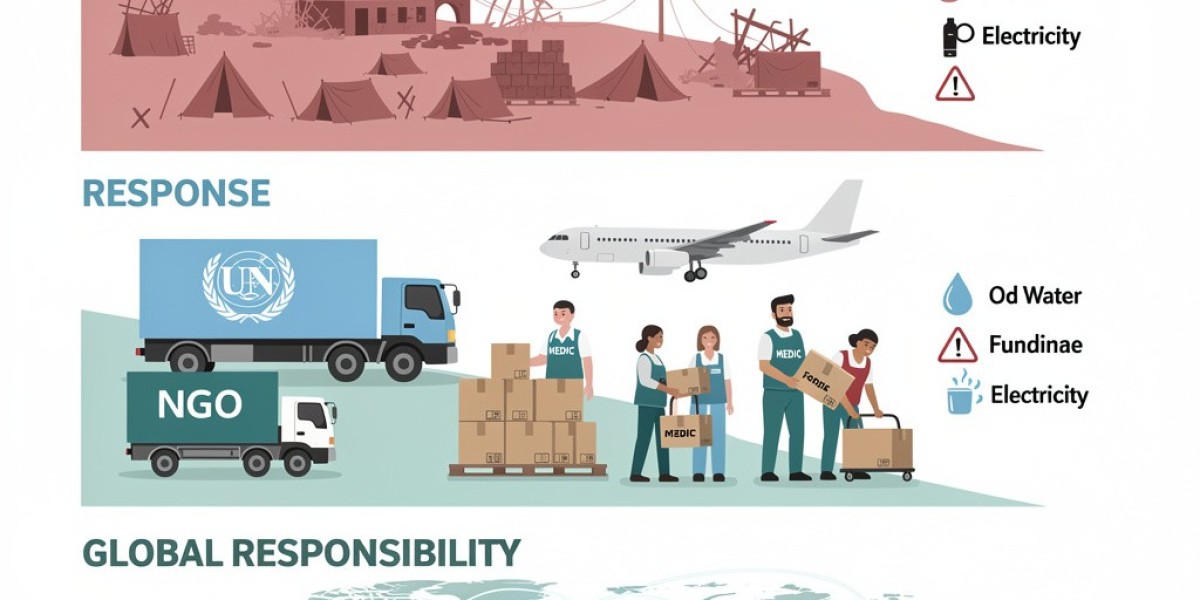

The humanitarian situation in Gaza has emerged as one of the most severe and complex crises of the modern era. Decades of political conflict, compounded by recent large-scale military operations, have left millions of civilians in desperate need of food, clean water, medical assistance, and shelter. International humanitarian organizations, governments, and civil society groups have mobilized considerable resources in an attempt to address the scale of suffering. However, access restrictions, infrastructure destruction, and ongoing hostilities continue to obstruct the delivery of life-saving aid. Understanding the Gaza humanitarian aid landscape requires examining the depth of civilian need, the architecture of international response, the barriers that persist on the ground, and the accountability frameworks that govern how aid reaches those who need it most.
The Scale of Humanitarian Need in Gaza
Gaza's humanitarian crisis is defined by its extraordinary scale and the speed at which civilian conditions have deteriorated. Prior to the escalation of conflict, Gaza already faced significant poverty levels, high unemployment, and limited access to essential services due to a longstanding blockade that restricted the flow of goods and people. The renewed intensity of military operations beginning in late 2023 pushed these pre-existing vulnerabilities into a full-scale humanitarian emergency. According to United Nations assessments, the vast majority of Gaza's population of approximately 2.3 million people has been displaced, with many forced to relocate multiple times as safe zones shifted or disappeared entirely.
Food insecurity has reached catastrophic levels across the territory. The World Food Programme and other United Nations agencies have documented widespread acute malnutrition, particularly among children under five and pregnant or lactating women. The destruction of agricultural land, fishing infrastructure, food storage facilities, and markets has severed the local food supply chain almost entirely. Aid-dependent populations have little to no ability to meet their caloric needs without external assistance. Famine conditions, defined by internationally recognized technical thresholds, have been reported in parts of northern Gaza, marking a dire milestone in the humanitarian trajectory of the conflict.
Health System Collapse and Medical Emergencies
Gaza's healthcare infrastructure has sustained enormous damage throughout the conflict. Major hospitals, including those that once served as the primary referral centers for the entire territory, have been forced to suspend operations or function at drastically reduced capacity due to damage, displacement of staff, fuel shortages, and supply chain disruptions. The World Health Organization has documented repeated attacks on healthcare facilities, ambulances, and medical personnel, all of which are protected under international humanitarian law. The collapse of routine healthcare services has meant that non-conflict-related illnesses, chronic conditions, maternal health, and childhood vaccinations have been severely neglected. Infectious disease outbreaks, including Hepatitis A and respiratory infections, have spread through overcrowded displacement sites where sanitation infrastructure has failed.
International Humanitarian Response to the Gaza Crisis
The international community has responded to the Gaza humanitarian emergency through a range of mechanisms, though the adequacy of that response has been subject to intense scrutiny and debate. The United Nations Relief and Works Agency for Palestine Refugees in the Near East, commonly known as UNRWA, has served as the primary vehicle for delivering humanitarian assistance to Palestinian refugees in Gaza for over seven decades. UNRWA operates schools, health centers, and emergency distribution programs throughout the territory, and its role during the current crisis has become both more critical and more contested. Some donor countries temporarily suspended funding to UNRWA in early 2024 following allegations of staff involvement in the October 7, 2023 attacks on Israel, creating a significant funding gap that had immediate consequences for aid delivery.
Beyond UNRWA, organizations including the International Committee of the Red Cross, Doctors Without Borders, Save the Children, Oxfam, and numerous faith-based and regional non-governmental organizations have attempted to operate in Gaza. Their operations have been defined by extreme risk to personnel, limited access corridors, and unpredictable security conditions. Several aid workers have been killed during the conflict, including a widely publicized incident in April 2024 when staff from the World Central Kitchen were killed in airstrikes while conducting approved aid distribution missions. These deaths prompted international condemnation and temporarily triggered pauses in aid operations as organizations reassessed safety protocols.
Role of Regional Countries and Diplomatic Channels
Regional actors including Egypt, Jordan, Qatar, and the United Arab Emirates have played important roles in facilitating humanitarian access to Gaza. Egypt's Rafah border crossing has historically served as one of the primary entry points for humanitarian goods and personnel, though its operational status has fluctuated significantly throughout the conflict. Jordan has conducted airdrops of humanitarian supplies in coordination with other governments, representing one of the alternative methods employed when ground crossings remain restricted. Qatar has served as a key diplomatic intermediary in ceasefire negotiations, and its financial contributions to Gaza's civilian population predate the current crisis. The Arab League and the Organisation of Islamic Cooperation have collectively called for ceasefire agreements and increased humanitarian access, reflecting a regional consensus that the civilian toll is unsustainable.
Access Barriers and Challenges in Delivering Aid to Gaza
Humanitarian access in Gaza has been constrained by a combination of physical, administrative, and security-related barriers. The Israeli government controls the primary entry points into Gaza, and aid organizations have consistently reported that the volume of supplies permitted entry falls far short of what is required to meet the needs of the population. Inspections at crossing points are time-consuming, and items classified as dual-use materials, meaning goods that could theoretically serve both civilian and military purposes, have been subject to extensive restrictions. This has affected not only weapons-related materials but also medical equipment, construction supplies, and communication tools needed by humanitarian actors.
The destruction of Gaza's road network has severely impeded internal distribution even when supplies do enter the territory. Aid trucks that successfully pass through crossing points often cannot reach their intended destinations due to destroyed bridges, rubble-blocked roads, and active hostilities. This last-mile delivery problem has been one of the most persistent logistical challenges facing humanitarian responders. Distribution points themselves have occasionally become sites of dangerous crowding and violence, as desperate civilians compete for limited supplies. The United Nations has documented incidents in which people were killed or injured while seeking food assistance, a deeply troubling indicator of the breakdown of civic order under conditions of prolonged deprivation.
International Humanitarian Law and Accountability in the Gaza Conflict
The Gaza humanitarian crisis has generated substantial legal and ethical debate regarding compliance with international humanitarian law. The laws of war, codified primarily in the Geneva Conventions and their Additional Protocols, impose clear obligations on all parties to a conflict to protect civilians, allow humanitarian access, and avoid attacks on civilian infrastructure. United Nations human rights bodies, independent fact-finding missions, and the International Court of Justice have examined conduct during the conflict and issued rulings or reports that have significant implications for accountability. South Africa's case against Israel before the International Court of Justice, filed in late 2023, brought global attention to whether the conduct of military operations meets the legal threshold for genocide, a proceeding that remains ongoing and deeply contested.
The International Criminal Court has also become a central institution in the accountability debate, with its prosecutor seeking arrest warrants against senior officials on both sides of the conflict. These legal proceedings reflect a broader international appetite for accountability mechanisms that go beyond diplomatic statements. Civil society organizations, international legal scholars, and human rights advocates have argued that impunity for violations of humanitarian law perpetuates cycles of violence and must be addressed through enforceable international mechanisms. The challenge, as with many international law processes, lies in the gap between legal findings and enforcement capacity, given that states retain significant power to comply with or resist international judicial decisions.
FAQs
What is the current humanitarian situation in Gaza?
Gaza is currently experiencing one of the worst humanitarian emergencies in the world. The vast majority of the population has been displaced, food insecurity has reached famine-level conditions in parts of the territory, the healthcare system has largely collapsed, and basic infrastructure including water, sanitation, and electricity has been severely degraded.
Why is humanitarian aid not reaching civilians in Gaza?
Multiple factors prevent humanitarian aid from reaching civilians in Gaza. Entry points into the territory are subject to inspection and approval processes that limit the volume and type of goods permitted.
How can I donate to help people in Gaza?
Reputable organizations accepting donations for Gaza humanitarian relief include UNRWA, UNICEF, the International Committee of the Red Cross, Doctors Without Borders, CARE International, and Oxfam.
What does international humanitarian law say about protecting civilians in Gaza?
International humanitarian law, codified primarily in the Geneva Conventions, requires all parties to a conflict to distinguish between civilian and military targets, to avoid disproportionate harm to civilians, to protect humanitarian workers and facilities, and to allow the unimpeded passage of humanitarian supplies.