
The Real Cost of Poor Production Planning
Production planning affects nearly every stage of a corrugated manufacturing operation.
When planning is done manually, manufacturers often experience:
- Excess paper consumption
- Frequent machine changeovers
- Production bottlenecks
- Delayed deliveries
- Higher wastage percentages
- Reduced machine utilization
Many of these costs remain hidden because they accumulate gradually across hundreds of production orders.
Over time, however, they can have a significant impact on profitability.
Why Paper Waste Happens
Paper waste is rarely caused by a single issue.
Common causes include:
- Improper order sequencing
- Frequent flute changes
- Unoptimized reel allocation
- Last-minute schedule adjustments
- Lack of visibility into machine capacity
- Inaccurate production priorities
Without a structured planning process, production teams often make reactive decisions instead of optimized ones.
How Automated Production Planning Helps
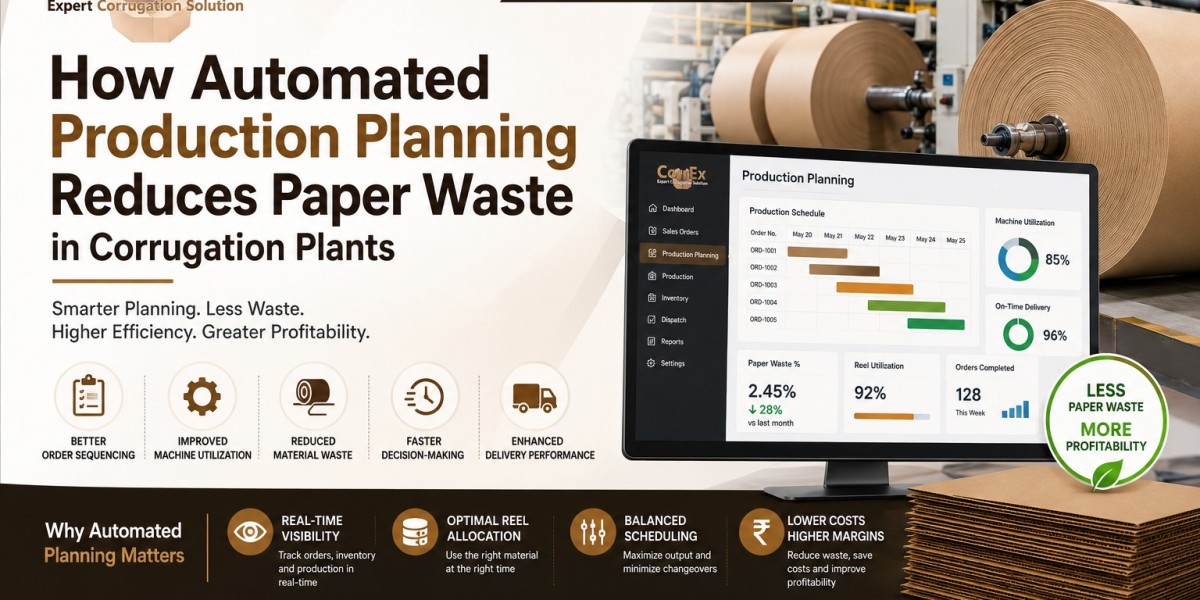
Automated planning systems use real-time production data to create efficient schedules based on machine capacity, order priority, delivery commitments, and material availability.
Instead of relying solely on manual coordination, planners gain a centralized view of plant operations.
Benefits include:
Better Order Sequencing
Orders can be grouped strategically to reduce machine setup changes and minimize material loss.
Improved Machine Utilization
Production schedules can be balanced across available resources, helping maximize output.
Reduced Material Waste
Optimized planning helps ensure paper reels are utilized efficiently throughout production.
Faster Decision-Making
Managers can quickly adjust schedules when urgent orders or unexpected disruptions occur.
Enhanced Delivery Performance
Better planning reduces production delays and improves on-time delivery rates.
The Importance of Real-Time Visibility
Effective planning depends on accurate information.
Manufacturers need visibility into:
- Current order status
- Available inventory
- Machine performance
- Production progress
- Delivery commitments
Without real-time visibility, planning becomes guesswork.
Industry-specific solutions such as CorrEx ERP by SB Infotech provide integrated production planning capabilities that help corrugated manufacturers coordinate operations more effectively and make informed scheduling decisions.
Moving Toward Smarter Manufacturing
As customer expectations continue to increase, manufacturers can no longer afford inefficient planning processes.
Reducing paper waste is not only about controlling costs—it is about improving competitiveness, sustainability, and operational performance.
Automated production planning gives corrugated manufacturers the tools needed to optimize resources, reduce wastage, and improve profitability in an increasingly demanding market.
For manufacturers looking to improve efficiency across production, inventory, and dispatch operations, investing in connected planning systems is becoming a business necessity rather than a future consideration.