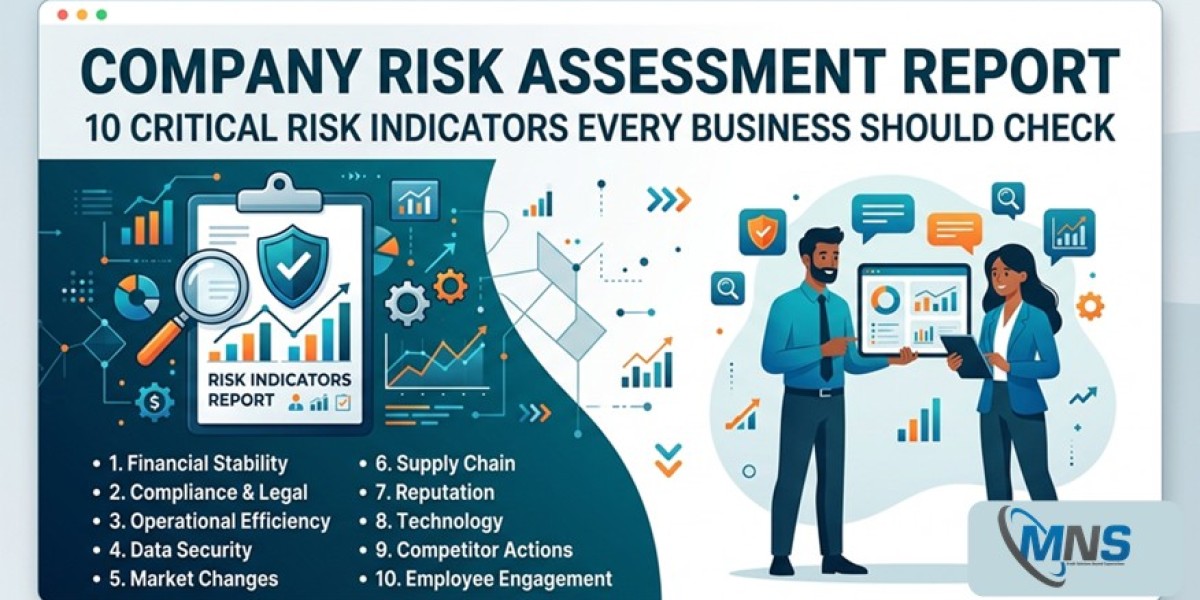

Every business relationship carries an element of risk, whether you are onboarding a new supplier, extending credit terms to a buyer, or evaluating a potential partner for a joint venture. A company risk assessment report is the single most reliable tool for uncovering hidden exposure before it becomes a financial loss. Yet not all reports are created equal, and many businesses focus on the wrong indicators or overlook red flags buried deep in financial statements and public records.
Below are the ten most critical risk indicators that a thorough company risk assessment report must evaluate, and why each one matters to your bottom line.
1. Financial Health and Solvency Ratios
A company's balance sheet tells a story well before it makes headlines. Current ratio, debt-to-equity ratio, and interest coverage reveal whether a business can meet short-term obligations or is quietly sliding toward insolvency.
2. Payment and Credit History
Past payment behaviour, including delays, defaults, or disputes with other trade creditors, is one of the strongest predictors of future payment reliability. A pattern of late payments across multiple vendors is a warning sign no report should miss.
3. Legal and Litigation Records
Ongoing lawsuits, insolvency filings, tax disputes, or regulatory actions can significantly affect a company's ability to honour commitments. A risk assessment should screen court records and regulatory databases for pending or historical litigation.
4. Ownership Structure and Beneficial Ownership
Complex or opaque ownership chains, shell entities, or frequent changes in directorship can obscure who truly controls a business. Verifying ultimate beneficial ownership helps identify concealed risk and potential regulatory exposure.
5. Industry and Sector Risk
Some sectors are inherently more volatile due to regulatory shifts, commodity price swings, or cyclical demand. Benchmarking a company against sector-specific risk trends gives context that isolated financial data cannot provide.
6. Geopolitical and Country Risk
For businesses operating across borders, currency controls, sanctions exposure, and political instability in the counterparty's home country can directly affect payment capability and contract enforceability.
7. Management Track Record
Leadership experience, past business failures, and director disqualifications are strong qualitative indicators. A capable management team can steer a company through downturns, while a history of failed ventures signals elevated risk.
8. Operational and Supply Chain Dependencies
Overreliance on a single customer, supplier, or geographic market creates concentration risk. A resilient business typically demonstrates diversification across revenue streams and sourcing channels.
9. Regulatory Compliance Standing
Compliance with statutory filings, licensing requirements, tax obligations, and industry-specific regulations reflects operational discipline. Repeated non-compliance often precedes larger financial or reputational trouble.
10. Reputation and Adverse Media Signals
Negative news coverage, customer complaints, and adverse media mentions can be early indicators of deeper operational or ethical issues, often surfacing well before financial statements reflect the strain.
Why a Structured Approach Matters
Evaluating these ten indicators in isolation rarely tells the full story. The real value of a company risk assessment report lies in how these signals are weighted and cross-verified against one another, financial distress combined with adverse litigation and ownership opacity paints a very different risk picture than a single red flag on its own.
At MNS Credit Management Group, our company risk assessment reports combine financial analysis, legal record checks, ownership verification, and on-ground due diligence to give businesses a complete and actionable view of counterparty risk, whether you are evaluating a domestic supplier or an international trade partner.