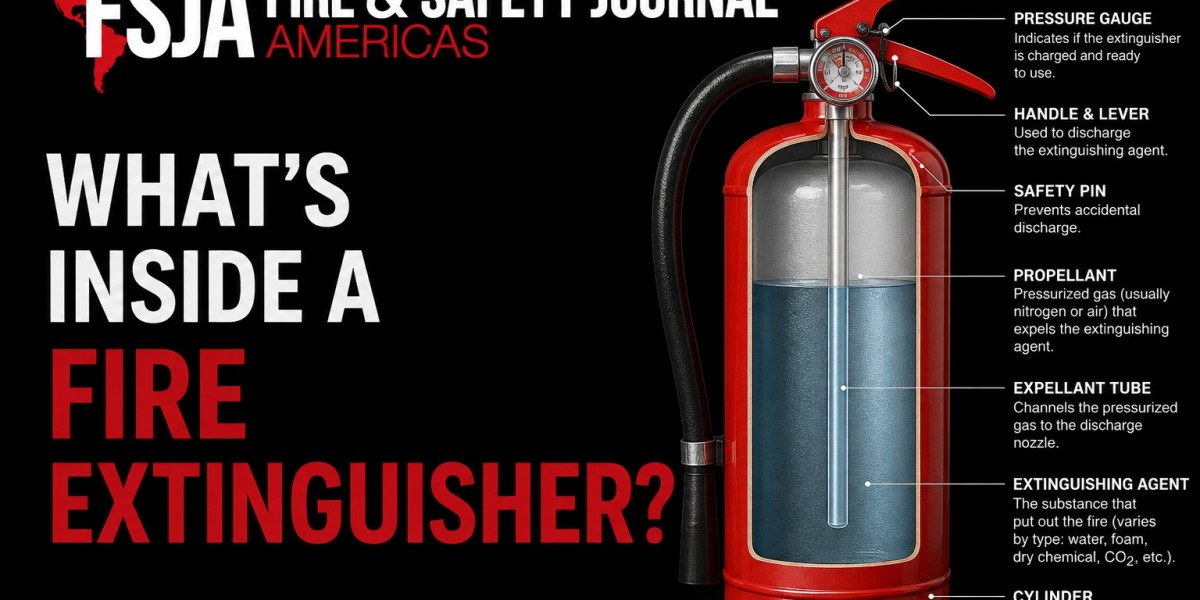

Fire extinguishers are essential safety devices found in homes, offices, schools, warehouses, and industrial facilities. Most people know how to pull the pin and operate one during an emergency, but few understand what's inside a fire extinguisher or why its contents vary between models. The extinguishing agent inside determines which types of fires the unit can safely control, making it important to choose the correct extinguisher for the environment. Whether it contains water, foam, carbon dioxide, dry chemical powder, or a clean agent, each substance is designed to tackle specific fire hazards. Understanding these internal components not only improves fire safety awareness but also helps prevent the misuse of extinguishers. This guide explains the main parts, the different extinguishing agents, how they work, and how to identify and maintain the right extinguisher for reliable protection.
Why Understanding What's Inside a Fire Extinguisher Matters?
Knowing the contents of a fire extinguisher is just as important as knowing where it is located. Every extinguishing agent is designed to suppress particular fire classes, and using the wrong type can make a fire worse or create additional safety risks. For example, water is effective on ordinary combustible materials but should never be used on electrical or flammable liquid fires. By understanding the purpose of each extinguishing agent, homeowners and businesses can make informed purchasing decisions, prepare for potential fire hazards, and respond more effectively during emergencies. This knowledge also supports proper maintenance and compliance with workplace fire safety requirements.
The Main Components Inside a Fire Extinguisher
Every fire extinguisher contains several essential components that work together to deliver the extinguishing agent quickly and efficiently during an emergency.
Extinguishing Agent
The extinguishing agent is the primary material responsible for controlling or extinguishing a fire. Depending on the extinguisher type, it may be water, foam, carbon dioxide, dry chemical powder, wet chemical solution, or a clean agent formulated for specific hazards.
Pressurizing Gas
Most extinguishers use compressed nitrogen or carbon dioxide to maintain internal pressure. This pressurized gas forces the extinguishing agent through the discharge hose or nozzle immediately after the operating lever is squeezed.
Siphon Tube
A siphon tube extends from the valve to the bottom of the cylinder, allowing the extinguishing agent to travel upward during discharge. This design helps ensure the extinguisher releases its contents efficiently and consistently.
Valve and Operating Mechanism
The valve assembly includes the handle, safety pin, and lever that control the release of the extinguishing agent. These components are engineered to provide safe storage while enabling quick activation during emergencies.
Steel Cylinder
The cylinder securely stores both the extinguishing agent and the pressurized gas. It is manufactured to withstand high internal pressure while protecting the contents from contamination and external damage throughout its service life.
What Is Inside Different Types of Fire Extinguishers?
Different fire extinguishers contain different extinguishing agents because each is designed to tackle specific fire risks safely and effectively.
Water Fire Extinguishers
Water extinguishers contain clean water stored under pressure. They remove heat from burning materials, making them suitable for Class A fires involving wood, paper, cardboard, and textiles commonly found in homes, schools, and offices.
Foam Fire Extinguishers
Foam extinguishers contain a mixture of water and foam concentrate. When discharged, the foam forms a blanket over burning liquids, reducing oxygen exposure while also cooling the fuel to prevent reignition on Class A and B fires.
Carbon Dioxide (CO₂) Fire Extinguishers
CO₂ extinguishers contain liquefied carbon dioxide stored under high pressure. As it expands, the gas displaces oxygen around the flames without leaving residue, making it ideal for electrical equipment and flammable liquid fires.
Dry Powder Fire Extinguishers
Dry powder extinguishers are filled with chemical powders such as monoammonium phosphate or sodium bicarbonate. These agents interrupt the combustion process, making them highly effective for multiple fire classes depending on the formulation used.
Wet Chemical and Clean Agent Fire Extinguishers
Wet chemical extinguishers use potassium-based solutions to tackle cooking oil and grease fires, while clean agent extinguishers contain residue-free chemicals that protect valuable electronics, data centres, and sensitive equipment from unnecessary damage.
How the Contents Work to Extinguish Fires?
Each extinguishing agent works differently, but every one is designed to remove one or more elements needed for combustion to continue.
Cooling the Burning Material
Water-based agents absorb heat from burning materials, reducing the temperature below the ignition point. This cooling action stops combustion and lowers the chance of the fire spreading to nearby combustible materials.
Smothering the Flames
Foam and carbon dioxide reduce the oxygen available to the fire. By separating oxygen from the fuel source, these extinguishing agents effectively suppress flames and minimise the possibility of reignition.
Interrupting the Chemical Reaction
Dry chemical powders break the chain reaction that keeps flames burning. Instead of simply cooling the fire, they interfere with combustion at the molecular level, allowing rapid suppression of many common fire types.
Preventing Re-Ignition
Certain extinguishing agents create a protective layer over the fuel surface after extinguishing the flames. This barrier reduces heat transfer and oxygen exposure, helping prevent the fire from reigniting once it has been controlled.
Are Fire Extinguisher Contents Safe?
Fire extinguisher contents are generally safe when used correctly, but some agents require careful handling after discharge, especially in enclosed spaces or around sensitive equipment.
Health Considerations
Most extinguishing agents cause only temporary irritation if accidentally inhaled or if they contact the skin or eyes. Following manufacturer instructions and avoiding unnecessary exposure reduces potential health concerns.
Environmental Impact
Modern extinguishing agents are designed with environmental regulations in mind, although disposal should always follow local guidelines. Proper recycling and servicing help minimise unnecessary environmental impact throughout the extinguisher's lifecycle.
Safe Cleanup
After using a fire extinguisher, clean any remaining residue promptly using the recommended methods for that agent. Wearing gloves and ensuring good ventilation helps make the cleanup process safer and more effective.
How to Identify What Is Inside Your Fire Extinguisher?
Manufacturers provide clear information to help users identify the extinguishing agent before an emergency occurs, making regular inspections an important part of fire safety.
Read the Product Label
The label identifies the extinguisher type, extinguishing agent, operating instructions, and the fire classes it is approved to combat, making it the first place users should check.
Check the Colour Band and Fire Rating
Many extinguishers feature coloured bands and standard fire class symbols that indicate the extinguishing agent inside and the hazards for which the unit has been tested and certified.
Review Manufacturer Information
If the extinguisher label has become damaged or difficult to read, consult the manufacturer's documentation or servicing records to confirm the internal contents and recommended applications.
Maintenance Tips to Keep Fire Extinguishers Ready
Routine maintenance ensures a fire extinguisher performs correctly whenever it is needed and helps extend its service life.
Inspect the Pressure Gauge Regularly
Check that the pressure indicator remains within the recommended operating range. An incorrect reading may indicate the extinguisher requires professional inspection or servicing before it can be relied upon.
Examine the Cylinder and Safety Components
Look for dents, corrosion, leaks, damaged hoses, or missing safety pins during routine inspections. Any visible damage should be assessed by a qualified technician as soon as possible.
Schedule Professional Servicing
Arrange periodic maintenance according to manufacturer recommendations and local fire safety regulations. Professional inspections verify the extinguisher remains in safe working condition throughout its lifespan.
Replace or Recharge After Use
Any extinguisher that has been discharged, even partially, should be recharged or replaced immediately. Prompt servicing ensures it remains ready to provide reliable protection during the next emergency.
Conclusion
Understanding the contents of a fire extinguisher helps you choose the right equipment for the hazards present in your home or workplace. Since each extinguisher contains a specific agent designed for particular fire classes, selecting the correct type improves safety and increases the chances of controlling a fire effectively. Regular inspections, proper maintenance, and checking product labels ensure the extinguisher remains ready for use when an emergency occurs. Fire and Safety Journal Americas encourages homeowners and businesses to stay informed about fire protection equipment and follow recommended maintenance practices to create a safer environment for everyone.
Frequently Asked Questions
What is the powder inside a fire extinguisher made of?
Most dry powder extinguishers contain monoammonium phosphate or sodium bicarbonate, depending on the fire classes they are designed to extinguish.
Is the material inside a fire extinguisher dangerous?
Most extinguishing agents are safe when used correctly, although some may cause temporary irritation if inhaled or exposed to the eyes or skin.
Do all fire extinguishers contain gas?
Most extinguishers use a pressurising gas such as nitrogen or carbon dioxide, but the primary extinguishing agent differs depending on the extinguisher type.
Can I refill a fire extinguisher after using it?
Many rechargeable extinguishers can be professionally refilled and repressurised, while disposable models should be replaced after use.
How long do fire extinguisher contents last?
Most fire extinguishers require regular inspections and servicing, with replacement intervals depending on the manufacturer, extinguisher type, and local fire safety regulations.