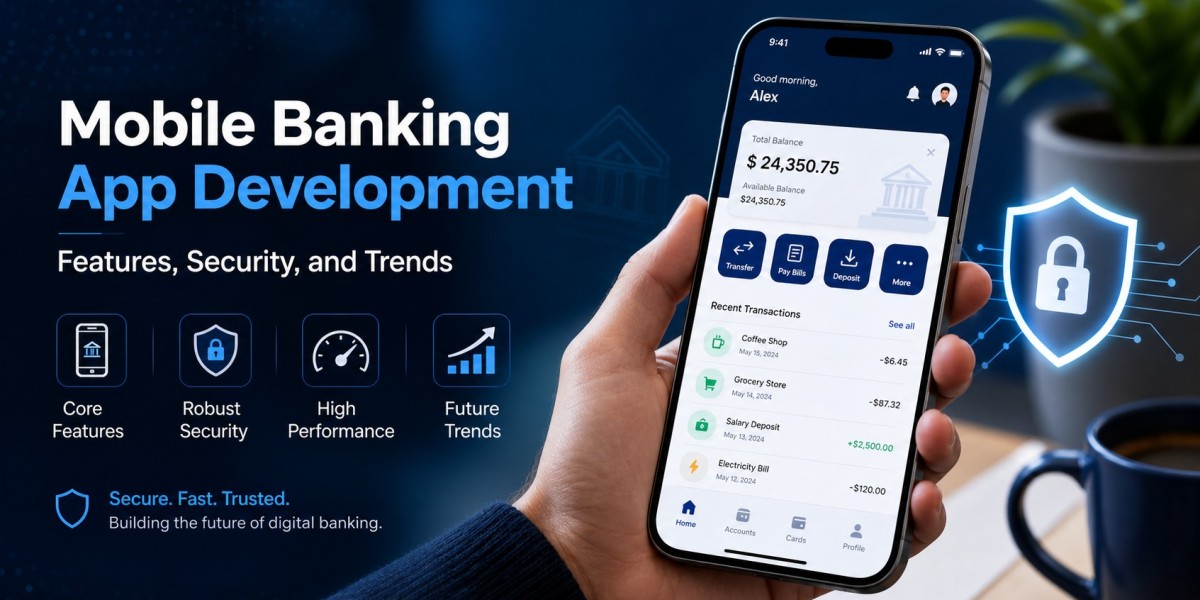

What is mobile banking app development?
Mobile banking app development is the process of designing and building mobile applications that allow users to manage their finances directly from their smartphones. These apps enable customers to check balances, transfer funds, pay bills, and access financial services without visiting a bank branch.
A well-developed mobile banking app helps you:
Offer 24/7 banking access
Improve customer experience
Reduce operational costs
Increase user engagement
For developers and fintech teams, the goal is to build secure, fast, and scalable apps that meet user expectations and regulatory requirements.
Why mobile banking apps are essential today
Digital banking is no longer optional. Users expect everything to be available on their phones. Traditional banking systems struggle to meet this demand without mobile-first solutions.
With modern mobile banking app development, you can:
Deliver instant financial services
Reduce dependency on physical branches
Improve transaction speed and accuracy
Gain a competitive edge in the fintech space
If you’re building a banking product, mobile should be your primary focus.
Core features of a mobile banking app
When planning mobile banking app development web development, you need to focus on features that deliver both usability and functionality.
1. User registration and authentication
This is the first interaction users have with your app. It should include:
Secure sign-up and login
Multi-factor authentication (MFA)
Biometric login (fingerprint, face ID)
A smooth onboarding experience improves user retention.
2. Account management
Users should be able to:
View account balances
Access transaction history
Download statements
Clear and simple dashboards improve usability.
3. Fund transfers
A core feature in any banking app:
Instant transfers (IMPS, UPI)
Scheduled payments
Beneficiary management
Speed and reliability are critical here.
4. Bill payments and recharge
Allow users to:
Pay utility bills
Recharge mobile and DTH
Set up auto-pay
This adds convenience and keeps users engaged with your app.
5. Push notifications
Keep users informed with:
Transaction alerts
Payment reminders
Security updates
Real-time notifications improve transparency and trust.
6. Customer support
Provide easy access to:
Chat support
FAQs
Ticket systems
You can also link to a helpful digital banking solutions resource internally for deeper guidance.
7. Card and loan management
Users should manage:
Debit/credit cards (block/unblock)
Loan details and EMIs
Spending limits
This gives users full control over their finances.
Security in mobile banking app development
Security is the backbone of mobile banking app development. Financial data is highly sensitive, and even small vulnerabilities can lead to major risks.
1. Data encryption
Ensure:
End-to-end encryption
Secure data storage
HTTPS for all communications
This protects user data during transactions.
2. Multi-factor authentication (MFA)
MFA adds an extra layer of security:
OTP verification
Biometric authentication
Device-based authentication
It reduces the risk of unauthorized access.
3. Secure APIs
APIs connect your app with backend services. You must:
Use API gateways
Implement token-based authentication
Monitor API activity
This prevents data leaks and attacks.
4. Fraud detection systems
Use AI and rule-based systems to:
Detect unusual transactions
Flag suspicious activity
Prevent fraud in real time
This builds user trust and protects assets.
5. Compliance with regulations
Your app must follow:
RBI guidelines (India)
PCI DSS standards
Data privacy laws
Compliance is not optional in financial applications.
Technology stack for mobile banking apps
Choosing the right technology stack is critical for performance and scalability.
Frontend development
Flutter or React Native for cross-platform apps
Swift (iOS) and Kotlin (Android) for native apps
Backend development
Node.js, Java, or Python
Microservices architecture for flexibility
Database
PostgreSQL or MySQL
Redis for caching
Cloud and DevOps
AWS, Azure, or Google Cloud
CI/CD pipelines for faster deployment
A strong tech stack ensures your app can handle high traffic and transactions.
Latest trends in mobile banking app development
The fintech space is evolving fast. Staying updated with trends helps you build future-ready apps.
1. AI-powered banking
AI is used for:
Chatbots and virtual assistants
Personalized financial insights
Fraud detection
It improves user experience and efficiency.
2. Open banking APIs
Open banking allows:
Integration with third-party services
Better financial data sharing
Enhanced user experiences
This trend is reshaping how banking apps are built.
3. Voice banking
Users can now:
Check balances using voice commands
Perform transactions hands-free
Voice interfaces are becoming more popular.
4. Blockchain integration
Blockchain helps in:
Secure transactions
Transparent records
Reduced fraud
It is gaining traction in financial applications.
5. Personal finance management (PFM)
Modern apps include:
Expense tracking
Budget planning
Financial insights
This adds more value beyond basic banking.
Development process
A structured approach is key to successful mobile banking app development.
Step 1: Requirement analysis
Define:
Target audience
Core features
Compliance requirements
Clear goals guide the entire project.
Step 2: UI/UX design
Focus on:
Simple navigation
Clean interface
Accessibility
Good design improves user adoption.
Step 3: Development
Build:
Frontend and backend systems
Secure APIs
Core banking features
Follow agile methods for faster delivery.
Step 4: Testing
Test for:
Security vulnerabilities
Performance issues
Functional bugs
Testing ensures reliability.
Step 5: Deployment
Launch on:
App Store (iOS)
Google Play Store (Android)
Monitor performance post-launch.
Step 6: Maintenance and updates
Regular updates are essential:
Fix bugs
Add new features
Update security protocols
This keeps your app relevant and secure.
Challenges in mobile banking app development
You may face several challenges:
Security risks: Constant threat of cyberattacks
Regulatory compliance: Changing financial laws
User trust: Requires consistent performance and security
Scalability: Handling growing user base
Planning and best practices can help overcome these issues.
Best practices for developers
To build a successful app:
Prioritize security from the start
Use modular architecture
Optimize app performance
Keep UI simple and intuitive
Continuously monitor and improve
Collaborating with experienced teams like just digital gurus can help you avoid common mistakes and speed up development.
Conclusion
Mobile banking app development is a critical part of modern financial services. It enables seamless, secure, and fast banking experiences for users.
By focusing on essential features, strong security measures, and emerging trends, you can build a powerful mobile banking app that meets user expectations and regulatory standards.
As the fintech industry grows, investing in high-quality mobile banking solutions will help you stay competitive and future-ready.
FAQs
1. What is mobile banking app development?
Mobile banking app development is the process of creating apps that allow users to perform banking activities on their mobile devices.
2. What features should a mobile banking app have?
Key features include account management, fund transfers, bill payments, notifications, and strong security measures.
3. Why is security important in mobile banking apps?
Security protects sensitive financial data and prevents fraud or unauthorized access.
4. How long does it take to develop a mobile banking app?
It typically takes 3–6 months for an MVP and longer for a full-featured app.
5. Which technologies are used in mobile banking app development?
Common technologies include React Native, Flutter, Node.js, Java, cloud platforms, and secure APIs.