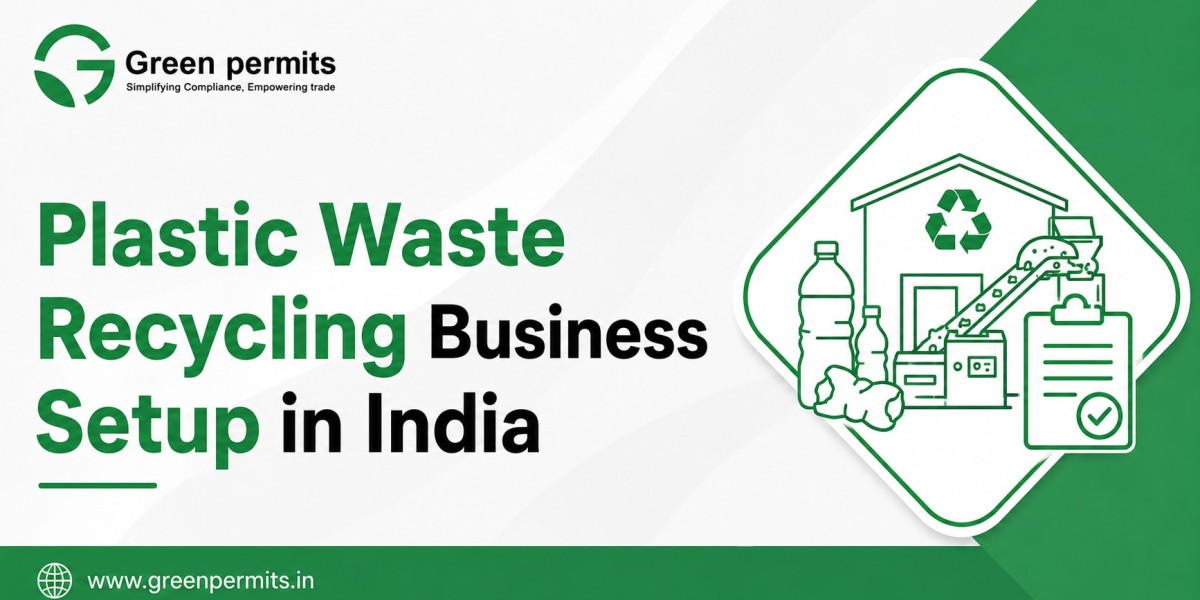

Plastic Waste Recycling Business Setup in India is becoming an important business opportunity for entrepreneurs, recyclers, manufacturers and waste management companies. Growing plastic consumption, stricter Extended Producer Responsibility requirements and increasing demand for recycled raw material are creating a structured market for plastic collection, segregation and recycling.
However, a plastic recycling plant cannot be started by simply purchasing a shredder or granulation machine. The entrepreneur must identify the correct plastic waste category, secure an industrial site, select suitable recycling technology, obtain pollution control approvals, arrange an effluent treatment system and register as a Plastic Waste Processor on the centralized EPR portal.
The main regulatory framework is the Plastic Waste Management Rules, 2016, together with amendments notified in 2018, 2021, 2022, 2023, 2024 and 2025. The 2022 amendment introduced the EPR framework for plastic packaging, while later amendments strengthened registration, reporting, labelling and enforcement requirements.
For a new entrepreneur, the success of a plastic recycling business depends on 4 connected factors:
- Availability of consistent plastic waste
- Correct recycling technology
- Regulatory approval of the facility
- Confirmed buyers for recycled output
A Plastic Waste Recycling Plant Setup Consultant assists with feasibility studies, Detailed Project Reports, plant layout, pollution approvals, Plastic Waste Processor registration, machinery planning and post-registration EPR compliance.
What is a Plastic Waste Recycling Business?
A plastic waste recycling business collects or procures discarded plastic, segregates it according to polymer type, removes contamination and converts it into reusable material.
Depending on the technology and raw material, the plant may produce:
- PET flakes
- HDPE flakes
- PP flakes
- Recycled plastic granules
- Recycled pellets
- Plastic regrind
- Plastic boards or sheets
- Recycled plastic products
- Industrial plastic components
- Plastic lumber
- Crates, bins, pallets or furniture components
The recycled material can be sold to manufacturers of packaging, automotive components, household products, pipes, sheets, furniture, construction materials and industrial products.
A recycling unit may also become eligible to generate plastic waste processing certificates under the EPR system after completing registration, verification and audit requirements.
Why Start a Plastic Waste Recycling Business in India?
The recycling market is no longer driven only by scrap value. Regulatory compliance has created a formal connection between Producers, Importers and Brand Owners, commonly called PIBOs, and registered Plastic Waste Processors.
PIBOs must fulfil applicable EPR obligations through mechanisms provided under the plastic packaging EPR framework. Registered recyclers process eligible plastic waste and generate category-wise certificates based on verified quantities.
This creates 2 potential commercial opportunities for a recycler:
- Sale of recycled physical material
- Generation and transfer of eligible EPR certificates
The business can also generate income through collection contracts, waste processing charges and long-term agreements with brand owners.
Plastic recycling has become attractive because it can:
- Convert low-value waste into marketable raw material
- Support circular economy requirements
- Reduce dependence on virgin plastic
- Generate recurring industrial demand
- Support EPR compliance of producers and brands
- Create employment in collection and processing
- Develop long-term contracts with municipalities and industries
- Provide traceable waste management services
However, EPR certificate income should not be treated as guaranteed profit. Certificate generation depends on actual eligible processing, plant capacity, portal validation, sales documentation and regulatory compliance.
Types of Plastic Recycling Businesses
Before preparing the project report, the entrepreneur must decide which type of recycling business will be established.
Plastic Collection and Material Recovery Facility
A Material Recovery Facility collects mixed waste, separates recyclable plastic and supplies segregated plastic to registered recyclers.
Activities may include:
- Waste collection
- Manual sorting
- Baling
- Polymer segregation
- Removal of non-recyclable material
- Storage and dispatch
This model generally requires lower machinery investment but depends heavily on collection contracts and labour management.
Plastic Shredding and Grinding Unit
A shredding unit converts rigid plastic scrap into regrind or flakes.
Typical raw materials include:
- Plastic crates
- Injection moulding scrap
- Plastic drums
- Containers
- Industrial plastic rejects
- HDPE and PP articles
The unit may sell washed or unwashed flakes to granule manufacturers.
Plastic Washing and Flake Manufacturing Unit
This business processes post-consumer plastic through sorting, crushing, washing, drying and packing.
Common outputs include:
- PET bottle flakes
- HDPE bottle flakes
- PP flakes
- Mixed rigid plastic regrind
The plant requires proper water management, sludge handling and an effluent treatment system.
Plastic Granule Manufacturing Unit
A granule plant converts cleaned and segregated plastic flakes into recycled granules.
The process generally involves:
- Feeding
- Agglomeration, where required
- Extrusion
- Melt filtration
- Degassing
- Pelletizing
- Cooling
- Drying
- Packing
The quality and price of granules depend on polymer purity, colour, moisture, contamination, melt flow characteristics and consistency.
Integrated Plastic Recycling Plant
An integrated plant performs collection, segregation, washing, drying, extrusion and pellet manufacturing at one location.
This model provides better control over quality but requires higher investment, larger land area, pollution control systems and working capital.
Plastic Waste to Product Unit
Instead of selling granules, the plant may manufacture finished products from recycled plastic.
Products may include:
- Plastic pallets
- Dustbins
- Benches
- Boards
- Sheets
- Crates
- Planters
- Construction products
- Non-food industrial components
The project must identify the applicable product standards, quality requirements and restrictions on the use of recycled material.
What is a Plastic Waste Processor?
Under the plastic packaging EPR framework, Plastic Waste Processors include different facilities involved in processing plastic waste.
These may include:
- Plastic recyclers
- Waste-to-energy plants
- Waste-to-oil plants
- Industrial composting facilities
- Cement plants using plastic waste for co-processing
- Other approved end-of-life processing facilities
Plastic Waste Processors must register through the centralized portal and obtain approval from the concerned State Pollution Control Board or Pollution Control Committee. Registration allows eligible processors to participate in the formal EPR system. The CPCB SOP also links certificate generation with audit and validation of the facility.
Plastic Waste Categories and Process Selection
Plastic waste should not be treated as a single raw material. Every polymer has different processing temperatures, contamination risks, market prices and end-use applications.
Common recyclable materials include:
- PET
- HDPE
- LDPE
- LLDPE
- PP
- PS
- ABS
- PVC
- Nylon
- Engineering plastic
- Multilayer plastic, where suitable processing technology is available
Mixing incompatible polymers can reduce product quality and damage machinery. PVC contamination in a PET stream, for example, can create serious processing and quality problems.
Before finalizing the plant, the entrepreneur should confirm:
- Type of plastic to be processed
- Source of plastic waste
- Whether the waste is pre-consumer or post-consumer
- Expected contamination level
- Required washing process
- Final product specification
- Market demand for the output
- Applicable portal process code
- Expected recovery percentage
- Disposal route for rejects
The process code selected in the PWP application must match the raw material, recycling process, machinery and final output shown in the project documents.
Main Licences Required for a Plastic Recycling Plant
The exact approvals depend on the state, capacity, land location, process and type of plastic waste. A typical project may require the following registrations and licences.
Business Registration
The enterprise may be established as:
- Proprietorship
- Partnership firm
- Limited Liability Partnership
- Private limited company
- Public limited company
- Cooperative or producer organisation
The applicant should obtain PAN, GST registration and other entity documents before submitting environmental applications.
Industrial Land and Land-Use Approval
The plant should normally be established on land where the proposed recycling activity is permitted.
The entrepreneur should verify:
- Industrial zoning
- Land-use classification
- Lease conditions
- Approach road
- Electricity availability
- Water availability
- Distance from residential areas
- Local development authority conditions
- Restrictions applicable to the industrial estate
Purchasing machinery before verifying land suitability can create major project delays.
Consent to Establish
Consent to Establish, commonly called CTE, must generally be obtained from the concerned SPCB or PCC before establishing the plant.
The CTE application may require:
- Project report
- Site plan
- Plant layout
- Manufacturing process
- Machinery details
- Water balance
- Air emission details
- Effluent treatment proposal
- Solid waste management plan
- Investment details
- Land documents
- Pollution control arrangements
The pollution category and scrutiny process vary by state and plant activity.
Consent to Operate
After installation of machinery and pollution control systems, the unit normally requires Consent to Operate before commercial operation.
The board may verify:
- Machinery installed at the site
- Production capacity
- Water consumption
- Effluent treatment system
- Air pollution control equipment
- Waste storage arrangements
- Electricity load
- Compliance with CTE conditions
The capacity declared on the PWP portal should be consistent with the capacity mentioned in the CTO.
Plastic Waste Processor Registration
The recycler must apply through the centralized Plastic EPR portal. The application is processed by the concerned SPCB or PCC.
The CPCB SOP requires detailed information relating to:
- Company and facility
- GPS location
- Recycling process
- Plastic waste category
- Installed machinery
- Processing capacity
- Recycled output
- Electricity load
- Pollution control measures
- Waste management
- Geo-tagged photographs and videos
Registered PWPs can generate eligible processing certificates only within their verified capacity and subject to portal and audit requirements.
Factory Licence
A Factory Licence may be required depending on the manufacturing process, power use and number of workers.
The requirement is administered through the concerned state factory department.
Fire NOC
A Fire NOC may be required because plastic waste is combustible and storage areas can carry a high fire load.
The fire safety plan may include:
- Fire extinguishers
- Hydrant system
- Water storage
- Smoke detection
- Emergency exits
- Fire separation
- Safe electrical installation
- No-smoking controls
- Emergency response procedure
Hazardous Waste Authorization
Hazardous Waste Authorization may be applicable when the unit generates used oil, contaminated sludge, chemical residues or other waste covered by the Hazardous and Other Wastes Rules.
The applicability must be assessed according to the actual process and waste streams.
Other Possible Approvals
Depending on the project, additional approvals may include:
- Local body trade licence
- Groundwater permission
- Electricity sanction
- Boiler approval
- Electrical inspector approval
- Labour registrations
- Legal Metrology verification for weighbridges
- Building plan approval
- Explosive or fuel storage approval, where applicable
- Environmental Clearance, where applicable
Documents Required for Plastic Waste Processor Registration
The CPCB SOP provides a detailed application structure for Plastic Waste Processors.
Common documents include:
- PAN of the business
- GST Registration Certificate
- CIN or incorporation document
- PAN or Aadhaar of the authorized person
- Consent to Establish
- Consent to Operate
- Applicable waste authorization
- Process flow diagram
- Plant and machinery list
- Machinery power ratings
- Processing capacity details
- Electricity bill
- Sanctioned power load
- Geo-tagged plant photographs
- Geo-tagged machinery photographs
- Raw material storage photographs
- Production-area photographs
- Finished-product storage photographs
- Waste characterization report
- Pollution control system details
- Occupational health and safety documents
- Onsite and offsite emergency plan
- Waste disposal arrangements
- Covering letter
- Authorized signature
- Existing registration documents, where applicable
The portal data, CTO capacity, machinery capacity, power consumption and geo-location should be consistent. Any major mismatch may result in a query, inspection issue or rejection.
Machinery Required for a Plastic Recycling Plant
Machinery depends on whether the unit produces flakes, granules or finished products.
A typical washing and granulation line may include:
- Sorting conveyor
- Bale opener
- Metal detector
- Crusher or shredder
- Friction washer
- Floating and sinking tank
- Hot washing unit
- Screw washer
- Centrifugal dryer
- Thermal dryer
- Agglomerator
- Extruder
- Screen changer
- Melt filter
- Degassing system
- Pelletizer
- Cooling tank
- Granule dryer
- Storage silo
- Packing machine
- Dust collection system
- Water recycling system
- Effluent treatment plant
Additional supporting systems may include:
- Weighbridge
- Forklift
- Baling machine
- Laboratory equipment
- Firefighting system
- Transformer
- Generator
- Air compressor
- Water storage tanks
- Sludge dewatering system
Machinery selection should be based on actual material trials rather than only vendor quotations.
Plastic Recycling Process
A standard mechanical recycling process generally follows these stages.
Step 1: Plastic Waste Procurement
Plastic waste may be sourced from:
- Municipal collection systems
- Waste aggregators
- Material Recovery Facilities
- Industrial units
- Warehouses
- Packaging companies
- Retail chains
- Scrap dealers
- Bulk waste generators
- Producer take-back systems
Long-term supply agreements are preferable because irregular feedstock can reduce plant utilization.
Step 2: Sorting and Segregation
Plastic is separated according to:
- Polymer type
- Colour
- Product form
- Contamination
- Food and non-food use
- Rigid or flexible structure
Sorting may be manual, mechanical or optical.
Step 3: Size Reduction
The plastic is shredded or crushed into smaller pieces.
Uniform particle size improves washing and processing efficiency.
Step 4: Washing
The material may undergo:
- Pre-washing
- Cold washing
- Hot washing
- Friction washing
- Float-sink separation
- Rinsing
Labels, dirt, oil, adhesive, food residue and other contamination must be removed.
Step 5: Drying
Washed plastic is dried using mechanical and thermal drying systems.
High moisture can reduce extrusion quality and increase energy consumption.
Step 6: Extrusion and Filtration
The dried material is melted in an extruder.
The melt passes through filtration systems to remove remaining contamination.
Step 7: Pelletizing
The filtered material is converted into pellets or granules.
Step 8: Quality Testing
The recycled material should be tested for:
- Moisture
- Melt flow index
- Density
- Colour
- Ash content
- Contamination
- Tensile properties
- Odour
- Particle size
- Bulk density
Step 9: Packing and Dispatch
Finished flakes or granules are weighed, packed, labelled and dispatched with proper sales and traceability records.
Land Requirement for a Plastic Recycling Plant
Land requirement depends on processing capacity, raw material inventory and technology.
A small shredding or dry-processing unit may operate from approximately 5,000 to 10,000 square feet, subject to local requirements.
A 3 to 5 TPD washing and granulation plant may require approximately 15,000 to 30,000 square feet or more.
A larger integrated facility may require substantially more land for:
- Raw material storage
- Segregation
- Washing
- Drying
- Granulation
- Finished goods
- Effluent treatment
- Utilities
- Roads
- Fire access
- Greenbelt
- Reject storage
The final land requirement should be calculated through a plant layout rather than selected through a generic estimate.
Water, Power and Utility Requirements
Plastic washing plants can consume significant water if proper recirculation systems are not installed.
A well-designed plant should include:
- Water balance
- Recycled-water system
- Effluent treatment plant
- Sludge dewatering
- Fresh-water measurement
- Separate stormwater drainage
- Leak and overflow control
The connected electrical load may range from approximately 75 kW for a small operation to several hundred kW for an integrated plant. Actual demand depends on the crusher, washer, dryer, extruder and pollution control system.
The machinery power calculation should match the electricity sanction and capacity declared to the Pollution Control Board.
Indicative Investment for Plastic Recycling Business
Investment varies significantly according to land, capacity, automation and final product.
Indicative planning ranges, excluding land in many cases, may be:
Sorting and Baling Facility
Approximate investment:
- ₹15 lakh to ₹50 lakh
Shredding and Flake Unit
Approximate investment:
- ₹25 lakh to ₹80 lakh
1 to 2 TPD Washing and Granulation Plant
Approximate investment:
- ₹60 lakh to ₹1.5 crore
3 to 5 TPD Integrated Recycling Plant
Approximate investment:
- ₹1.5 crore to ₹5 crore
10 TPD or Larger Automated Plant
Approximate investment:
- ₹5 crore to ₹12 crore or more
These figures are broad project-planning estimates. The final investment must be calculated through vendor quotations, utility design, civil cost, pollution control equipment and working capital assessment.
Working Capital Requirement
Many recycling businesses underestimate working capital.
Working capital is required for:
- Purchase of plastic waste
- Transport
- Labour
- Electricity
- Water and chemicals
- Packing material
- Machine maintenance
- Rent
- Credit given to customers
- Waste disposal
- Compliance and testing
The business should normally plan for at least 2 to 4 months of operating expenses, depending on supplier and customer payment cycles.
Revenue Sources for a Plastic Recycling Plant
A plastic recycling business can earn revenue from multiple channels.
These include:
- Sale of recycled flakes
- Sale of recycled granules
- Sale of finished recycled products
- Waste collection charges
- Processing or gate fees
- Long-term waste management contracts
- Sale of eligible EPR certificates
- Sale of reusable by-products
- Corporate traceability and waste reporting services
A strong business model should remain viable from the sale of physical output. EPR certificate revenue should improve profitability rather than become the only source of income.
CPCB Application Fee for PWP Registration
The CPCB SOP dated March 15, 2022 specifies the following processing-capacity-based application fees:
- Below 200 TPA: ₹5,000
- 200 TPA to below 2,000 TPA: ₹20,000
- Above 2,000 TPA: ₹50,000
The SOP also specifies the same fee for renewal and annual processing charges equal to 25% of the application fee at the time of annual return filing. Applicants should verify the live portal fee before payment because government charges and portal requirements may be revised.
Plastic Recycling Plant Setup Process
Step 1: Select the Business Model
Decide whether the plant will produce flakes, granules or finished products.
Step 2: Conduct a Feasibility Study
Assess:
- Feedstock availability
- Purchase price
- Product recovery
- Selling price
- Transportation
- Utility cost
- EPR opportunity
- Competition
- Working capital
- Project risk
Step 3: Prepare the Detailed Project Report
The DPR should include:
- Business model
- Market analysis
- Technical process
- Machinery
- Land requirement
- Utility calculation
- Material balance
- Pollution control system
- Project cost
- Revenue projections
- Break-even analysis
- Regulatory approvals
- Implementation schedule
A recycling DPR should connect technical capacity with feedstock, market demand and financial projections instead of treating machinery capacity as guaranteed production.
Step 4: Finalize Industrial Land
Verify zoning, access, electricity, water and environmental suitability.
Step 5: Apply for Consent to Establish
Submit the project report, layout and pollution control proposal to the SPCB or PCC.
Step 6: Order Machinery
Machinery should be finalized after CTE conditions, process trials and utility requirements are reviewed.
Step 7: Install Pollution Control Systems
Complete the ETP, air pollution control system, fire safety and waste storage areas.
Step 8: Install and Commission Machinery
Conduct dry trials and material trials.
Step 9: Apply for Consent to Operate
Submit installation documents, photographs, test reports and compliance evidence.
Step 10: Apply for PWP Registration
Complete the centralized portal application with process code, machinery, capacity, consents and geo-tagged evidence.
Step 11: Prepare for Physical Verification
The facility should be operational and consistent with portal declarations.
Step 12: Start Compliant Commercial Operations
Maintain procurement, processing, sales, stock and certificate-generation records.
Timeline for Plastic Recycling Plant Setup
An indicative implementation schedule may be:
- Feasibility study and DPR: 2 to 4 weeks
- Land finalization: 2 to 8 weeks
- CTE application and processing: 4 to 12 weeks
- Machinery procurement: 6 to 16 weeks
- Civil work and installation: 8 to 20 weeks
- Trial production: 2 to 4 weeks
- CTO processing: 4 to 12 weeks
- PWP registration and verification: depends on portal scrutiny and audit
A small project may take approximately 6 to 9 months. A larger integrated facility may require 9 to 15 months or more.
The timeline depends on state authority processing, document readiness, construction and machinery delivery.
Illustrative Case Study for a 5 TPD Plant
Consider an entrepreneur planning a 5 TPD HDPE and PP recycling plant.
The promoter initially proposes purchasing mixed plastic from local scrap dealers and installing a washing and granulation line. During the feasibility study, it is found that mixed waste contains high moisture, PVC and multilayer packaging.
To improve the project, the business model is revised to:
- Source pre-segregated HDPE and PP
- Sign supply agreements with 3 waste aggregators
- Install separate washing and drying sections
- Establish an internal quality-control laboratory
- Secure trial orders from 2 plastic product manufacturers
- Design an ETP with water recirculation
- Maintain separate raw-material and finished-product storage
- Apply for capacity consistent with machinery and electricity load
The revised model requires more planning but reduces rejection, improves granule quality and supports better portal traceability.
The key lesson is that feedstock quality and customer approval should be confirmed before machinery is ordered.
Common Mistakes in Plastic Recycling Plant Setup
Businesses frequently face delays or losses because of incorrect planning.
Common mistakes include:
- Purchasing machinery before checking land suitability
- Selecting mixed waste without a sorting plan
- Depending only on scrap traders
- Overstating processing capacity
- Applying with mismatched power load
- Installing an undersized ETP
- Ignoring sludge and reject disposal
- Using non-geo-tagged photographs
- Declaring machinery not installed at the site
- Mixing plastic categories
- Starting production before CTO
- Treating PWP registration as a substitute for pollution consent
- Generating certificates beyond actual processing
- Maintaining incomplete purchase and sales records
- Assuming EPR certificate income is guaranteed
- Not conducting product trials with buyers
- Underestimating working capital
- Ignoring fire risk in plastic storage
Professional planning can prevent costly layout changes, compliance queries and underutilized machinery.
Importance of Record Keeping
A registered plastic recycler should maintain a complete material trail.
Important records include:
- Supplier details
- Purchase invoices
- Weighment slips
- Vehicle records
- Plastic category
- Daily input
- Production output
- Process loss
- Reject quantity
- Waste disposal
- Electricity consumption
- Water consumption
- Finished-goods stock
- Customer invoices
- GST records
- EPR certificate records
- Maintenance records
- Laboratory test reports
Certificates should be supported by actual processing, sale and portal records. The CPCB SOP states that processing beyond installed capacity should not be considered for certificate issuance.
Benefits of Hiring a Plastic Recycling Plant Consultant
A Plastic Waste Recycling Plant Setup Consultant can support the project from concept to commercial operation.
Consulting support may include:
- Business model selection
- Feedstock assessment
- Market and product study
- Detailed Project Report
- Plant capacity planning
- Technology comparison
- Machinery evaluation
- Material balance
- Plant layout
- Water balance
- ETP planning
- Consent to Establish
- Consent to Operate
- Plastic Waste Processor registration
- Factory and fire approvals
- Portal query response
- Inspection readiness
- EPR certificate compliance
- Annual return support
- Expansion and renewal assistance
An integrated approach helps ensure that machinery, pollution approvals, capacity and commercial planning remain aligned.
Why Work with Green Permits Consulting?
Plastic recycling projects involve environmental approvals, plant design, financial feasibility and EPR compliance.
Green Permits Consulting supports entrepreneurs, recyclers and industries with:
- Plastic recycling feasibility studies
- Detailed Project Reports
- Plant setup planning
- Machinery and capacity assessment
- Pollution Control Board approvals
- CTE and CTO assistance
- Plastic Waste Processor registration
- EPR portal support
- Plant inspection preparation
- Compliance documentation
- Annual return and renewal support
- Expansion and capacity amendment
- Waste management strategy
Professional support helps reduce project delays and allows the promoter to make investment decisions based on regulatory and commercial feasibility.
Learn More About Plastic Waste Recycling Business Setup in India
Before investing in machinery or land, the entrepreneur should evaluate raw material availability, product demand, plant capacity, pollution control cost and regulatory requirements.
Read the complete guide here:
? https://www.greenpermits.in/07/plastic-waste-recycling-business-setup-in-india/
? Get Expert Assistance for Plastic Recycling Plant Setup
Green Permits Consulting provides end-to-end assistance for plastic recycling plants, including DPR preparation, plant layout, pollution approvals and Plastic Waste Processor registration.
? Website: https://www.greenpermits.in/
? Phone: +91 78350 06182
? Email: wecare@greenpermits.in