
A surprising share of shipping delays, failed deliveries, and support tickets trace back to one root cause: an address that was never actually valid in the first place. A typo, a missing unit number, or a city that does not match its stated ZIP code can slip through a simple text field unnoticed. An address validation API catches these problems before they turn into a failed delivery or a frustrated customer.
What Address Validation Actually Checks
Real validation goes beyond confirming a field is not empty. It checks that the address structure matches known formatting for its country, confirms the city and postal code are actually consistent with each other, and can return standardized, corrected formatting for storage. Many providers also return coordinates alongside the validated address, useful for mapping or distance calculations later in the same workflow.
Where This Saves Real Money
E-commerce checkout flows validate addresses before payment is even processed, catching typos while the customer can still fix them instantly. Delivery and logistics platforms validate addresses at the point of entry rather than discovering a bad one mid-route. Subscription businesses reduce failed shipments and the support cost that comes with them. Real estate and insurance platforms confirm an address exists at all before running further checks against it.
A Simple Example
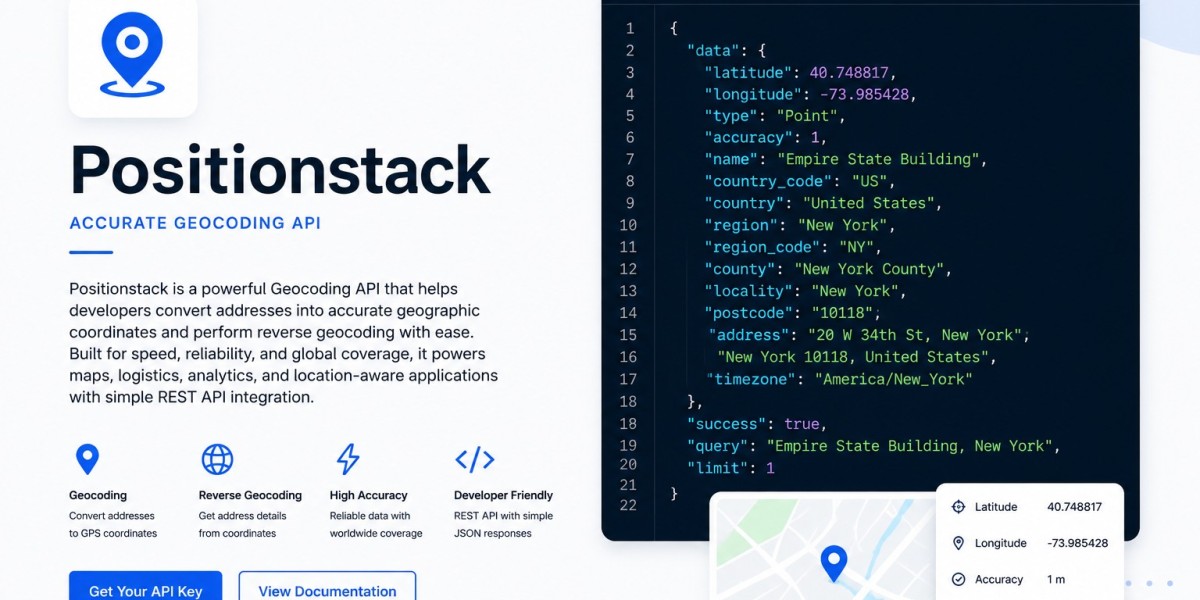
curl "http://api.positionstack.com/v1/forward?access_key=YOUR_ACCESS_KEY&query=350 Fifth Avenue, New York"{"data": [{"latitude": 40.7484, "longitude": -73.9857, "label": "350 5th Ave, New York, NY 10118, United States"}]}A structured, standardized address plus coordinates in a single response.
Pairing Validation With a Store Locator
Address validation and location search often show up together in the same product. A store locator API built on the same geocoding foundation lets customers search for the nearest physical location by typing an address, while the same underlying service validates that the address they typed is real in the first place.
What to Check Before Choosing a Provider
Global address format support rather than just US or European formatting, since international address structures vary significantly. Batch validation for cleaning existing customer databases in one pass rather than one record at a time. Response speed fast enough for live checkout validation, where any noticeable lag creates friction at the worst possible moment in the funnel.
positionstack handles global address validation and geocoding together, with batch processing support for cleaning up existing address lists and response times fast enough for live checkout flows.
Final Thoughts
Bad address data is one of the more invisible costs in most businesses, since it rarely shows up as a single obvious failure and instead accumulates as delivery delays, support tickets, and quiet churn. Validating at the point of entry is far cheaper than fixing a failed delivery after the fact.
Stop bad addresses before they cost you a delivery
Validate and standardize addresses worldwide, free to start.
Try positionstack now →https://apilayer.com/products/positionstack/