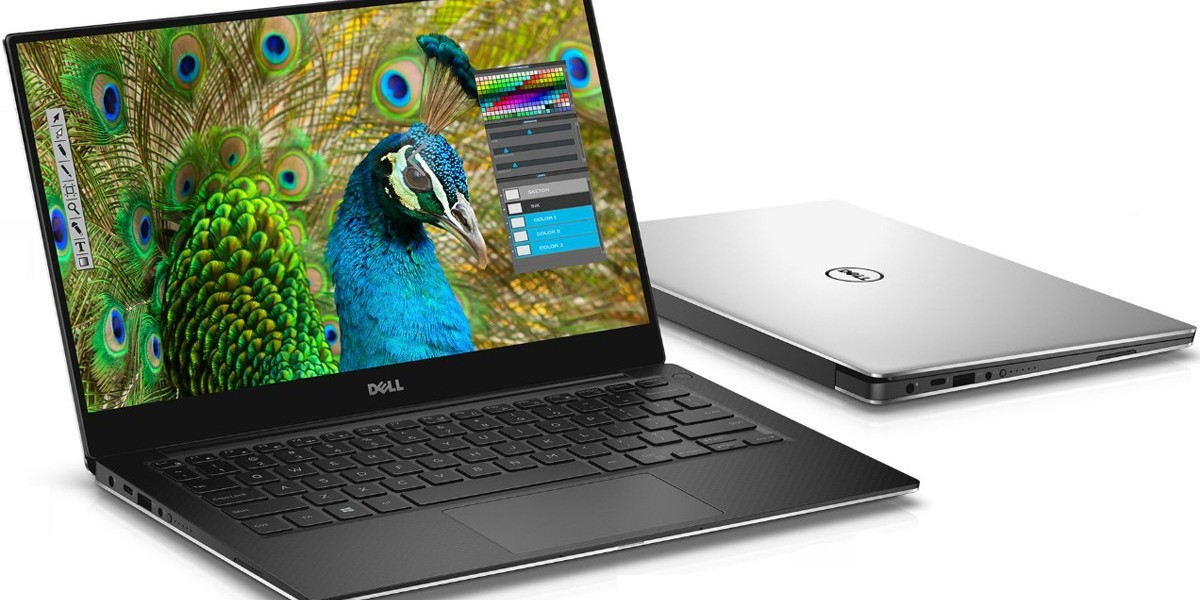

Dell XPS 13 9350 Review: Is Dell's Lunar Lake Ultrabook Still Worth Buying?
If you've been shopping for a premium Windows ultrabook lately, chances are the Dell XPS 13 9350 has crossed your radar. It's the latest chapter in one of the most recognizable laptop lines in the industry, and it arrives with Intel's efficiency-focused Lunar Lake processors under the hood. But is it actually a smart buy in 2026, or has Dell's controversial design finally caught up with it?
In this article, you'll learn exactly what the XPS 13 9350 gets right, where it falls short, how it compares to very different machines like the Lenovo ThinkPad P1 Gen 6 mobile workstation and the ASUS ROG Flow Z13, and whether it deserves a spot on your shortlist. We'll cover performance benchmarks, battery life, display quality, design quirks, pricing, and real buyer questions so by the end, you'll have a clear picture of who this laptop is actually for.
What Is the Dell XPS 13 9350?
The XPS 13 9350 is Dell's 2024/2025 refresh of its flagship 13-inch ultrabook, built around Intel's Core Ultra 200V "Lunar Lake" processors. It keeps the minimalist, zero-lattice keyboard design that Dell introduced a few years ago with the XPS 13 Plus, along with a capacitive touch function row and a borderless, seamless-looking trackpad.
Configurations range from a Core Ultra 7 256V with 16GB of RAM and a 512GB SSD, up to a Core Ultra 7 258V with 32GB of RAM, a 1TB SSD, and a 2.8K OLED touch display. <cite index="3-1">The base model, priced around $1,400, pairs the Core Ultra 7 256V with 16GB of RAM, a 512GB SSD, and a 13.3-inch FHD+ IPS display, while the top configuration runs about $2,000 with a Core Ultra 7 258V, 32GB of RAM, a 1TB SSD, and a 2.8K OLED panel.</cite>
Key Specifications at a Glance
Processor: Intel Core Ultra 7 256V or 258V (Lunar Lake / Core Ultra Series 2)
Display: 13.3-inch FHD+ IPS or 2.8K OLED touchscreen options
Memory: Up to 32GB, non-upgradeable (soldered)
Storage: Up to 1TB SSD
Ports: Two Thunderbolt 4 USB-C ports, no headphone jack on most configurations
Connectivity: Wi-Fi 7 and Bluetooth 5.4
Security: IR webcam with Windows Hello, fingerprint reader in the power button
Performance: How Fast Is Lunar Lake, Really?
Lunar Lake was designed by Intel primarily to close the battery-life gap with Apple Silicon and Qualcomm's Snapdragon X chips, not to chase raw multi-core speed records and the benchmarks reflect that trade-off.
On <cite index="1-1">Geekbench 6, the Dell XPS 13 9350 scored 2,660 in single-core and 10,486 in multi-core testing, landing slightly behind the ASUS Zenbook S14 running the same chip</cite>. Where it does shine is storage speed: <cite index="1-1">the XPS 13 9350 was the fastest laptop in its test group on a file transfer benchmark, copying 25GB of data at 1,533.85 MBps</cite>, beating out both the Snapdragon-powered XPS 13 and its competitors.
Multi-threaded workloads are where Lunar Lake shows its limits. <cite index="1-1">In a Handbrake video transcoding test, the XPS 13 9350 took 8 minutes and 35 seconds to convert a 4K clip down to 1080p</cite>, respectable, but not class-leading for anyone doing heavy video editing or 3D rendering regularly.
For everyday use web browsing, office work, streaming, light photo editing this is more than enough horsepower. For sustained creative or engineering workloads, you'll want to look at a different class of machine entirely, which is where the Lenovo ThinkPad P1 Gen 6 mobile workstation enters the conversation.
Battery Life and Efficiency
This is where the XPS 13 9350 earns its keep. <cite index="2-1">Reviewers consistently point to impressive battery life, impactful speakers, and a vivid Tandem OLED display option as the laptop's biggest strengths</cite>. <cite index="3-1">Dell's use of the Lunar Lake chipset is specifically credited with delivering markedly better battery life than the previous XPS 13 generation</cite>.
Part of that efficiency comes from the chip's onboard AI hardware. <cite index="3-1">The Lunar Lake NPU delivers 45 tera operations per second (TOPS), comfortably clearing Microsoft's 40 TOPS threshold for Copilot+ PC certification</cite>, which means on-device AI features run without leaning heavily on the battery or a cloud connection.
Display Options: IPS vs. OLED
Dell offers two very different display experiences on the same chassis, and the difference matters more than usual.
The entry-level FHD+ IPS panel has drawn criticism. <cite index="2-1">One reviewer described the base LCD as serviceable but unremarkable, noting it wasn't a particularly enjoyable panel to look at</cite>, and pointed out that this echoes weak color performance seen on a similar panel in the prior-generation Snapdragon model.
At the top end, though, Dell brought something genuinely new to the category. <cite index="4-1">The XPS 13 lays claim to a world first with tandem OLED technology, offering a pin-sharp 2,880 x 1,800 resolution touchscreen</cite>. If display quality matters to you for photo editing, video streaming, or just day-to-day visual comfort the extra cost for the OLED configuration is worth strong consideration.