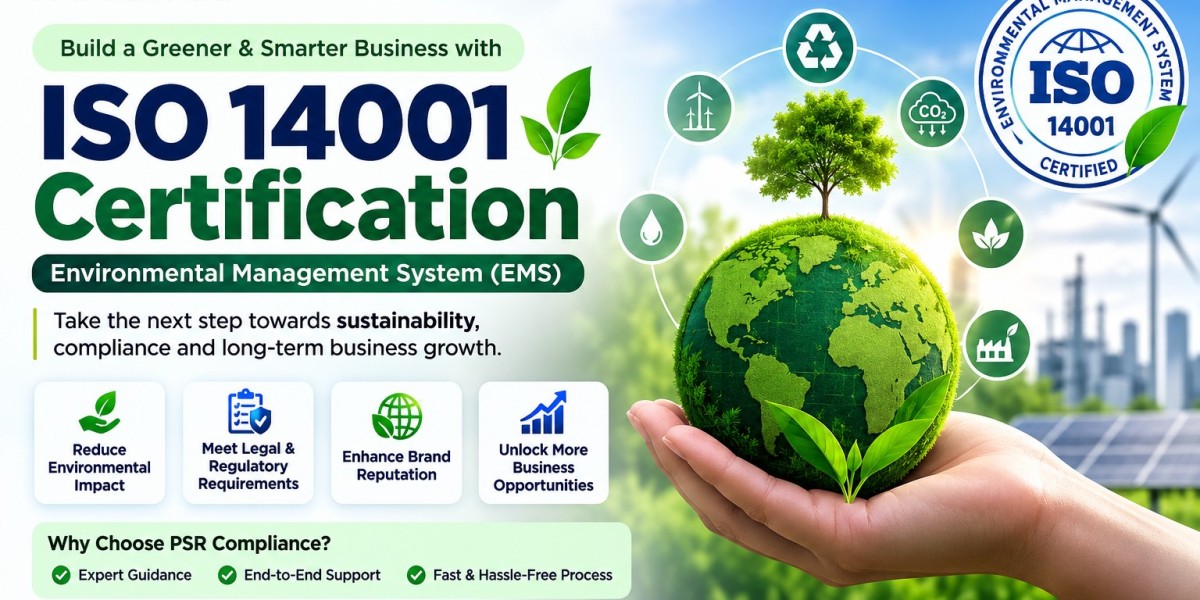

Businesses today are under increasing pressure to reduce pollution, use natural resources responsibly, and comply with environmental laws. Whether you are a manufacturer, exporter, construction company, pharmaceutical business, or service provider, customers and government authorities expect organizations to operate responsibly. In many industries, environmental compliance has become an important factor in winning contracts and building long-term trust.
This is where ISO 14001 Certification becomes valuable.
ISO 14001 is an internationally recognized standard that helps organizations establish an Environmental Management System (EMS). It provides a systematic approach to identifying environmental risks, reducing waste, improving resource efficiency, and meeting legal obligations. Instead of focusing only on solving environmental problems after they occur, ISO 14001 encourages businesses to prevent them through proper planning and continuous improvement.
If you're planning to apply for ISO 14001 Certification in India, this guide explains everything in simple language. In this first part, you'll learn what ISO 14001 is, why it matters in 2026, who should apply, and how it can benefit your business.
What is ISO 14001 Certification?
ISO 14001 Certification is an international standard published by the International Organization for Standardization (ISO) for implementing an Environmental Management System (EMS).
An EMS helps organizations identify how their activities affect the environment and provides a framework to reduce those impacts while improving operational performance. The standard does not prescribe fixed environmental targets. Instead, it helps each organization create a system based on its own activities, risks, and legal obligations.
The latest version emphasizes continuous improvement, leadership involvement, risk management, and compliance with environmental regulations. Organizations that successfully implement the requirements can obtain certification from an accredited certification body after an independent audit.
Simply put, ISO 14001 helps businesses become more environmentally responsible while improving efficiency and strengthening customer confidence.
What is an Environmental Management System (EMS)?
An Environmental Management System (EMS) is a structured framework that enables an organization to manage its environmental responsibilities effectively.
Instead of reacting to environmental issues after they arise, an EMS helps businesses identify risks in advance and implement controls to minimize their impact.
A well-designed EMS generally includes:
Environmental policy
Identification of environmental aspects and impacts
Legal compliance management
Environmental objectives
Operational controls
Waste management procedures
Employee training and awareness
Internal audits
Performance monitoring
Corrective actions and continual improvement
By implementing an EMS, businesses can improve environmental performance while reducing unnecessary operational costs.
Why is ISO 14001 Important in 2026?
Environmental sustainability is no longer just a corporate responsibility—it is a business necessity.
Customers, investors, multinational companies, and government departments increasingly prefer working with organizations that can demonstrate responsible environmental practices. At the same time, environmental regulations continue to evolve, making systematic compliance more important than ever.
Implementing ISO 14001 Certification helps organizations:
Improve environmental performance
Reduce operational waste
Optimize energy and resource consumption
Meet legal and regulatory requirements
Strengthen brand reputation
Increase customer confidence
Improve supply chain opportunities
Support long-term business sustainability
For many exporters and manufacturers, ISO 14001 has become a competitive advantage when dealing with international clients who expect suppliers to follow globally accepted environmental management practices.
Who Should Apply for ISO 14001 Certification?
One of the biggest advantages of ISO 14001 is that it is suitable for organizations of all sizes.
Whether your company has 10 employees or 10,000, the Environmental Management System can be adapted to your operations.
Industries that commonly apply include:
Manufacturing companies
Pharmaceutical industries
Automobile manufacturers
Chemical industries
Food processing units
Construction companies
Engineering firms
Textile manufacturers
Logistics companies
Warehousing businesses
Hospitals
Hotels
Educational institutions
IT companies
Infrastructure businesses
Government organizations
Exporters and importers
Even service-based businesses can benefit by improving resource efficiency and demonstrating environmental responsibility to customers.
Key Objectives of ISO 14001 Certification
The primary goal of ISO 14001 Certification is to help organizations create an effective Environmental Management System that supports continual improvement.
Its objectives include:
Reducing environmental pollution
Preventing unnecessary waste
Improving energy efficiency
Conserving water and natural resources
Ensuring legal compliance
Managing environmental risks
Increasing employee awareness
Building customer trust
Supporting sustainable business growth
Organizations that achieve these objectives often experience improved operational performance alongside stronger environmental management.
How Does ISO 14001 Work?
ISO 14001 follows the internationally recognized Plan-Do-Check-Act (PDCA) methodology.
Plan
Identify environmental aspects, legal requirements, risks, opportunities, and environmental objectives.
Do
Implement policies, allocate resources, train employees, and establish operational controls.
Check
Monitor environmental performance, conduct internal audits, and evaluate compliance.
Act
Take corrective actions, review performance, and continuously improve the Environmental Management System.
This cycle ensures that environmental performance continues to improve over time rather than remaining static.
Benefits of ISO 14001 Certification
Organizations implementing ISO 14001 Certification can experience several long-term benefits.
Better Environmental Performance
Businesses can identify environmental impacts and implement measures to reduce pollution, emissions, and waste generation.
Improved Legal Compliance
The Environmental Management System helps organizations monitor and comply with applicable environmental regulations, reducing compliance risks.
Reduced Operating Costs
Efficient use of electricity, water, raw materials, and waste management can lower operational expenses over time.
Increased Customer Confidence
Many customers prefer working with organizations that follow internationally recognized environmental standards.
Better Business Opportunities
ISO 14001 Certification can improve eligibility for government tenders, exports, and contracts with multinational companies.
Enhanced Brand Reputation
A certified Environmental Management System demonstrates that the organization values sustainability and responsible business practices.
ISO 14001 Requirements
To obtain ISO 14001 Certification, an organization must establish and maintain an effective Environmental Management System (EMS) that meets the requirements of the ISO 14001 standard. The focus is on identifying environmental risks, complying with legal requirements, and continuously improving environmental performance.
The key ISO 14001 Requirements include:
Defining an Environmental Policy
Identifying environmental aspects and impacts
Understanding legal and compliance obligations
Setting environmental objectives
Allocating resources and responsibilities
Employee training and awareness
Operational planning and control
Emergency preparedness and response
Monitoring environmental performance
Conducting internal audits
Management review meetings
Continual improvement through corrective actions
These requirements help organizations build a systematic approach to environmental management rather than addressing issues only after they occur.
Documents Required for ISO 14001 Certification
The exact documentation depends on the size and nature of the organization. However, most businesses are required to maintain the following documents:
Certificate of Incorporation or Business Registration
GST Registration (if applicable)
PAN Card of the Business
Organization Chart
Scope of Business Activities
Environmental Policy
Environmental Objectives
List of Applicable Environmental Laws
Risk & Opportunity Assessment
Waste Management Procedure
Emergency Response Plan
Employee Training Records
Internal Audit Reports
Management Review Records
Corrective Action Reports
Keeping proper documentation helps make the certification audit smoother and demonstrates that the Environmental Management System is functioning effectively.
Step-by-Step ISO 14001 Certification Process
Getting ISO 14001 Certification in India involves a structured process. While the exact timeline may vary depending on the organization, the overall process generally includes the following steps:
Step 1: Understand Business Activities
The organization first identifies its environmental aspects, legal obligations, and the scope of certification.
Step 2: Gap Analysis
A detailed review is conducted to compare existing practices with ISO 14001 Requirements. Any gaps are identified and improvement plans are prepared.
Step 3: Develop the Environmental Management System
Policies, procedures, objectives, risk assessments, operational controls, and documentation are prepared based on the organization's activities.
Step 4: Employee Training
Employees are trained on environmental responsibilities, operational controls, and emergency procedures to ensure successful implementation.
Step 5: Internal Audit
Before the certification audit, an internal audit is carried out to identify any non-conformities and implement corrective actions.
Step 6: Certification Audit
An accredited certification body conducts Stage 1 and Stage 2 audits to verify compliance with the ISO 14001 Standard.
Step 7: Issue of ISO 14001 Certificate
Once all requirements are successfully met, the certification body issues the ISO 14001 Certification, confirming that the organization complies with the international standard.
How Much Does ISO 14001 Certification Cost in India?
The cost of ISO 14001 Certification in India depends on several factors, including:
Size of the organization
Number of employees
Number of business locations
Business activities
Scope of certification
Complexity of operations
Certification body selected
Because every organization has different requirements, there is no fixed government fee. Businesses should obtain a customized quotation based on their specific needs.
Validity of ISO 14001 Certification
An ISO 14001 Certificate is generally valid for three years, subject to successful surveillance audits conducted periodically by the certification body.
Organizations must continue following the Environmental Management System throughout the validity period to maintain certification.
Common Mistakes to Avoid During ISO 14001 Certification
Many businesses face delays because they overlook important requirements during implementation.
Some common mistakes include:
Incomplete documentation
Lack of employee awareness
Ignoring legal compliance obligations
Poor environmental risk assessment
Missing internal audits
Failure to monitor environmental objectives
Delayed corrective actions
Lack of management involvement
Avoiding these mistakes helps organizations achieve certification more efficiently and maintain compliance over the long term.
Why Choose PSR Compliance for ISO 14001 Certification?
Obtaining ISO 14001 Certification requires proper planning, documentation, implementation, and audit support. At PSR Compliance, our team assists businesses throughout the certification journey with practical guidance and professional support.
Our services include:
Initial consultation and eligibility assessment
Gap analysis and documentation support
Environmental Management System implementation guidance
Assistance during certification audits
Coordination with accredited certification bodies
Post-certification support and surveillance audit guidance
Whether you are a startup, MSME, manufacturer, exporter, or large enterprise, we help simplify the certification process and ensure timely completion.
Need Expert Assistance?
? Call: +91 8796104190
? Email: support@psrcompliance.com
? Website: https://www.psrcompliance.com
Conclusion
Implementing ISO 14001 Certification is more than obtaining an internationally recognized certificate—it is a strategic investment in your organization's future. By establishing an effective Environmental Management System, businesses can improve environmental performance, reduce operational costs, strengthen legal compliance, and build greater trust among customers and stakeholders.
As environmental expectations continue to grow across industries, organizations that adopt ISO 14001 are better positioned to compete in domestic and international markets. Whether you're an MSME, manufacturer, exporter, or service provider, adopting this standard demonstrates your commitment to sustainable and responsible business practices.
If you're planning to obtain ISO 14001 Certification in India, professional guidance can help streamline the process and ensure successful certification.
Frequently Asked Questions (FAQs)
1. What is ISO 14001 Certification?
ISO 14001 Certification is an international standard for implementing an Environmental Management System (EMS) that helps organizations manage environmental responsibilities effectively.
2. Who can apply for ISO 14001 Certification?
Any organization, regardless of size or industry, can apply for ISO 14001 Certification, including manufacturers, exporters, service providers, hospitals, educational institutions, and IT companies.
3. Is ISO 14001 Certification mandatory in India?
No, ISO 14001 Certification is generally voluntary. However, many customers, government tenders, and multinational companies prefer suppliers with this certification.
4. How long does it take to get ISO 14001 Certification?
The timeline depends on the organization's size, readiness, and documentation. Most businesses complete the process within a few weeks to a few months.
5. What is the validity of ISO 14001 Certification?
The certificate is generally valid for three years, subject to successful surveillance audits.
6. What documents are required for ISO 14001 Certification?
Typical documents include business registration details, environmental policy, EMS documentation, internal audit reports, employee training records, and management review records.