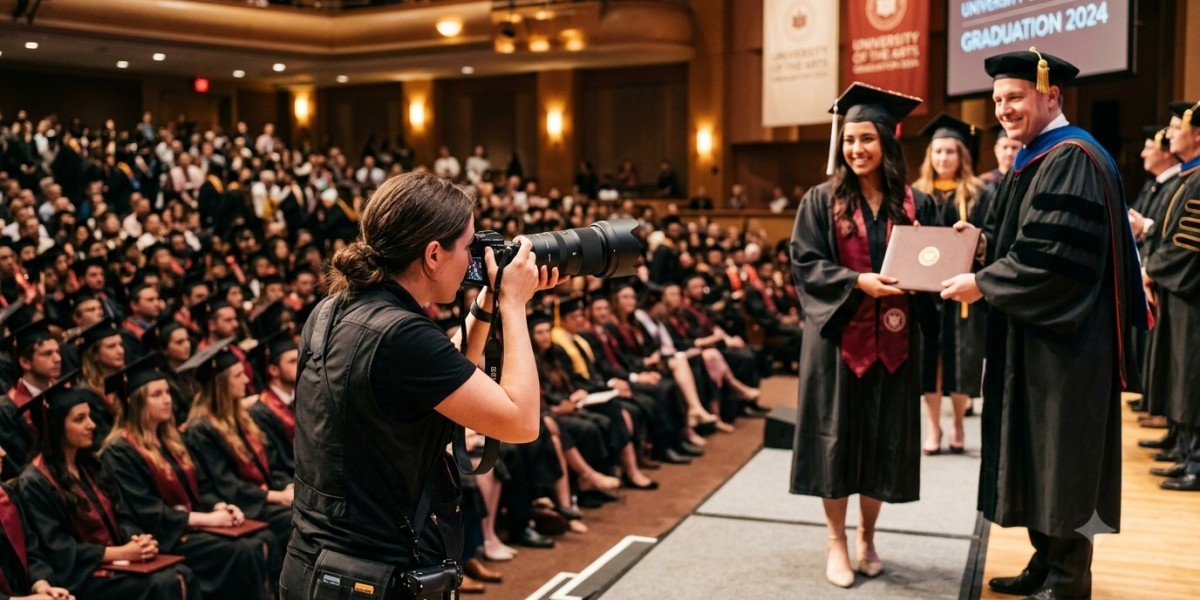

Indoor school and university events are filled with memorable moments—graduation ceremonies, annual functions, debates, award distributions, cultural performances, science exhibitions, and convocation celebrations. While these events offer countless photo opportunities, they also present some of the most challenging lighting conditions photographers face.
Dim auditoriums, stage spotlights, fast-moving performers, and limited shooting positions can make it difficult to capture sharp, well-exposed images. That's why choosing the right lens is often more important than choosing the latest camera body.
Whether you're photographing a school annual day, a university seminar, or an indoor sports event, selecting a lens that matches the venue and your shooting style can significantly improve your results.
This guide explains which lenses work best for indoor educational events, what features matter most, and how to choose the right option for your photography needs.
Why Indoor Events Are More Challenging Than Outdoor Photography
Unlike outdoor photography, indoor venues usually provide limited and inconsistent lighting.
Common challenges include:
Low ambient light
Mixed LED and tungsten lighting
Fast-moving students and performers
Limited room to move around
Crowded seating arrangements
Stage spotlights creating high contrast
A lens that performs well in these situations helps maintain image quality without relying on excessively high ISO settings.
What Makes a Good Lens for Indoor Events?
When choosing a lens for indoor photography, several characteristics are more important than simply having a long zoom range.
Look for lenses with:
A wide maximum aperture
Fast and accurate autofocus
Excellent sharpness
Good low-light performance
Flexible focal length
Comfortable weight for extended shooting
These features make it easier to photograph both stage performances and candid audience moments.
Why a Wide Aperture Matters
Indoor venues often don't allow the use of flash, especially during ceremonies, speeches, and performances.
A wider aperture such as F1.4, F1.8, or F2.8 allows more light to reach the camera sensor.
Benefits include:
Faster shutter speeds
Lower ISO settings
Cleaner images with less noise
Better subject separation
Faster autofocus performance
This is especially useful in auditoriums and lecture halls with dim lighting.
Prime Lens vs Zoom Lens
Both prime and zoom lenses work well for educational events, but each has different strengths.
The table below compares them.
Feature | Prime Lens | Zoom Lens |
Maximum Aperture | Wider (F1.2–F1.8) | Usually F2.8 |
Low-Light Performance | Excellent | Very Good |
Flexibility | Fixed focal length | Multiple focal lengths |
Subject Isolation | Outstanding | Excellent |
Lens Changes | May require multiple lenses | Less frequent |
Best For | Portraits and stage details | Complete event coverage |
If you're covering an entire event by yourself, a versatile zoom lens often provides the greatest flexibility.