
Introduction
If you've been shopping for a business laptop lately, you've probably run into the Dell Latitude 7350 and maybe gotten a little confused about what it actually is. That's fair. Dell has released more than one machine under this name over the years, and the company also reshuffled its entire laptop lineup in 2025, folding Latitude, XPS, and Inspiron into new "Dell," "Dell Pro," and "Dell Pro Max" branding.
This guide cuts through that confusion. We'll walk through what the current-generation Latitude 7350 actually offers, how it performs in real-world use, who it's built for, and how it stacks up against newer options like the Dell 16 Plus and the premium Dell Pro Max 16 Premium line. By the end, you'll know exactly whether this machine or one of its modern successors deserves a spot on your desk.
What Is the Dell Latitude 7350?
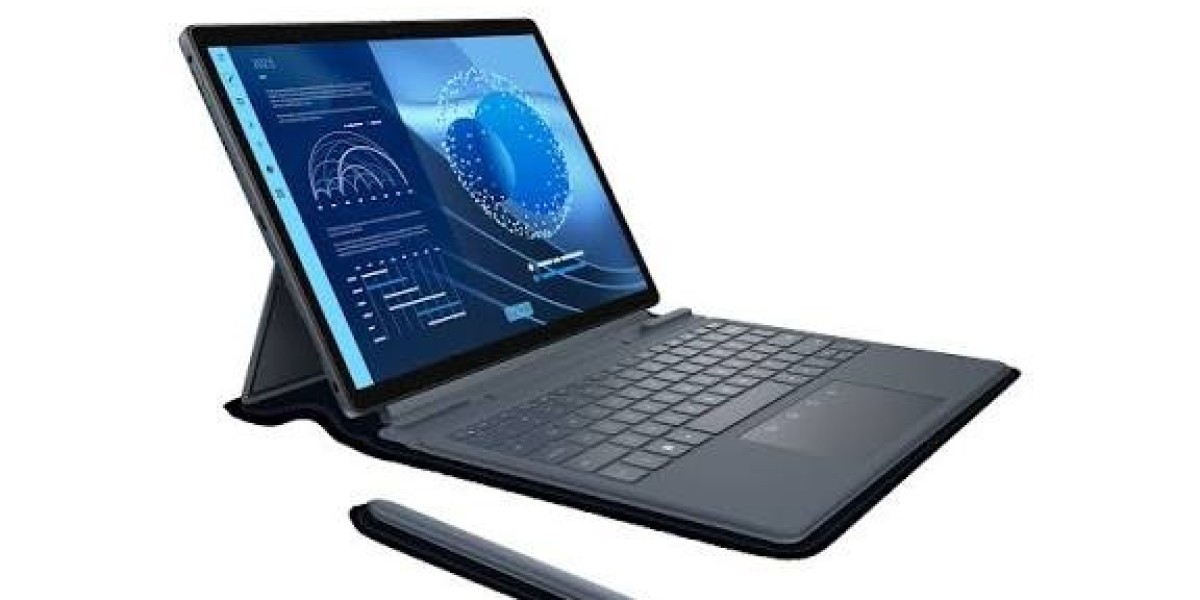
The modern Dell Latitude 7350 is a 13.3-inch business-class machine that Dell has offered in three distinct forms: a standard laptop, a 2-in-1 with a 360-degree hinge, and a detachable model with a separate keyboard and optional active pen. All three share a common design philosophy: keep the device light, keep it secure, and build it to survive life on the road.
Under the hood, the Latitude 7350 runs on Intel Core Ultra processors commonly configured with the Core Ultra 5 134U vPro or Core Ultra 7 options, both featuring 12-core designs with integrated NPUs for on-device AI processing. Most configurations pair the chip with 16GB of LPDDR5x memory running at 6400 MT/s and a PCIe Gen4 NVMe SSD starting at 256GB.
Key Specifications at a Glance
Display: 13.3-inch panel, with a 3K resolution option on the detachable model featuring ComfortView Plus low blue-light technology
Processor: Intel Core Ultra 5 or Ultra 7 (12-core, vPro available)
Memory: 16GB LPDDR5x 6400 MT/s (onboard, dual-channel)
Storage: 256GB–512GB M.2 2230 PCIe Gen4 NVMe SSD
Operating System: Windows 11 Pro
Battery Life: Up to 12 hours 27 minutes on the Ultralight variant; roughly 12 hours on the 2-in-1 and laptop versions
Connectivity: Wi-Fi 6E or Wi-Fi 7, dual Thunderbolt 4 ports
Security: Discrete TPM 2.0, fingerprint reader, optional vPro management
That combination of specs puts the 7350 squarely in the ultraportable business category closer to a travel companion than a desktop replacement.
Design and Build Quality
Dell built the Latitude 7350 to survive more than a desk job. The chassis is constructed with a magnesium alloy body made from 90% recycled magnesium, paired with a kickstand (on the detachable model) made from 75% recycled aluminum. The battery frame uses 90% recycled materials as well, and the battery itself incorporates 50% recycled cobalt a notable sustainability push that also helped the device earn ENERGY STAR certification and EPEAT Gold status.
Durability isn't just a marketing checkbox here. The detachable and 2-in-1 variants carry a Gorilla Glass display for scratch and dust resistance, along with a spill-resistant keyboard designed to survive the occasional coffee mishap. While Dell doesn't market every configuration with a full military-standard rating, the engineering lineage clearly traces back to Latitude's long-running reputation for rugged reliability in field and travel conditions.
Weight varies by configuration, but all three 7350 variants are designed to be genuinely portable something road warriors, consultants, and hybrid workers will appreciate after carrying a heavier machine for a full workday.
Performance in Real-World Use
Where the Latitude 7350 earns its keep is in everyday productivity work. The Core Ultra processors handle typical office workloads spreadsheets, video calls, browser tabs, and light content creation without breaking a sweat. The built-in NPU adds a layer of on-device AI capability that powers features like automatic camera framing, eye-gaze correction during video calls, and intelligent background blur, all without needing to send data to the cloud.
Independent testing on the Detachable variant found that Dell's thermal engineering allows the system to boost performance by a meaningful margin when docked in laptop mode, thanks to improved airflow and more aggressive thermal profiles. That's a useful distinction: if you frequently work in tablet mode, expect slightly more conservative performance than when the keyboard base is attached.
Battery life is a genuine strength. Real-world battery benchmarking on the Detachable model recorded close to ten hours of continuous use under moderate brightness settings solid, though it trails some competing 2-in-1 devices in Dell's own lineup, like the Latitude 9450, which pushed past 14 hours in similar testing.
Collaboration and Camera Features
The Detachable variant, in particular, was marketed as one of the most conferencing-friendly machines in its class. It ships with dual 8-megapixel HDR cameras and introduces what Dell calls a "Collaboration Touchpad" a touchpad with dedicated controls for Microsoft Teams and Zoom, letting users mute, raise hands, or manage calls without hunting through menus. For anyone in a hybrid or remote-heavy role, these small conveniences add up quickly.
Real-World Use Case: The Hybrid Consultant
Consider a management consultant who splits time between client sites, airports, and a home office. They need a machine light enough to carry all day, secure enough to handle sensitive client data, and reliable enough for back-to-back video calls. The Latitude 7350 Detachable fits this profile well: the tablet mode is useful for client-facing presentations and note-taking with the active pen, the keyboard dock handles report writing, and the Collaboration Touchpad simplifies the constant stream of Teams calls. The fingerprint reader and TPM 2.0 chip also satisfy typical corporate IT security requirements a common gatekeeping factor for enterprise deployments.
Dell Latitude 7350 vs. Dell 16 Plus
Here's where things get interesting for shoppers comparing options. The Dell 16 Plus isn't a business laptop in the traditional Latitude sense it's part of Dell's newer, consolidated consumer-and-prosumer lineup that emerged after the company retired the XPS, Inspiron, and Latitude names in 2025.
Feature | Dell Latitude 7350 | Dell 16 Plus |
Screen Size | 13.3" | 16" |
Target User | Business/enterprise | Creators, students, general use |
Processor Options | Intel Core Ultra (Meteor Lake) | Intel Core Ultra Series 2 or AMD Ryzen AI 300 |
Display Option | Up to 3K (detachable) | Up to 2.5K, 120Hz |
Portability | Higher (13" ultraportable) | Larger, heavier footprint |
Starting Price | ~$1,889+ | As low as $699–$799 on sale |
Business Features | vPro, TPM, fingerprint reader | Consumer-focused, less enterprise management |
In short: if you need a compact, security-hardened machine for enterprise deployment, the Latitude 7350 remains the stronger fit. If you want a bigger screen for creative work, gaming-adjacent tasks, or general home use at a friendlier price, the Dell 16 Plus is worth a serious look especially given its access to Intel's latest Lunar Lake silicon at aggressive discount pricing.