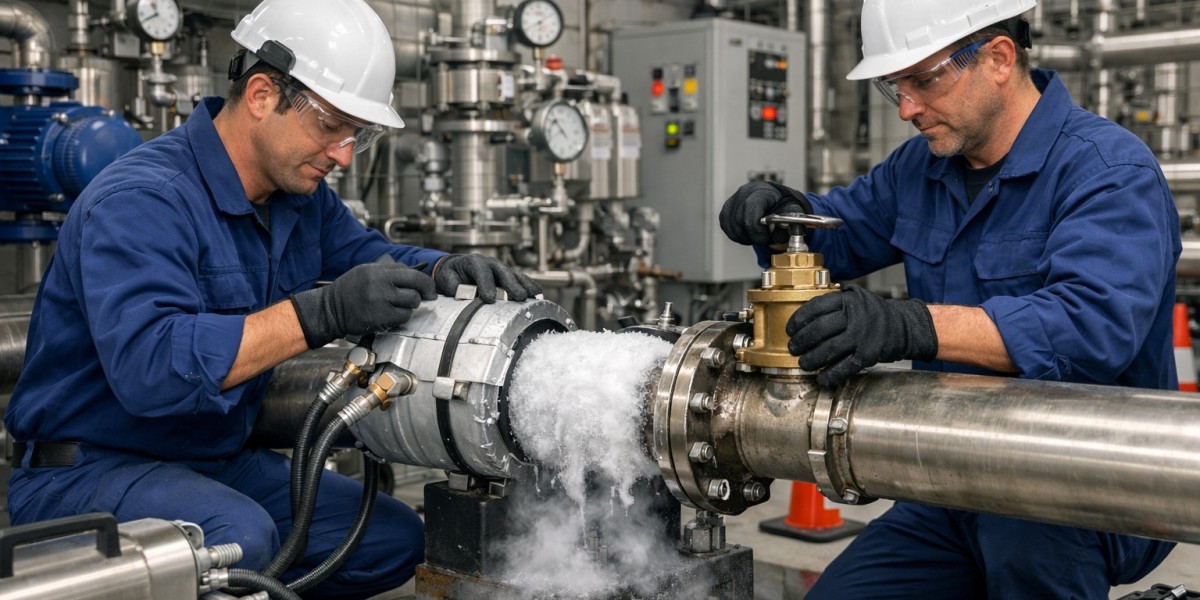

Many buildings and industrial facilities need valve replacement while keeping the water system active. Pipe freezing services in Dubai provide a practical way to complete this work without draining the entire pipeline. The process creates a temporary ice plug inside the pipe, which blocks water flow only in the required section. This allows technicians to replace a faulty valve while reducing water loss and avoiding unnecessary interruption to the system.
What Is Pipe Freezing?
Pipe freezing is a maintenance method used to stop liquid flow in a specific part of a pipe. Special freezing equipment cools the outside of the pipe until the water inside forms a solid ice plug. This frozen section acts as a temporary barrier and holds back the water while maintenance work is carried out.
After the repair is complete, the freezing equipment is removed. The ice melts naturally, and water flow returns without changing the normal operation of the pipeline. This method is commonly used in water systems where shutting down the complete network is difficult.
Why Valve Replacement Can Be Difficult
A damaged or old valve should be replaced before it causes bigger problems. In many buildings, replacing a valve usually requires draining a large amount of water from the system. This process can take time and may interrupt daily activities.
Large commercial buildings, hotels, hospitals, factories, and office buildings often depend on continuous water supply. Emptying the whole system can increase maintenance time and create extra work. Pipe freezing helps solve this problem by isolating only the section where the valve needs replacement.
How Pipe Freezing Supports Valve Replacement
The process starts by checking the pipe material, size, water temperature, and flow conditions. After the inspection, technicians install freezing jackets around the selected pipe section.
A cooling agent passes through the freezing equipment and slowly lowers the pipe temperature. Once a strong ice plug forms inside the pipe, the water flow stops in that section. The damaged valve can then be removed safely and replaced with a new one.
After the new valve is installed and tested, the freezing equipment is removed. The ice melts naturally, allowing the water to flow again through the system.
Main Benefits of This Method
Pipe freezing offers several practical advantages during valve replacement work.
One important benefit is that there is very little water loss because the water remains inside the pipeline. This saves water and reduces cleanup after maintenance.
Another advantage is that nearby areas can continue normal operations while the repair is taking place. There is also less time spent draining and refilling the entire system.
This method also reduces the need for additional isolation work. Since only one section of the pipe is frozen, maintenance becomes more focused and easier to manage.
Where Pipe Freezing Is Commonly Used
Pipe freezing is suitable for many different types of buildings and facilities. It is often used in commercial buildings where water systems must remain available during maintenance.
Industrial plants also use this method because production areas often depend on continuous water supply. Hotels and residential buildings can benefit when valve replacement is needed without affecting other occupants.
Educational institutions, healthcare facilities, shopping centres, and office complexes may also use pipe freezing when replacing valves in active water systems.
Safety Steps During Pipe Freezing
Proper planning is important before starting any pipe freezing work. Technicians first inspect the pipeline to confirm that freezing is suitable for the system.
The condition of the pipe, water pressure, and surrounding environment are carefully checked. During freezing, the ice plug is monitored to make sure it remains stable throughout the valve replacement process.
Technicians also use suitable tools and protective equipment while working. Once the new valve is installed, the system is checked carefully before normal water flow is restored.
When Pipe Freezing Is the Right Choice
Pipe freezing is useful when draining the complete system is not practical. It works well during planned maintenance, emergency valve replacement, and repair work in occupied buildings.
The method is especially helpful when only one valve needs replacement while the rest of the water system continues operating normally. It can also reduce maintenance time compared with traditional draining methods.
Each project should be assessed individually because pipe size, liquid type, and operating conditions all affect whether pipe freezing is suitable.
Understanding the Process Makes Maintenance Easier
Learning how pipe freezing works helps building owners and maintenance teams understand why it is widely used for valve replacement. Instead of draining long sections of pipe, technicians create a temporary ice plug that allows safe repairs with limited water loss. This practical method supports efficient maintenance while protecting the existing water supply system. For many maintenance projects, Pipe freezing services in Dubai provide an effective solution for replacing valves without unnecessary water loss.