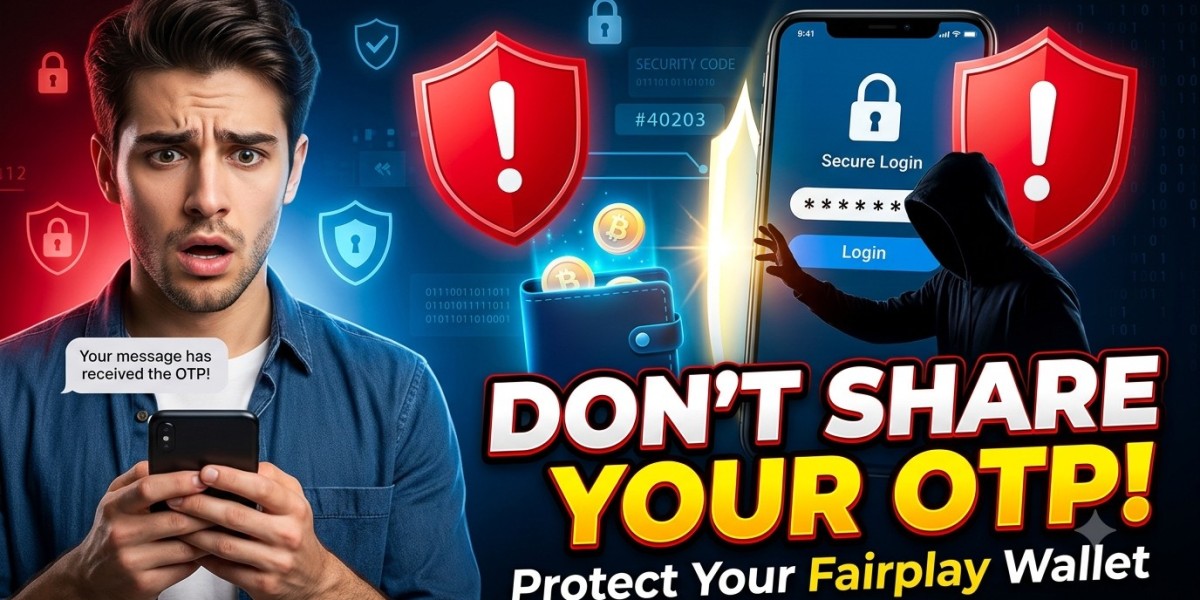

Sharing your Fairplay login OTP gives another person the chance to access your account during the verification process. A one-time password is the final security step that confirms your identity. If someone else receives that code, they can complete the login attempt and potentially gain access to your wallet.
Many account security problems begin with a simple mistake. Users trust an unknown caller, reply to a fake message, or believe a promise of quick rewards. Understanding how OTP fraud works helps you protect your account and keep your balance safe.
What Is a Fairplay Login OTP?
A Fairplay login OTP is a one-time password sent to your registered mobile number or email to verify your identity.
The code is valid for a short time and works for only one login session. After you enter it successfully, the system confirms that the account belongs to you.
An OTP helps protect your account by:
Confirming your identity.
Preventing unauthorized logins.
Supporting password recovery.
Securing new device verification.
Adding an extra layer of account protection.
Without the correct OTP, a login request usually cannot be completed.
Why Is the OTP So Important?
The OTP is the final security checkpoint before account access is granted.
Even if someone learns your password, they often cannot finish the login process without the verification code. That is why scammers try so hard to obtain it.
Keeping your OTP private protects:
Your wallet balance.
Your account details.
Your transaction history.
Your registered contact information.
Your login security.
A few seconds of caution can prevent a much bigger problem later.
How Do OTP Scams Work?
Most OTP scams rely on trust rather than technology.
Fraudsters contact users through phone calls, text messages, or chat applications. They pretend to help with login problems, bonus claims, account verification, or withdrawal requests.
Common scam situations include:
Someone claiming to be customer support.
Messages offering exclusive rewards.
Calls requesting account verification.
Fake login assistance.
Alerts claiming your account will be blocked.
The conversation usually ends with one request: "Please share your OTP."
What Happens If You Share Your OTP?
Sharing your OTP allows another person to complete the login verification process.
Once verification succeeds, unauthorized actions become easier if the login attempt is still active.
Possible consequences include:
Unauthorized account access.
Changes to account settings.
Password reset attempts.
Access to wallet information.
Temporary account restrictions after suspicious activity.
Quick action is essential if you believe your OTP has been exposed.
Five Signs Someone Is Trying to Steal Your OTP
Recognizing common warning signs helps you avoid fraud.
Watch for these situations:
1. Someone Asks for Your OTP
Your OTP is personal and should never be shared.
No genuine verification process requires you to disclose your one-time password to another person.
2. You Receive an Urgent Message
Fraudsters often create panic to force quick decisions.
Messages may claim your account will be suspended within minutes unless you complete immediate verification.
3. You Are Promised Guaranteed Rewards
Unrealistic bonus offers are a common way to gain your trust.
Offers such as guaranteed profits, instant cashback, or unlimited bonus credits deserve extra caution.
4. You Receive an Unexpected Verification Request
An OTP you did not request can indicate that someone is trying to access your account.
Do not share the code with anyone. Instead, review your account activity and change your password if necessary.
5. Someone Requests Personal Information
Requests for passwords, OTPs, or banking details are serious warning signs.
Protect all confidential information, even if the request appears genuine.
What Should You Do If You Shared Your OTP?
Immediate action reduces the risk of unauthorized account activity.
Follow these steps without delay:
Change your Fairplay password.
Complete another secure login.
Review recent account activity.
Verify your registered mobile number and email.
Check your wallet balance.
Watch for unexpected account changes.
Responding quickly improves the chances of securing your account before further activity occurs.
Best Practices to Keep Your Fairplay Account Safe
Simple security habits protect your account every day.
Follow this checklist:
Keep your OTP private.
Use a strong and unique password.
Update your password regularly.
Log in only from trusted devices.
Keep your registered mobile number active.
Install the latest Fairplay app version.
Log out after using shared devices.
Review account notifications regularly.
These habits strengthen your account security and reduce unnecessary risks.
Common Myths About OTP Security
Understanding the facts helps you avoid costly mistakes.
Myth: Customer support needs my OTP.
Fact: Genuine account verification does not require you to reveal your OTP to another person.
Myth: An expired OTP is safe to share.
Fact: Every OTP should remain private, whether it is active or expired.
Myth: Only large account balances are targeted.
Fact: Fraud attempts can target any account regardless of wallet size.
Myth: Sharing an OTP once cannot cause problems.
Fact: A single shared OTP can be enough to complete an unauthorized login session.
Frequently Asked Questions
Can someone access my Fairplay account with only my OTP?
An OTP is part of the login verification process and should always remain private.
Keeping both your password and OTP secure provides stronger protection for your account.
How long is a Fairplay OTP valid?
An OTP normally works for a limited time and only for one verification session.
If it expires, request a new code through the login process.
What should I do if I receive an OTP without requesting one?
Do not share the code and review your account immediately.
Unexpected verification messages can indicate an attempted login.
How often should I change my password?
Changing your password every few months improves account security.
Update it immediately if you notice unusual account activity.
Conclusion
Your Fairplay login OTP is one of the most important security tools protecting your wallet and account. Sharing that code with another person removes a critical layer of protection and increases the risk of unauthorized access. Keeping your OTP private, creating a strong password, reviewing account activity regularly, and recognizing common scam tactics will help protect your balance and provide a safer login experience every time you access your Fairplay account.