
You're ready to buy a men's leather biker vest. You've got your budget figured out, you know what style you want, and then you hit the material selection screen. Naked cowhide or buffalo leather? Both sound tough. Both look legitimate in the product photos. And the descriptions don't help much; they're either too technical or too vague to actually mean anything.
Here's the truth: these leathers perform differently, age differently, and suit different riders. One isn't universally better than the other, but one is almost certainly better for your specific riding habits and expectations.
This guide breaks down exactly what separates naked cowhide from buffalo leather in a men's leather motorcycle vest, what each material does well, where each falls short, and how to choose the right one without second-guessing yourself later.
What Naked Cowhide Actually Is
Naked cowhide is exactly what the name suggests, cowhide leather with minimal surface treatment or finish. The leather is tanned, dyed (usually drum-dyed so color penetrates through the hide), and left without a heavy protective topcoat or sealant.
This "naked" surface means the leather's natural texture, grain, and character stay visible. You can see the pores. You can feel the natural variations in the hide. Every piece of naked cowhide looks slightly different because the material isn't sanded smooth or artificially uniform.
For durable leather motorcycle vests for men, naked cowhide is popular because it breaks in beautifully, develops a rich patina over time, and feels more organic than heavily finished leathers. It's genuine, honest material that doesn't try to hide what it is.
What Buffalo Leather Brings to the Table
Buffalo leather comes from water buffalo, not American bison, an important distinction that trips people up. The hide is thicker and denser than cowhide, with a more pronounced grain pattern that creates visible texture across the surface.
Buffalo leather used in motorcycle gear is typically vegetable-tanned or chrome-tanned, then finished with oils that give it a distinctive look slightly pebbled, rich in color, and noticeably tougher to the touch than most cowhide.
In a men's leather motorcycle vest, buffalo leather signals durability and a rugged aesthetic that stands out immediately. It's the leather that looks like it can take serious abuse, because it can.
How They Feel and Move Differently
Touch is where you notice the difference first.
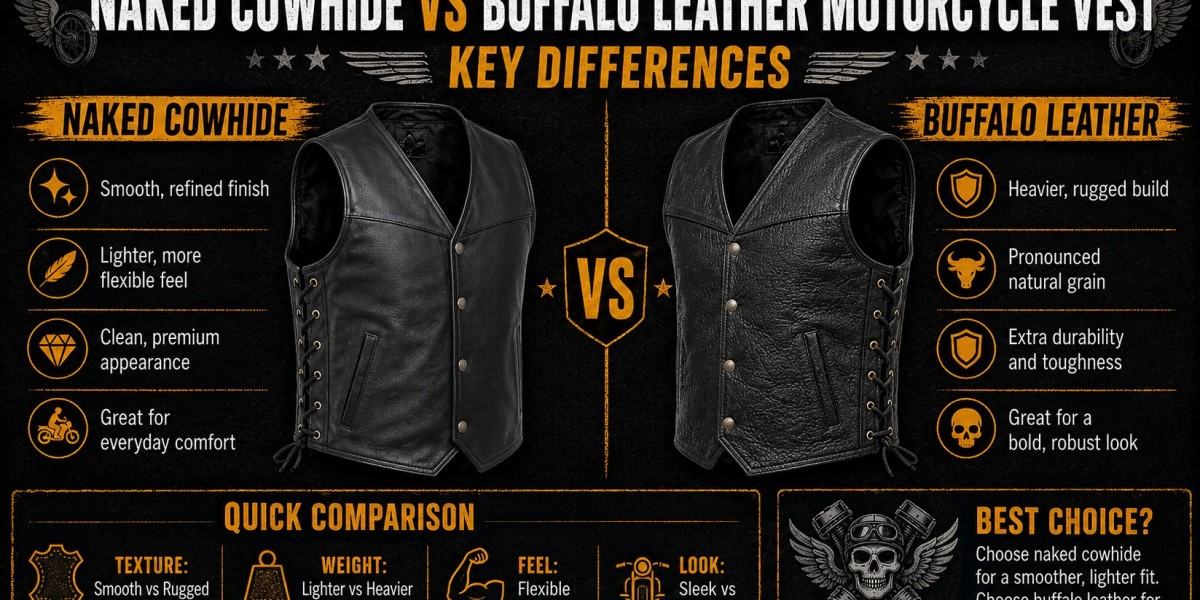
Naked cowhide feels smoother and more pliable right out of the box. It's supple without being soft, and it moves with your body relatively easily even before the break-in period. The surface has a slight give when you press into it.
Buffalo leather feels stiffer and more substantial. There's heft to it. When you pick up a buffalo vest, you feel the weight immediately, it's denser, thicker, and doesn't bend or flex as easily as naked cowhide. This isn't a flaw; it's the nature of the hide.
For riders, this translates directly to how the vest performs:
Naked cowhide conforms to your torso faster, requires less break-in, and feels less restrictive during the first few wears.
Buffalo leather takes longer to soften, but once broken in, it holds its shape better and provides a more structured fit that some riders prefer.
Neither feels bad. They just feel different, and your preference depends on whether you prioritize immediate comfort or long-term structure.
Durability: Which One Lasts Longer?
This is where buffalo leather earns its reputation.
Buffalo hide is thicker and denser than cowhide, which means it resists abrasion, tearing, and general wear more effectively. If you're the kind of rider who puts serious miles on your gear, rides daily, or needs a vest that can handle rough conditions without babying it, buffalo leather delivers.
Naked cowhide is durable, don't misunderstand, but it's not quite as bombproof as buffalo. It holds up well through years of normal riding, but heavy use in harsh conditions will show wear sooner. Scratches, scuffs, and surface damage are more visible on naked cowhide because there's no heavy finish protecting the surface.
That said, many riders actually prefer how naked cowhide ages. The wear becomes part of the character. Buffalo leather ages too, but it's less dramatic, the hide is so thick that surface-level wear doesn't penetrate as visibly.
Break-In Period and Comfort Over Time
Break-in is where naked cowhide wins clearly.
A summer riding men's leather biker vest made from naked cowhide typically feels comfortable within the first week or two of regular wear. The leather softens naturally with body heat and movement, conforming to your shoulders, torso, and riding position without much effort on your part.
Buffalo leather requires patience. The stiffness you feel on day one won't disappear overnight. Count on several weeks, sometimes a full month or more, of consistent wear before a buffalo vest truly breaks in. During that period, it can feel restrictive, especially across the shoulders and through the back panel.
However, once a buffalo leather vest breaks in, it stays broken in. The structure remains intact even after years of wear, which means the fit stays consistent rather than stretching out or losing shape over time.
Here's the breakdown:
Naked cowhide: Faster break-in, more immediate comfort, slight stretch over time.
Buffalo leather: Longer break-in, initial stiffness, holds shape permanently once broken in.
Weight Comparison: What You Feel on Long Rides
Buffalo leather is noticeably heavier. The thicker, denser hide adds weight that you'll feel during long rides, especially if you're a smaller-framed rider or you wear your vest for extended periods.
Naked cowhide vests are lighter without feeling flimsy. The difference might only be a pound or so, but after four hours on the highway, that difference becomes real. Your shoulders carry less load, and fatigue sets in slower.
For daily commuters or weekend cruisers, the weight difference is minor. For touring riders covering serious mileage, lighter naked cowhide often makes more sense.
Visual Differences: How They Look on the Bike
Naked cowhide has a cleaner, more refined appearance. The surface is smoother, the color is more uniform, and the overall look reads slightly more polished. It works well for riders who want classic biker style without overly aggressive texturing.
Buffalo leather looks rugged immediately. The pronounced grain, the thicker hide, and the texture give it a tougher, more weathered appearance even when brand new. If you want a vest that visually communicates durability and road-worn authenticity, buffalo delivers that naturally.
Both look right on a motorcycle. The choice comes down to whether you want sleek and classic (naked cowhide) or bold and rugged (buffalo).
Price: What You'll Actually Pay
Buffalo leather typically costs more than naked cowhide in comparable leather motorcycle vests for men. The hide is less common, thicker, and requires more material to produce a vest of the same size.
Expect to pay 15–30% more for a buffalo vest compared to a naked cowhide equivalent with similar construction and features. Whether that premium is worth it depends on your priorities, if extreme durability and unique texture matter, the cost makes sense. If you want solid protection and classic style at a better price, naked cowhide delivers without compromise.
Care and Maintenance Differences
Both leathers need regular conditioning to prevent drying and cracking, but they respond differently to care routines:
Naked Cowhide:
Absorbs conditioner quickly and shows results immediately
Benefits from conditioning every 2–3 months with regular use
Spot cleans easily with a damp cloth
More sensitive to stains and water marks initially
Develops patina naturally without much intervention
Buffalo Leather:
Takes longer to absorb conditioner due to density
Needs slightly more product to penetrate the thicker hide
Resists stains and water better naturally
Requires less frequent conditioning (every 3–4 months)
Ages more slowly and subtly
Neither is high-maintenance, but naked cowhide responds faster to care while buffalo leather is more forgiving if you occasionally forget.
Related Read: How to Clean Men's Leather Vests?
Which Leather Fits Your Riding Life?
Choose naked cowhide if:
You want faster break-in and immediate comfort
Lighter weight matters for long rides or smaller frames
You prefer a cleaner, more refined aesthetic
You like leather that develops visible character quickly
Budget is a consideration and you want quality at a better price
Choose buffalo leather if:
Maximum durability is your top priority
You ride daily in tough conditions
You want texture and visual presence
You don't mind a longer break-in period
You prefer gear that holds its structure permanently
The Honest Answer: Both Work
There's no wrong choice between naked cowhide and buffalo leather for a men's leather motorcycle vest. Both are genuine, quality materials used in legitimate riding gear. Both protect you. Both age well with proper care.
The right material is the one that matches your expectations for comfort, durability, aesthetics, and budget. Know what you value most, be realistic about how you ride, and choose accordingly.
Then wear it hard, break it in properly, and trust that whichever leather you picked will serve you well for years to come.