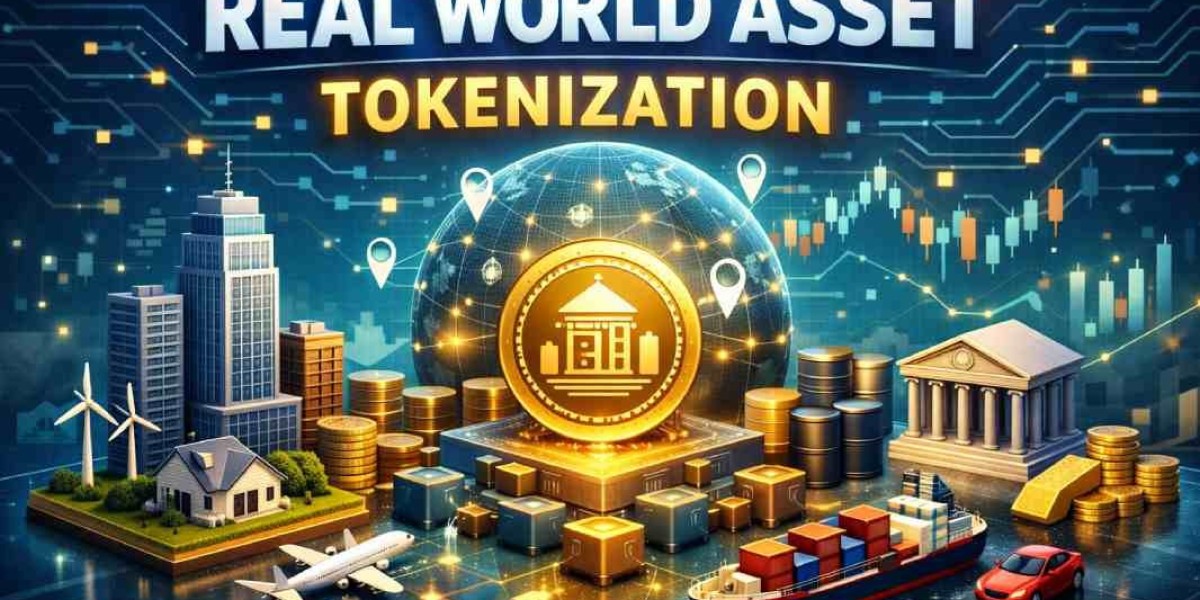

Investment markets are undergoing a significant transformation as blockchain technology continues to bridge the gap between traditional finance and digital assets. One of the most impactful developments in this transition is Real-World Asset (RWA) tokenization. By converting ownership rights in physical and financial assets into blockchain-based digital tokens, tokenization is creating new ways for investors to access, manage, and diversify their portfolios.
For long-term investors, the appeal of RWA tokenization extends beyond technological innovation. It introduces opportunities to gain exposure to previously inaccessible asset classes, improve portfolio diversification, enhance liquidity, and participate in emerging digital financial ecosystems. As institutional adoption grows and regulatory frameworks evolve, tokenized real-world assets are becoming an increasingly important consideration for long-term wealth-building strategies.
Understanding Real-World Asset Tokenization
Real-world asset tokenization refers to the process of representing ownership interests in tangible or traditional financial assets as digital tokens on a blockchain network. These assets may include:
- Real estate properties
- Commercial buildings
- Agricultural land
- Infrastructure projects
- Commodities such as gold and silver
- Bonds and debt instruments
- Private equity investments
- Investment funds
- Revenue-generating assets
Each token represents a specific ownership share or economic interest in the underlying asset. Smart contracts automate ownership management, compliance procedures, and financial distributions, creating a more efficient investment framework.
Why Long-Term Investors Are Paying Attention
Long-term investors typically focus on capital preservation, steady growth, diversification, and income generation. Traditional investment vehicles have historically provided these benefits, but they often come with limitations such as high entry barriers, limited liquidity, and restricted market access. Tokenized real-world assets address many of these challenges by creating more flexible and accessible investment structures. As a result, investors are increasingly evaluating how tokenization can complement long-term portfolio strategies.
1. Access to Previously Exclusive Asset Classes
One of the most significant opportunities created by RWA tokenization is broader access to high-value assets. Traditionally, investments in commercial real estate, private equity, infrastructure projects, and certain commodities often required substantial capital commitments. These opportunities were typically available only to institutional investors or high-net-worth individuals. Tokenization enables fractional ownership, allowing investors to participate with smaller amounts of capital. This expanded accessibility provides long-term investors with exposure to asset classes that were previously difficult to enter.
2. Enhanced Portfolio Diversification
Diversification remains one of the most effective methods for managing investment risk.
Tokenized real-world assets allow investors to spread capital across a wide range of asset categories, including:
- Residential real estate
- Commercial property
- Land investments
- Infrastructure developments
- Private credit
- Precious metals
- Alternative investment vehicles
This broader exposure can reduce portfolio concentration risk while providing access to multiple sources of long-term value creation.
3. Improved Liquidity for Traditionally Illiquid Assets
Many real-world assets have historically been difficult to buy or sell quickly. For example, real estate transactions can take weeks or months to complete, while private equity investments often require long holding periods before liquidity events occur. Tokenization creates the potential for secondary market trading, where ownership tokens can be exchanged more efficiently. While liquidity levels depend on market participation and regulatory structures, tokenization generally introduces greater flexibility compared to traditional ownership models. For long-term investors, this means maintaining exposure to valuable assets while potentially gaining more options for portfolio adjustments when needed.
4. Access to Passive Income Opportunities
Many real-world assets generate recurring income streams.
Examples include:
- Rental income from real estate
- Interest payments from debt instruments
- Revenue distributions from infrastructure assets
- Dividend-like payouts from certain investment structures
Tokenized assets can automate these distributions through smart contracts, providing investors with transparent and efficient income generation mechanisms. For long-term investors focused on wealth accumulation and cash flow, these income-producing opportunities can play an important role in portfolio construction.
5. Greater Transparency and Ownership Verification
Transparency is essential for long-term investment confidence. Blockchain technology records ownership, transactions, and financial activities on immutable ledgers. This creates a transparent and verifiable record of asset ownership and transaction history. Investors gain greater visibility into asset structures, ownership transfers, and financial distributions, reducing information asymmetry and improving trust. Enhanced transparency supports better decision-making and strengthens confidence in long-term investment positions.
6. Global Investment Opportunities
Traditional investment opportunities are often constrained by geography, regulatory complexity, and operational barriers. Tokenized assets can be accessed through digital platforms that facilitate participation across multiple jurisdictions, subject to applicable regulations. This global accessibility allows long-term investors to explore opportunities in different markets and regions without the operational challenges associated with direct ownership. International diversification can improve portfolio resilience and provide exposure to broader economic growth trends.
7. Lower Investment Entry Barriers
High minimum investment requirements have historically limited participation in many alternative asset classes. Tokenization significantly lowers these barriers by dividing assets into smaller ownership units. Investors can build positions gradually rather than committing large amounts of capital upfront. This flexibility makes long-term portfolio construction more accessible and allows investors to allocate capital more efficiently across multiple opportunities.
8. Participation in Emerging Digital Financial Ecosystems
As digital asset infrastructure continues to evolve, tokenized real-world assets are increasingly integrating with broader blockchain-based financial systems.
These ecosystems may include:
- Digital asset marketplaces
- Blockchain-based investment platforms
- Automated compliance systems
- Digital custody solutions
- Programmable financial products
Long-term investors who gain exposure to tokenized assets may benefit from participating in the growth of these emerging financial networks.
9. Potential for More Efficient Capital Allocation
Traditional asset ownership often involves administrative inefficiencies and intermediary costs. Tokenized systems streamline ownership management, reporting, compliance processes, and financial distributions through automation. Improved efficiency can contribute to better capital allocation and reduced operational friction, enhancing the overall investment experience for long-term asset holders.
10. Exposure to Future Financial Infrastructure
Many financial institutions, investment firms, and technology providers are actively exploring tokenization as a foundational component of future capital markets. As adoption increases, tokenized real-world assets may become an integral part of global investment ecosystems. Long-term investors who understand these developments may be better positioned to evaluate opportunities arising from the modernization of financial infrastructure.
Challenges Long-Term Investors Should Consider
Despite its potential, real-world asset tokenization is still developing.
Important considerations include:
Regulatory Evolution
Legal frameworks continue to evolve across jurisdictions.
Technology Risks
Blockchain platforms and smart contracts require robust security and governance.
Market Liquidity Variability
Secondary markets for tokenized assets are still maturing.
Asset Quality Assessment
Investors must evaluate the underlying asset rather than focusing solely on the token structure.
Platform Selection
Choosing reliable tokenization platforms and service providers remains critical. Understanding these factors is essential for informed long-term investment decisions.
The Future of RWA Tokenization
The tokenization of real-world assets is expected to expand significantly over the coming years as institutional participation increases and regulatory frameworks become more established.
Future developments may include:
- Expanded tokenized real estate markets
- Growth in tokenized private equity offerings
- Increased infrastructure investment opportunities
- Enhanced global trading networks
- Greater integration with digital financial services
These trends suggest that tokenized assets may become a meaningful component of diversified long-term portfolios.
Conclusion
Real-world asset tokenization is creating new opportunities for long-term investors by improving access to alternative asset classes, enhancing diversification, increasing transparency, and introducing more flexible ownership structures. Through fractional ownership and blockchain-based infrastructure, investors can participate in assets that were traditionally difficult to access while benefiting from greater operational efficiency. Although challenges remain, the continued evolution of tokenized asset markets is reshaping how long-term capital is deployed and managed. For investors focused on sustainable growth, income generation, and portfolio diversification, real-world asset tokenization represents a significant development in the future of investing.