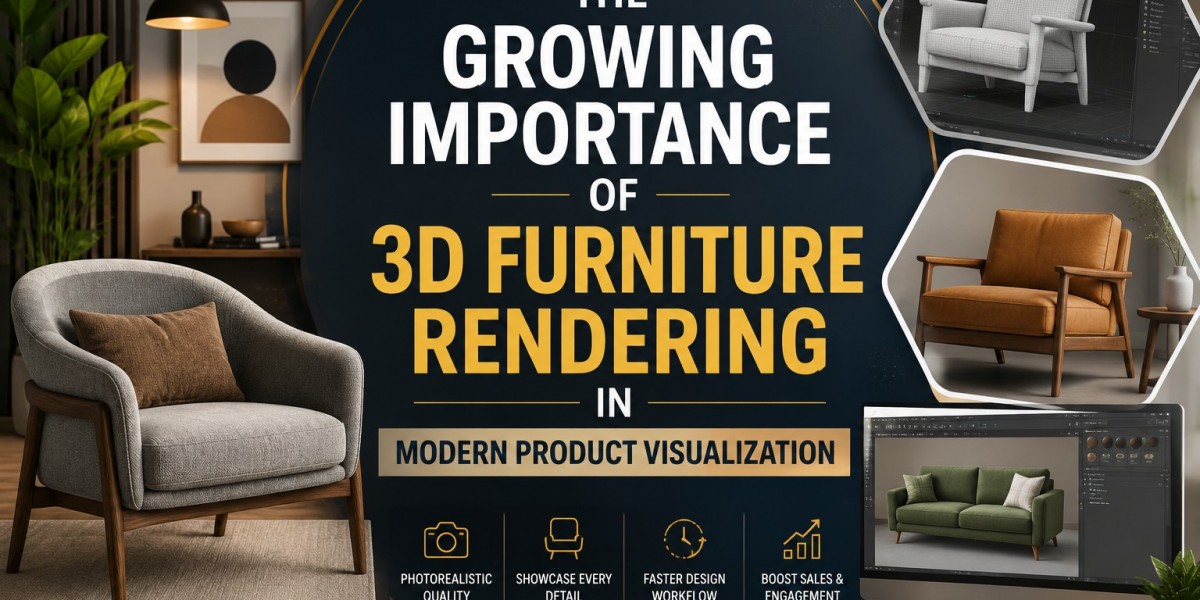

In the past, furniture shopping meant checking a fabric and finishing, visiting a showroom, or sitting on a chair physically. Online shopping has changed this concept altogether. However, it also created a problem: how do you sell something using only images on a screen that people typically want to see and touch realistically? The growing Importance of 3D Furniture Rendering answers that question. It offers buyers a lifelike, detailed view of a piece before it is produced, pictured, or shipped to a showroom.
Why 3D Furniture Rendering is Valuable
The following are some factors explaining why brands have shifted toward rendering rather than depending on traditional photography:
No physical sample needed
A new design can be rendered and presented to potential buyers before a prototype is made. This saves material costs and time.
Easy to show multiple options
The same piece can be rendered in multiple finishes, fabrics, or woods without constructing a separate version of every piece.
Faster catalog updates
Adding a new variant or color to a website only needs a new render, not a full new photo shoot.
Better consistency across a catalog
Every product can be shown with the same quality and lighting.
This is exactly what 3D Furniture Rendering Services are used to deliver: lifelike, flexible product pictures that work for the following platforms:
Catalogs
E-commerce
Marketing
Where 3D Rendering Makes the Biggest Difference
The following are a few types of furniture that benefit more than others from strong 3D visualization. A few examples are as follows:
Bedroom furniture visualization
Where buyers want to see how a nightstand set, dresser, or bed looks together in a styled room.
Custom and made-to-order furniture
Where no physical sample exists until the buyer places an order.
Modular and sectional pieces
Where buyers want to see varying configurations before deciding which layout suits their space.
Outdoor and patio furniture
Where lighting and material realism help show how a piece will actually look outside.
In each case, a strong render does more than just show the product. It helps the buyer picture it in their own home.
What Makes a 3D Furniture Render Convincing
Not all renders look real enough to develop a buyer's confidence. A few details make a difference between a convincing render and a non-convincing one:
Correct fabric texture, i.e., how light catches woven or textured materials
Lifelike wood grain and finish, particularly under different light settings
Correct size and scale, so the piece looks right next to other furniture or in a room setting
Natural reflections and shadows, which are some of the simplest details to get wrong
These are the same skills used in broader 3D Rendering Services in architecture and interior design. A team of experts in rendering lifelike materials and lighting for buildings and interiors delivers the same level of detail to furniture.
Choosing the Right Rendering Partner
Since furniture renders are often a buyer's only way to assess a product before buying, render quality has a direct impact on sales. The following things are worth checking before hiring a provider:
Do their renders hold up when zoomed in, not just at thumbnail size?
Can they exactly render different materials, e.g., fabric, wood, and leather, simultaneously?
Do they have experience rendering furniture in styled room settings, not just isolated product shots?
SMA Archviz stands out as the best in offering 3D furniture renders that look realistic. That level of detail matters a lot, since a render that looks even slightly off can make a client cautious to buy something they cannot physically test first.
Conclusion
There is a simple reality as every channel becomes increasingly important: web shoppers want a product that looks good on screen, especially when they're buying furniture. Brands can gain a competitive edge due to their investment in realistic rendering. Since the customer can now browse furniture without physically stepping into a showroom, realistic renders are a great advantage. Well done if you create a render that does not just show a piece of furniture. It allows a buyer to picture that piece in their own home. That is what makes the sale.