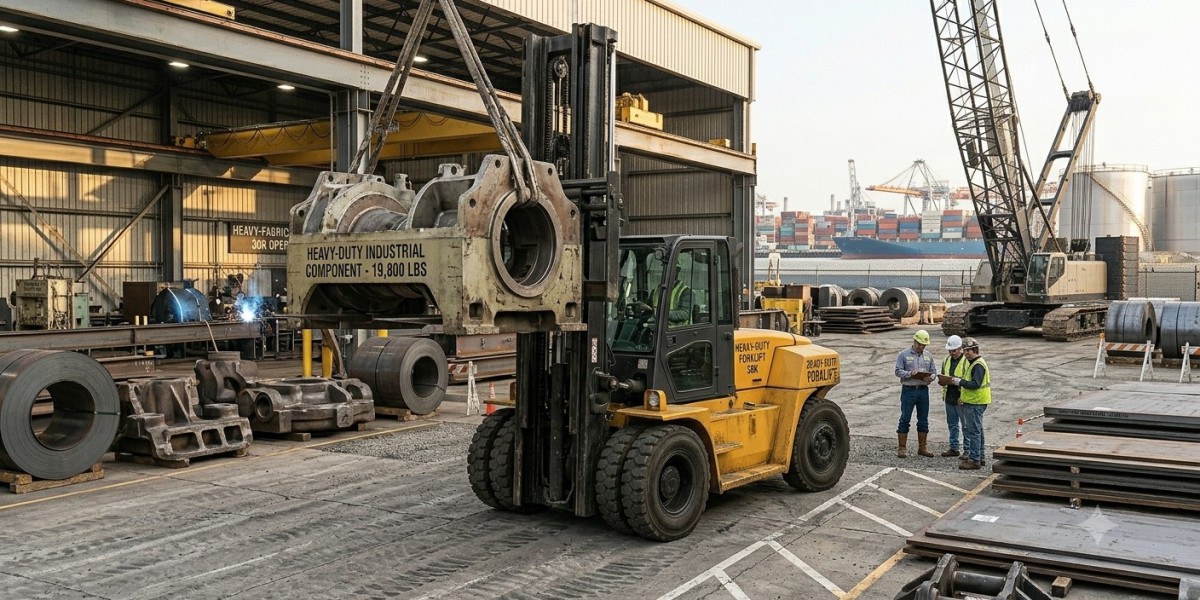

A 20000 lb forklift is made for industrial jobs where standard forklifts do not have enough strength, balance, or lifting control. In warehouses, manufacturing plants, steel yards, construction supply sites, and shipping facilities, heavy materials need equipment that can handle serious weight safely. When businesses move machinery, lumber, concrete products, metal bundles, large pallets, or oversized crates, a 20,000 lb capacity forklift can keep work moving with less delay and better control.
Heavy-duty lifting is not only about power. It is also about stability, safety, and choosing the right machine for the job. A forklift that is too small may lift poorly, strain its parts, or create tipping risks. A forklift that is too large for the space may be difficult to operate safely. The best option depends on the load, worksite, surface, lift height, and daily usage.
For companies that handle demanding materials, understanding how a 20,000 lb forklift fits into daily operations can help improve productivity and reduce risk.
Why a 20,000 lb Forklift Matters for Industrial Work
Industrial work often involves loads that are heavier, wider, and more difficult to handle than standard warehouse pallets. A regular 5,000 lb forklift may be enough for retail storage or light warehouse use, but it is not built for large industrial lifting. When loads reach several tons, equipment capacity becomes a major safety and performance factor.
A 20000 lb forklift gives businesses the ability to move heavy loads in fewer trips. This can save time in busy yards and production areas. For example, a construction supplier may need to move heavy pallets of block or pipe. A metal fabrication shop may need to shift large steel components. A manufacturing facility may need to move equipment parts from one department to another. In each case, using properly rated equipment reduces unnecessary handling.
Capacity should always be understood correctly. Forklift capacity can change based on load center, mast height, attachments, tire type, and how the load is positioned. A machine rated for 20,000 pounds may not safely lift that full weight if the load is long, uneven, or lifted too high. Operators should always check the data plate before lifting.
This is especially important because forklift incidents are a serious workplace concern. The U.S. Bureau of Labor Statistics reported that 614 workers died in forklift-related incidents from 2011 to 2017, and more than 7,000 nonfatal injuries with days away from work occurred every year during that period. These numbers show why correct capacity, inspection, and operator training matter in every forklift operation.
Common Uses for a 20,000 lb Forklift
A 20,000 lb forklift is commonly used in environments where materials are too heavy for mid-size forklifts. Construction material yards use them for concrete products, pipes, large pallets, stone, and building supplies. Lumber yards use them to move heavy bundles of wood. Manufacturing facilities use them for machinery parts, engines, molds, dies, and oversized production materials.
Warehouses with industrial inventory may also use this type of forklift when loads are large or unusually shaped. For example, a warehouse storing heavy equipment components may need a forklift that can move crated machinery safely across the floor. A smaller forklift may technically lift some loads, but it may struggle with balance and braking.
Outdoor yards often choose pneumatic tire forklifts because they perform better on gravel, rough pavement, and uneven surfaces. Indoor operations may choose cushion tire models when floors are smooth and space is more controlled. Fuel type also matters. Diesel forklifts are often used for heavy outdoor lifting, while propane forklifts can work in mixed environments with proper ventilation.
A 20000 lb forklift can also be used with attachments such as fork positioners, clamps, extended forks, or specialized handling tools. These attachments can improve efficiency, but they may reduce the forklift’s effective lifting capacity. That is why the attachment rating and updated data plate should always be reviewed before operation.
One real-life example is a steel supplier moving long metal beams. The load may not only be heavy but also awkward in shape. In that situation, the operator must consider weight distribution, turning space, surface condition, and travel speed. The right forklift makes the lift possible, but safe handling still depends on good planning.
Maintenance and Safety Considerations
A heavy-duty forklift works under pressure, so maintenance should never be ignored. Brakes, tires, steering, hydraulic systems, forks, chains, mast components, lights, and warning devices should be inspected regularly. When a forklift is carrying large loads, even a small defect can become a serious hazard.
OSHA states that any powered industrial truck not in safe operating condition must be removed from service, and all repairs must be made by authorized personnel. OSHA also notes that defects should be reported and corrected. This guidance is especially important for heavy-duty forklifts because equipment problems can become more dangerous when loads are larger.
Operators should complete daily checks before using the forklift. These checks may include looking for fluid leaks, testing brakes, checking tires, inspecting forks, reviewing warning lights, and listening for unusual sounds. If something feels wrong, the forklift should not be pushed through another shift just to avoid delays.
Businesses should also decide whether buying or renting makes more sense. Renting may be better for short-term projects, seasonal work, or one-time heavy lifts. Buying may be better when the forklift is needed daily and long-term availability matters. Either way, the machine should match the worksite and load requirements.
Conclusion
A 20000 lb forklift is a strong solution for heavy-duty industrial lifting. It helps businesses move large materials, reduce repeated handling, improve workflow, and support safer operations when used correctly. But capacity alone is not enough. Businesses must also consider load center, lift height, tire type, attachments, fuel choice, operator training, and maintenance.
Heavy lifting requires the right equipment and the right process. When companies inspect forklifts properly, train operators, and choose machines based on real worksite needs, they can reduce downtime and improve safety.
If your current forklift struggles with heavy loads, oversized materials, or demanding industrial jobs, a 20,000 lb capacity forklift may be the upgrade your operation needs.