
A Complete Guide to Choosing On-Road Tyres in the Middle East
The demands on on-road tyres are changing
Vehicle ownership across the Middle East continues to rise, while urban expansion and growing intercity travel are increasing the number of kilometres driven each year. At the same time, drivers face some of the world's most demanding road conditions, including prolonged heat, high-speed highway travel, and long commuting distances. These factors are reshaping how consumers evaluate on-road tyres and what they expect from tyre performance.
On-road tyres are tyres specifically designed for use on paved roads and highways. They focus on delivering predictable handling, braking stability, ride comfort, fuel efficiency, and tread longevity on asphalt surfaces. Unlike off-road or all-terrain tyres, on-road tyres are optimised for everyday driving conditions commonly found in cities, suburbs, and highway networks.
For drivers across the Gulf region and wider Middle East, understanding how these tyres perform under local conditions has become increasingly important as vehicle technology, road infrastructure, and consumer expectations continue to evolve.
Why this topic matters now
Recent investment in transportation infrastructure across countries including the UAE, Saudi Arabia, Qatar, and Oman has expanded highway networks and increased vehicle mobility. At the same time, vehicle owners are facing higher operating costs, making tyre longevity and fuel efficiency more significant considerations than they were a few years ago.
The tyre industry is also adapting to changing consumer preferences. Manufacturers are introducing compounds designed to cope with extreme temperatures, while regulators continue to focus on safety standards, efficiency labelling, and product quality requirements.
For consumers, the challenge is not simply choosing a replacement tyre. It is understanding which features matter most for their driving habits, vehicle type, and local environment. This guide clarifies the key factors influencing on-road tyre selection in the Middle East today.
Heat remains the defining factor
Many drivers focus on tread patterns or brand reputation when selecting tyres. However, temperature remains one of the most important influences on tyre performance throughout the Middle East.
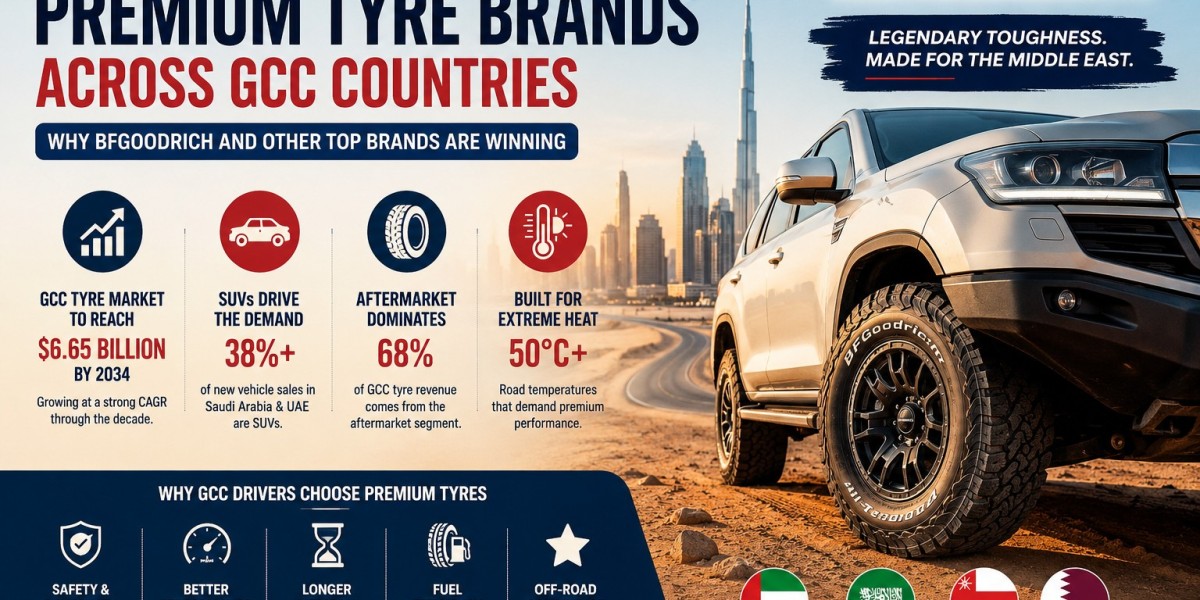
Road surface temperatures can significantly exceed ambient temperatures during summer months. In some areas, asphalt temperatures can rise well above 60°C during peak daytime hours. Under these conditions, tyre compounds are exposed to constant thermal stress.
This affects several aspects of performance. Excessive heat can accelerate tread wear, increase rolling resistance, and influence braking behaviour. As a result, manufacturers increasingly invest in heat-resistant rubber compounds and construction technologies designed to maintain stability during prolonged highway driving.
The practical implication for drivers is straightforward. A tyre that performs well in cooler climates may not necessarily deliver the same durability under Middle Eastern conditions. Understanding temperature-related performance characteristics is often more important than focusing solely on advertised mileage figures.
The growing importance of fuel efficiency
Fuel efficiency has become a more prominent consideration among vehicle owners throughout the region.
One reason is that rolling resistance plays a measurable role in vehicle fuel consumption. Rolling resistance refers to the energy lost as a tyre rotates and deforms while moving. Lower rolling resistance generally means the vehicle requires less energy to maintain speed.
Many consumers ask a simple question: Do on-road tyres affect fuel consumption?
The answer is yes. Tyres with lower rolling resistance can contribute to improved fuel economy compared with less efficient alternatives. While the exact savings vary depending on vehicle type, driving behaviour, road conditions, and tyre maintenance, tyre selection remains one factor influencing overall operating costs.
However, fuel efficiency should not be viewed in isolation. A tyre designed primarily to reduce rolling resistance may involve different trade-offs in areas such as grip, handling, or tread life. The most suitable option depends on how the vehicle is used rather than any single performance metric.
This balancing act has become increasingly important as consumers seek products that deliver both economic and safety benefits.
Highway driving is shaping purchasing decisions
Long-distance travel is a defining characteristic of driving across much of the Middle East.
Major urban centres are connected by extensive highway systems that encourage sustained high-speed driving. Whether travelling between Dubai and Abu Dhabi, Riyadh and Dammam, or Muscat and Sohar, many drivers spend substantial periods on motorways.
This creates a different set of priorities compared with predominantly urban driving environments.
Noise levels become more noticeable during extended journeys. High-speed stability becomes critical for driver confidence. Braking performance remains important, particularly in emergency situations. Ride comfort also influences fatigue during long trips.
As a result, tyre buyers are increasingly evaluating characteristics that extend beyond simple durability. Consumer surveys conducted across automotive markets globally suggest that comfort, noise reduction, and handling precision are receiving greater attention alongside traditional considerations such as price and tread life.
The trend reflects a broader shift in how vehicle owners assess value. The cheapest option is not always viewed as the most economical if it affects comfort, efficiency, or replacement frequency.
Understanding the difference between tyre categories
A common source of confusion involves the distinction between on-road tyres and all-terrain tyres.
On-road tyres are designed primarily for paved surfaces. Their tread patterns maximise contact with the road, helping improve handling, braking, and comfort under normal driving conditions.
All-terrain tyres, by contrast, are engineered to operate across a wider range of surfaces, including gravel, sand, and unpaved routes. Their tread designs are generally more aggressive and prioritise versatility.
For drivers who spend most of their time on highways and city roads, on-road tyres are typically aligned with everyday driving requirements. Drivers who regularly encounter desert tracks, construction zones, or mixed-surface routes may prioritise different characteristics.
The key point is that tyre selection should reflect actual usage patterns rather than occasional driving scenarios.
Looking ahead: how the market is evolving
The Middle East tyre market is expected to continue evolving as vehicle technology changes and consumer expectations become more sophisticated.
Manufacturers including Michelin, Bridgestone, Continental, Goodyear, and BFGoodrich have all introduced products focused on different aspects of on-road performance, ranging from efficiency and comfort to durability and handling. Their product strategies reflect broader industry efforts to address the region's unique operating conditions rather than any single performance objective.
As vehicle ownership grows and mobility patterns continue to change, demand for on-road tyres is likely to remain closely linked to factors such as fuel efficiency, heat resistance, safety performance, and long-term value. For consumers, understanding these factors may prove more useful than focusing on marketing claims or headline specifications alone.
The most significant trend is not the emergence of a particular tyre model or manufacturer. It is the increasing emphasis on matching tyre characteristics to real-world driving conditions. In a region defined by heat, distance, and extensive road networks, that alignment is becoming one of the most important considerations in tyre selection.