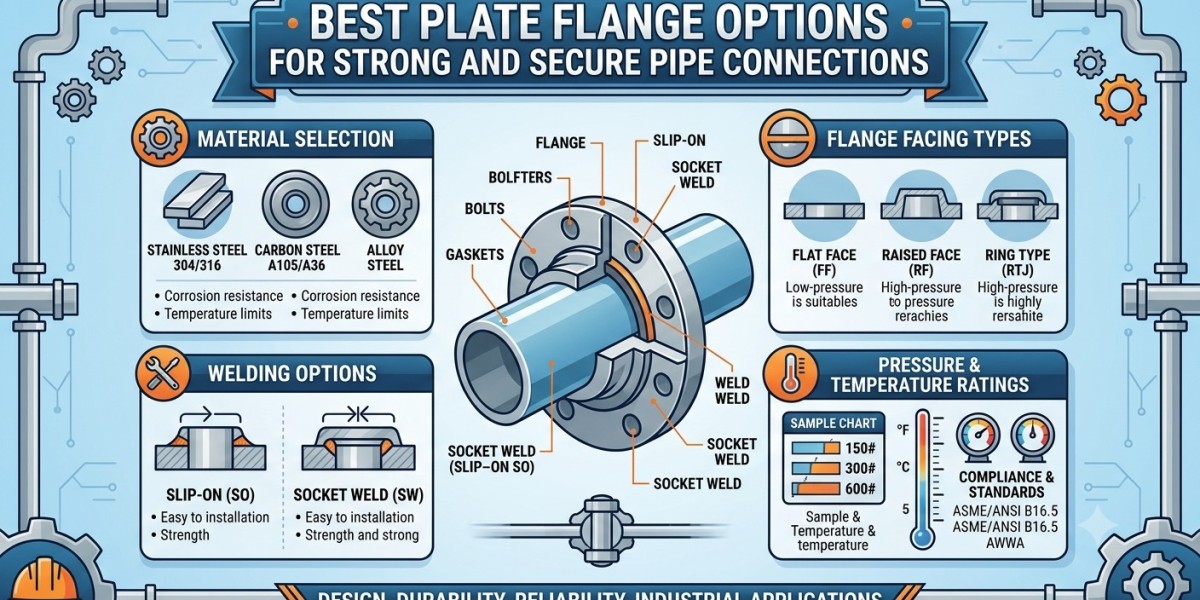

In many industrial environments, a weak pipe connection can create serious problems. Leakage, pressure loss, corrosion, vibration damage, and unexpected shutdowns can all affect system performance. For this reason, choosing the right flange is not only a technical decision. It is also a safety and maintenance decision.
What Makes Plate Flanges Useful in Piping Systems?
Plate flanges are commonly used because they offer a simple and cost-effective way to join piping components. Unlike welded-only connections, flange joints can be unbolted when maintenance is required. This makes them useful in systems where regular inspection or equipment replacement is part of normal operation.
For example, a water treatment plant may use flanges around pumps, filters, and valves so maintenance teams can remove parts without cutting the pipeline. In a manufacturing facility, flanges may connect processing equipment to supply lines. In oil, gas, and chemical applications, the right flange helps keep joints stable under pressure and temperature changes.
The pipe fittings industry also shows how important these components are. Grand View Research estimated the global pipe fittings market at USD 16.39 billion in 2024 and projected it to reach USD 25.02 billion by 2030. This growth is linked to construction, oil and gas, water treatment, manufacturing, and infrastructure development.
A plate flange is especially useful in low-to-medium pressure applications where a flat, bolted connection is needed. It provides support, alignment, and sealing when matched with the correct gasket and bolts.
Best Plate Flange Material Options
The best flange material depends on the fluid, working pressure, temperature, and environment. Choosing the wrong material can lead to corrosion, early wear, or leakage.
Carbon steel plate flanges are one of the most common options. They are strong, affordable, and suitable for many industrial piping systems. They are often used in water lines, oil systems, gas pipelines, and general manufacturing applications. However, they may need coating or protection if the environment is wet or corrosive.
Stainless steel plate flanges are better for applications where corrosion resistance matters. They are commonly used in food processing, chemical handling, marine systems, pharmaceutical plants, and clean water applications. Stainless steel is also easier to clean and performs well in environments exposed to moisture or chemicals.
Mild steel plate flanges are used in standard piping systems where the application is not highly corrosive or extreme. They are economical and easy to fabricate, making them suitable for general-purpose use.
Galvanized plate flanges offer additional rust protection because of their zinc coating. These are useful for outdoor systems, water lines, and environments where moisture exposure is expected.
In more demanding systems, buyers should also check flange standards and pressure ratings. ASME B16.5 covers pipe flanges and flanged fittings, including pressure-temperature ratings, materials, dimensions, tolerances, marking, and testing for many common flange types.
Key Factors Before Choosing a Plate Flange
Before buying a flange, the first thing to confirm is pipe size. The flange must match the pipe diameter correctly. Even a small mismatch can create alignment issues, stress, or poor sealing.
Pressure rating is another important point. A flange used in a basic water line may not be strong enough for high-pressure steam, gas, or chemical service. The flange should be selected according to the actual operating pressure and temperature of the system.
Gasket selection is also critical. The gasket sits between two flange faces and creates the seal. Rubber, EPDM, PTFE, graphite, and spiral wound gaskets are used in different applications. If the gasket material does not match the fluid or temperature, the joint may fail even if the flange itself is strong.
Bolt quality and tightening method can also affect performance. Bolts should be tightened evenly in a cross-pattern so pressure spreads properly around the flange. Uneven tightening can create gaps, gasket damage, or leakage.
Surface finish matters as well. A damaged or uneven flange face can prevent the gasket from sealing properly. Before installation, the flange face should be checked for scratches, dents, rust, or dirt.
A real-life example is a pump connection in a factory. Pumps often create vibration during operation. If the flange is poorly aligned or loosely tightened, vibration can slowly weaken the joint. But when the correct flange, gasket, and bolts are installed properly, the connection remains stronger and easier to maintain.
Why Quality Matters More Than Low Price
It can be tempting to choose the cheapest plate flange, especially for large projects where many pieces are needed. However, low-quality flanges can create higher costs later. A single leak may lead to product loss, shutdown time, labor cost, and safety concerns.
The global flanges market is also growing, with Global Market Insights estimating it at USD 6.4 billion in 2025 and projecting USD 11.2 billion by 2035. This shows that industries continue to invest in stronger and more reliable connection components.
A good flange should offer the right material strength, accurate dimensions, clean finishing, proper bolt holes, and compatibility with the piping system. These details help improve safety and long-term performance.
Conclusion
The right plate flange helps create strong, secure, and serviceable pipe connections. It supports system stability, reduces leakage risks, and makes maintenance easier in industries such as water treatment, oil and gas, construction, manufacturing, chemical processing and power generation.
Before selecting a flange, buyers should review material type, pipe size, pressure rating, gasket compatibility, bolt quality, installation method, and working environment. Carbon steel, stainless steel, mild steel, and galvanized options all have their place, but the best choice depends on real operating conditions.
A flange may look simple, but it carries major responsibility. Choosing the right one can protect the pipeline, reduce downtime, and improve the long-term reliability of the entire system.