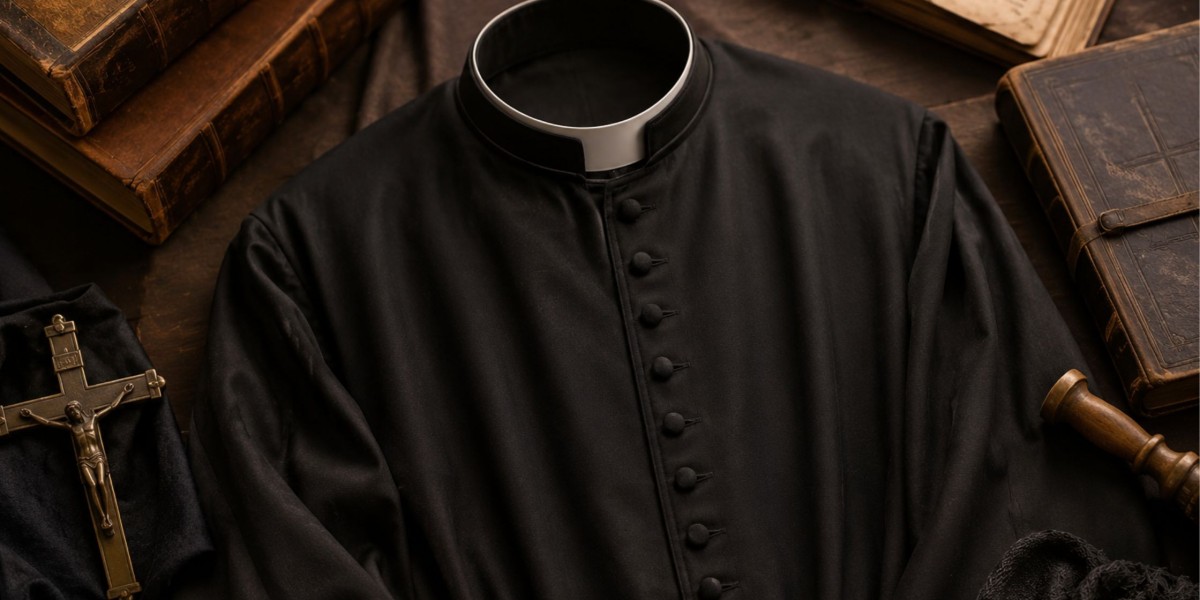

The cassock is one of the most recognizable garments in Christian clergy attire. Worn by priests, bishops, and other religious ministers, it carries deep symbolic meaning while also serving a practical role in daily ministry life. However, in modern times, questions often arise about how it should be worn correctly, what the rules are, and whether those rules are strict or flexible.
This blog explores the cassock, its meaning of cassock, and the ongoing discussion around its proper use. It also looks at related clergy clothing such as mens pastor attire and catholic bishop clothing, helping to clarify tradition versus modern practice.
What is a Cassock?
A cassock is a long, close-fitting robe traditionally worn by clergy members in many Christian denominations, especially in the Roman Catholic Church, Orthodox Churches, and some Anglican communities. It usually extends down to the ankles and is often black for priests, while bishops and higher-ranking clergy may wear different colors such as purple or white.
The cassock is not just clergy attire, it is a symbol of commitment, discipline, and religious identity. It visually separates clergy from everyday secular clothing, reminding both the wearer and the community of their spiritual role.
Meaning of Cassock
The meaning of cassock goes beyond fabric and design. It represents:
Dedication to service: A reminder of the priest’s or minister’s vow to serve God and the community.
Humility and discipline: The simple, uniform design reflects modesty.
Spiritual identity: It signals a life set apart for religious duties.
Tradition and continuity: The cassock has been worn for centuries, linking modern clergy to historical church practices.
In many traditions, wearing a cassock is also seen as a form of visible witness to faith in daily life, not just during formal services.
Cassock Wearing Rules: Are They Strict?
One of the most commonly debated topics is whether there are strict rules for wearing a cassock. The reality is that there is no single universal rulebook that applies to every situation. Instead, practices vary depending on:
Denomination (Catholic, Anglican, Orthodox, etc.)
Country and cultural context
Type of occasion (formal liturgy vs daily life)
Personal or diocesan preference
This leads to different interpretations of how the cassock should be worn in practice.
Common Questions About Wearing a Cassock
1. Should a waist band (fascia) be used?
The fascia is a sash or belt worn around the waist with the cassock, traditionally used in Roman Catholic practice. It helps keep the cassock fitted and also adds a formal appearance.
However, its use is not always mandatory. Some clergy wear it only during formal liturgical events, while others skip it in daily or casual settings within church environments.
So, the fascia is generally traditional but optional depending on context.
2. Should pants be visible under the cassock?
Another frequent question concerns whether trousers should be visible under the cassock. Traditionally, cassocks are designed to be long enough that pants are not seen. However, in modern practice, this is not always strictly enforced.
In many cases:
Clergy wear regular black trousers underneath
Slight visibility is sometimes accepted depending on movement and garment length
Formal settings usually expect full coverage for a cleaner appearance
The key idea is modesty and respect for the garment rather than strict visual perfection.
3. What about socks and footwear?
Socks are usually expected to be simple and modest. In traditional Catholic practice, black socks are common for priests. Footwear is typically formal and discreet.
There is no strict global rule, but simplicity is generally preferred because it maintains the uniform and humble appearance of mens pastor attire.
4. What is worn under the cassock?
Under the cassock, clergy typically wear:
A clerical shirt or regular shirt
Undergarments suitable for comfort
Sometimes lightweight layers depending on climate
There is no requirement for a special inner garment, but comfort and practicality are important, especially for daily ministry work.
Traditional vs Modern Practice
The discussion around cassock usage often reflects a larger tension between tradition and modern adaptation.
Traditional View
In traditional settings:
Cassock is worn fully and formally
Fascia is commonly used
Proper length and full coverage are emphasized
The attire is seen as sacred and symbolic
Modern View
In more modern or informal environments:
Flexibility is accepted
Comfort is prioritized in daily activities
Some rules are interpreted loosely
Practical use outside liturgical settings is common
Both approaches exist simultaneously within global Christianity, which explains why practices vary so widely.
Cassock in Mens Pastor Attire
The cassock is an important part of mens pastor attire, especially in denominations that maintain traditional clergy clothing. However, not all pastors or ministers wear cassocks today.
In modern Protestant settings, for example, pastors may prefer:
Clerical shirts with collars
Suits with clerical symbols
Robes only during services
Meanwhile, in more traditional or liturgical churches, the cassock remains a daily or ceremonial garment. This difference highlights the diversity in how religious identity is expressed through clothing.
Cassock in Catholic Bishop Clothing
In the context of catholic bishop clothing, the cassock takes on additional symbolic meaning. Bishops often wear distinctive variations such as:
Purple cassocks (symbol of authority and service)
White cassocks in specific regions or ceremonies
Additional vestments like mozzetta or pectoral cross
For bishops, the cassock is not only a garment but also a visible sign of ecclesiastical rank and responsibility within the Church hierarchy.
Social Media Confusion and Misunderstandings
In modern online discussions, especially on social platforms, debates about cassock rules often become confusing. Some of the common issues include:
Different churches using the term “Catholic” in unrelated ways
Independent clergy or groups using similar attire
Misinterpretation of dress codes across denominations
Personal opinions being mistaken for official rules
This leads to confusion about what is “correct,” even though most clothing practices are based on tradition rather than strict law.
Why Cassock Still Matters Today
Despite changes in modern clergy fashion, the cassock remains important because:
It preserves historical continuity
It reinforces spiritual identity
It creates visual unity among clergy
It serves as a reminder of service and responsibility
Even when not worn daily, it continues to hold symbolic importance in religious ceremonies and formal church life.
Conclusion
The cassock is more than just a religious outfit—it is a symbol of tradition, identity, and service. While there are long-standing customs around how it should be worn, modern practice shows that there is flexibility depending on context, denomination, and personal or institutional preference.
Whether discussing the cassock, the meaning of cassock, mens pastor attire, or catholic bishop clothing, one clear idea emerges: clothing in clergy life is not only about rules, but also about meaning, respect, and purpose.
As religious traditions continue to evolve, the cassock remains a powerful visual link between history and modern ministry, balancing tradition with practical everyday use.