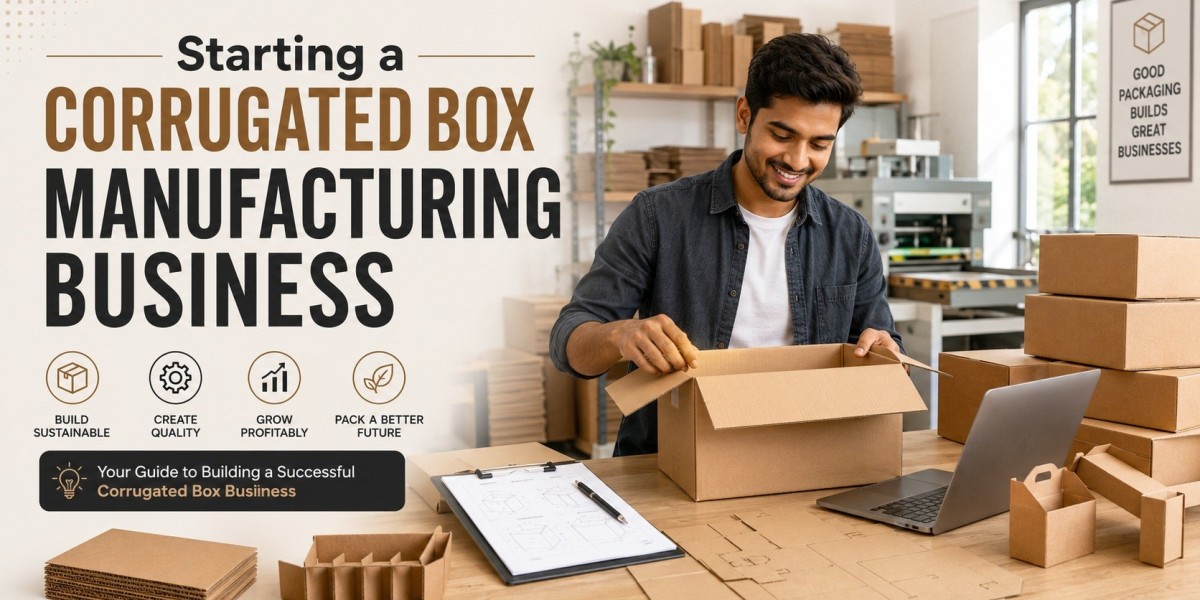

Starting a corrugated box manufacturing business can be a strong idea for new business owners. Corrugated boxes are used every day by shops, factories, food brands, online stores, movers, and many more. These boxes protect products during storage, handling, and delivery. Because online shopping and product shipping keep growing, the need for strong packaging is also growing.
A corrugated box business can be profitable, but it needs proper planning. You need the right machines, good raw material, trained staff, quality checks, and trusted customers. This guide explains the main steps in simple UK English so you can understand how to start in a clear and practical way.
What Is a Corrugated Box?
A corrugated box is made from strong paperboard. It usually has three layers. The outer layer is called liner board, the middle wavy layer is called flute, and the inside layer is also liner board. The flute gives the box strength and helps protect items from pressure and damage.
Corrugated boxes are different from normal cardboard boxes. They are stronger and better for shipping. They are used for e-commerce parcels, food delivery, retail products, electronics, clothes, books, and industrial goods.
There are many types of corrugated boxes. Some are single-wall, some are double-wall, and some are triple-wall. Single-wall boxes are good for light products. Double-wall boxes are better for heavier items. Triple-wall boxes are used for very heavy or large products.
Why Start a Corrugated Box Manufacturing Business?
Corrugated packaging is always in demand because every product needs safe delivery. Many businesses want packaging that is strong, low-cost, and easy to print. This gives you a good chance to build a steady business.
Online stores need shipping boxes every day. Food companies need boxes for bulk supply. Retail brands need printed boxes for their products. Warehouses need strong boxes for storage. This wide demand makes the corrugated box industry useful and stable.
Another good point is repeat orders. If a customer is happy with your box quality and delivery, they may order again every month. This can help your business grow faster.
Step 1: Research the Market
Before starting, study your local and national market. Check which businesses need corrugated boxes in your area. Look at e-commerce sellers, food factories, bakeries, clothing brands, supermarkets, and moving companies.
You should also study your competitors. Check their box sizes, prices, delivery time, quality, and services. This will help you understand how you can offer something better.
Ask questions such as: What box sizes are most popular? Do customers want plain boxes or printed boxes? Do they need small orders or bulk orders? Are they asking for eco-friendly options? Good research will save you from costly mistakes.
Step 2: Choose Your Business Model
There are different ways to run a corrugated box business. You can start with full manufacturing, where you make boxes from sheets. You can also start with semi-manufacturing, where you buy ready corrugated sheets and convert them into boxes.
Full manufacturing needs more machines, more space, and more money. But it gives you better control over quality and cost. Semi-manufacturing is easier for beginners because the investment is lower.
You can also focus on plain shipping boxes, printed boxes, custom-size boxes, food boxes, or ecommerce packaging. Choosing a clear model helps you buy the right machines and target the right customers.
Step 3: Make a Business Plan
A business plan is your roadmap. It explains what you will sell, who you will sell to, how much money you need, and how you will make a profit.
Your plan should include startup cost, machine cost, raw material cost, staff wages, rent, electricity, transport, marketing, and working capital. You should also set your expected monthly sales and profit margin.
Write down your order process, too. For example, the customer gives size and quantity, you give a quote, the artwork is approved, production starts, quality is checked, and boxes are delivered.
A simple but clear plan will help you stay organised and make better decisions.
Step 4: Arrange Investment
The cost of starting depends on your business size. A small box conversion unit may need less money than a full corrugation plant. The main costs include machines, factory space, raw material, labour, power supply, transport, and marketing.
You may use your savings, take a business loan, or work with a partner. But do not spend all your money on machines only. You also need cash for raw materials and daily running costs.
Many new owners forget working capital. This is the money needed to keep the business running while waiting for customer payments. Always keep extra funds for at least a few months.
Step 5: Choose the Right Location
Location matters in this business. You need enough space for machines, raw material storage, finished boxes, staff movement, and loading vehicles.
A small unit may need less space, but a full manufacturing setup needs a larger factory. The place should have good electricity, water, road access, and safety arrangements.
It is also helpful to be near industrial areas, warehouses, or transport routes. This can reduce delivery costs and make supply easier.
Step 6: Buy Machines and Equipment
Machines are the heart of your corrugated box business. The machines you need depend on your setup. Common machines include a corrugation machine, a sheet cutting machine, a creasing machine, a slotting machine, a stitching machine, a gluing machine, a printing machine, and a bundling machine.
If you want to offer printed boxes, you may need flexographic printing machines. If you want to make custom shapes, you may need die-cutting machines.
Do not buy machines without proper checking. Compare suppliers, ask for demos, check warranty, and understand maintenance needs. Poor machines can slow production and reduce box quality.
Step 7: Source Good Raw Materials
Raw material quality affects the strength of your boxes. You will need kraft paper, liner board, flute paper, glue, ink, stitching wire, and printing plates if needed.
Choose suppliers who provide steady quality. If the paper is weak, your boxes will fail during shipping. This can damage your customer’s products and your reputation.
Many customers now prefer eco-friendly packaging. So, you can offer recyclable paper and responsible material options. This is also useful for brands that want customised packaging with a cleaner and greener image.
Step 8: Hire and Train Staff
Even with good machines, you need skilled people. Your team may include machine operators, helpers, quality checkers, designers, sales staff, and delivery workers.
Train your staff on safety, machine use, box sizes, production steps, and quality checks. Mistakes in cutting, creasing, or printing can waste material and delay orders.
A trained team helps you produce better boxes and serve customers faster. Good staff also reduce damage and waste.
Step 9: Set Your Product Range
Start with a simple product range. You can offer standard shipping boxes, ecommerce boxes, moving boxes, food supply boxes, die-cut boxes, and printed corrugated boxes.
Many e-commerce brands also need brown postal boxes for safe delivery, low-cost shipping, and a simple natural look.
Later, you can add more options such as white boxes, branded boxes, heavy-duty boxes, display boxes, and custom inserts. Growing step by step is better than offering too much from day one.
Step 10: Focus on Quality Control
Quality control is very important in corrugated box manufacturing. Every box must have the right size, strength, shape, and print finish.
Check the paper quality, flute formation, glue strength, cutting accuracy, folding lines, stitching, and printing. You should also test box strength for heavy products.
If a box breaks during shipping, the customer may not return. So, quality must be checked before delivery. A good quality system builds long-term trust.
Step 11: Price Your Boxes Correctly
Pricing should cover all costs and still give a profit. Your price should include raw material, labour, machine running cost, electricity, waste, printing, finishing, packing, transport, and profit margin.
Box price also depends on size, paper grade, flute type, quantity, printing colours, and delivery location. Larger orders usually cost less per box because setup costs are shared.
Always give clear quotes. Tell the customer what is included and what is extra. Clear pricing helps avoid arguments later.
Step 12: Find Customers
Sales are the lifeline of your business. Start by contacting local businesses that use boxes. Visit factories, food companies, ecommerce sellers, clothing brands, warehouses, and retailers.
You should also build a website. Add your products, sizes, materials, photos, quote form, and contact details. Use SEO so people can find you online when they search for corrugated boxes.
Social media can also help. Show box samples, production videos, packing tips, and customer success stories. Real photos and videos make your business look active and trusted.
Step 13: Provide Great Service
Customers want more than boxes. They want clear advice, fast replies, fair prices, and on-time delivery. If you can guide them properly, they will trust you.
Ask useful questions before giving a quote. Ask about box size, product weight, quantity, print needs, delivery date, and budget. This helps you suggest the right box.
Good service can make your business different from competitors. Many customers stay with suppliers who are honest and easy to work with.
Final Thoughts
Starting a corrugated box manufacturing business can be a good step if you plan well. The market is strong because many businesses need safe and affordable packaging every day.
Start with research, choose a clear business model, buy reliable machines, use good raw materials, and focus on quality. Build strong relationships with customers and suppliers. Keep your service simple, honest, and professional.
With patience and smart work, your corrugated box business can grow into a trusted packaging company that serves many industries for years.