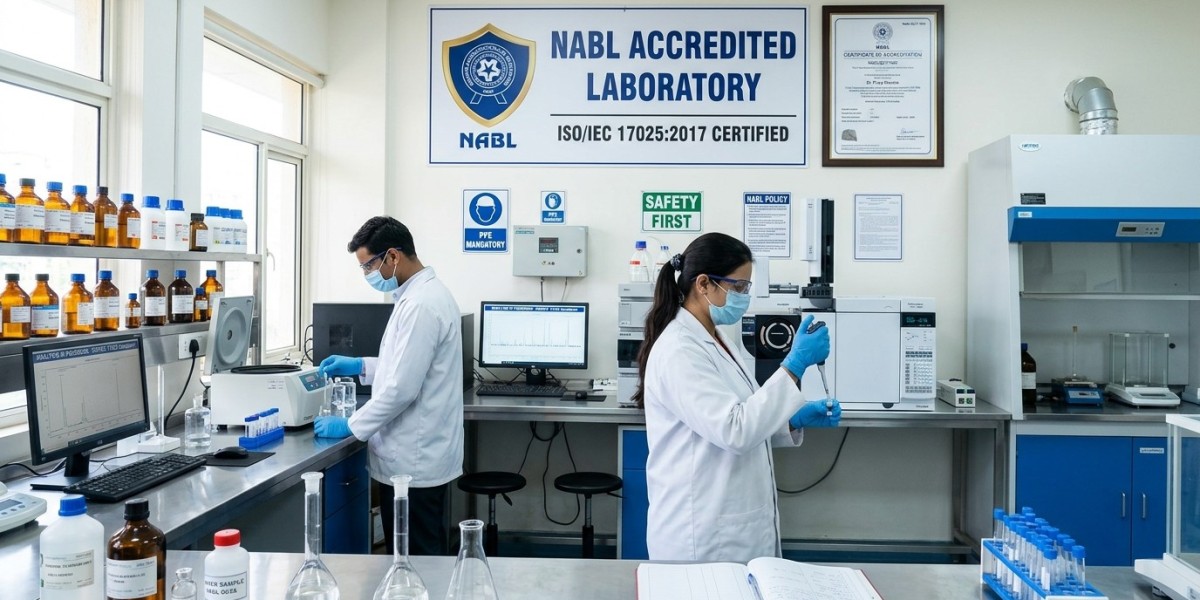

In the healthcare landscape of 2026, the precision of a diagnostic report is often the thin line between a successful recovery and a prolonged medical struggle. As personalized medicine and AI-driven treatments become the norm, the data provided by laboratories serves as the foundation for nearly 70% of all clinical decisions. However, not all laboratories are created equal. For a patient, navigating the sea of diagnostic centers requires more than just looking for the nearest clinic. It requires understanding the gold standard of quality assurance: NABL accreditation.
NABL, or the National Accreditation Board for Testing and Calibration Laboratories, is an autonomous body under the Quality Council of India. In 2026, it remains the most trusted benchmark for technical competence in the diagnostic industry. Choosing an accredited lab ensures that the facility has undergone rigorous third-party assessment, proving its ability to produce accurate, reliable, and globally accepted results. This guide will walk you through the nuances of choosing a laboratory that doesn’t just claim quality but lives it through every automated process and clinical protocol.
The shift toward the latest international standards has made the role of NABL even more critical. Patients now have the power to verify credentials in real-time, demand high-integrity sample handling, and expect digital integration with national health missions. By the end of this guide, you will be equipped to distinguish between a simple "registered" lab and a truly competent NABL-accredited facility, ensuring your health data is in the safest possible hands.
Understanding NABL Accreditation: The ISO 15189:2022 Standard in 2026
By mid-2026, the diagnostic industry has fully transitioned to the ISO 15189:2022 standard, which marks a significant departure from older, more administrative versions of lab accreditation. For you as a patient, this means the focus has shifted from mere paperwork to "risk-based thinking." Every NABL accredited lab today must identify potential risks to patient safety at every stage—from the moment a needle touches your arm to the second your report is uploaded to your health locker. This standard ensures that the laboratory isn’t just following a checklist but is actively preventing errors before they occur.
Accreditation is a voluntary process, which is why it is such a powerful indicator of a lab's commitment. While any diagnostic center can get a basic trade license to operate, only those with a high level of technical competence can survive the multi-day on-site assessments conducted by NABL experts. These assessors scrutinize everything: the calibration of high-end analyzers, the environmental conditions of the testing area, and the specific qualifications of the medical staff. In 2026, a lab that lacks this accreditation is essentially operating without a verified safety net, leaving the accuracy of your results to chance.
The 2026 iteration of NABL standards also emphasizes the "welfare of patients" as a primary objective. This includes ensuring confidentiality of your genetic data, providing clear instructions for test preparation, and maintaining a transparent communication channel for critical alerts. When you choose an accredited lab, you are choosing a facility that speaks the global language of medicine, meaning your reports are likely to be accepted by doctors and hospitals not just in India, but across the world through the ILAC Mutual Recognition Arrangement.
| Feature | NABL Accredited Lab (ISO 15189:2022) | Non-Accredited/Registered Lab |
| :--- | :--- | :--- |
| Technical Competence | Verified by independent medical experts | Self-claimed or unverified |
| Error Management | Proactive risk-based prevention | Reactive or undocumented |
| Equipment | Regularly calibrated with traceability | Inconsistent maintenance schedules |
| Staff Qualifications | Mandatory certified pathologists/specialists | May use semi-skilled technicians only |
| Global Recognition | Accepted by international medical bodies | Limited to local or regional acceptance |
Verifying Authenticity: How to Check NABL Status and Scopes Online
One of the most common pitfalls for patients in 2026 is assuming that a "NABL" logo on a billboard means the entire lab is accredited for every test. Accreditation is actually granted for a specific "Scope of Testing." For instance, a lab might be accredited for routine blood sugar and cholesterol tests but not for advanced molecular genomics or rare hormone markers. To be truly safe, you must verify that the specific test you require falls under the lab’s accredited scope. This is easily done through the official NABL website or dedicated health apps that pull data from the national registry.
When you receive a report, the first thing to look for is the NABL symbol paired with a unique certificate number, typically starting with "M-" for medical labs. In 2026, all genuine reports also carry a Unique Lab Report (ULR) number. This digital fingerprint allows you to cross-reference the report on the NABL portal to ensure it wasn't fabricated. Fake certificates are a rare but existing danger, and the board has made it easier than ever for consumers to spot discrepancies in validity periods or unauthorized use of the NABL emblem.
A laboratory’s accreditation status is not permanent; it requires regular surveillance and reassessment every two years. Therefore, checking the "Validity Date" is crucial. If a lab is in its "cooling-off period" or has been "suspended" due to a quality breach, this information is public. Taking five minutes to check the directory of accredited labs on the NABL-India website provides a layer of security that could prevent a misdiagnosis.
Checklist for Verifying a Laboratory’s Credentials
Search for the lab by name or city on the official NABL directory.
Confirm the accreditation certificate number (e.g., M-1234) is currently valid.
Check the "Scope" to ensure your specific test (Pathology, Genetics, etc.) is listed.
Look for the NABL logo and ULR number on your final report.
Verify if the lab is integrated with the Ayushman Bharat Digital Mission (ABDM) for secure data transfer.
Beyond the Basics: Evaluating Home Collection and Sample Integrity
In 2026, nearly 60% of diagnostic samples are collected from the comfort of a patient’s home. While convenient, this "pre-analytical phase" is where most diagnostic errors occur. NABL accredited labs must follow the strict NABL 112B guidance document, which dictates how samples should be handled outside the main facility. For a patient, the quality of a lab is often visible in the professionalism of the phlebotomist who arrives at your door. A reliable lab ensures their collection staff is certified and follows rigorous hygiene and identification protocols.
Sample integrity hinges on "Cold Chain Management." Many blood parameters, such as enzymes or certain vitamins, are extremely sensitive to temperature. If a sample is carried in a simple plastic bag through the summer heat of Bangalore or Delhi, the chemistry of the blood changes before it ever reaches the machine. Accredited labs are required to use insulated, temperature-controlled carriers (usually maintained between 4°C and 8°C) equipped with digital loggers. These loggers provide a timestamped record proving the sample stayed at the correct temperature throughout its journey.
Furthermore, the materials used for collection speak volumes. In 2026, safety-engineered sharps and vacuum-sealed tubes (vacutainers) are the standard in accredited facilities. These prevent sample contamination and protect both the patient and the healthcare worker from needle-stick injuries. If you notice a collector using loose syringes or unlabelled tubes, it is a significant red flag that the lab may not be adhering to the high-stakes quality standards required for accreditation.
Signs of High-Quality Sample Collection
The phlebotomist uses a digital app to verify your identity and scan sample barcodes.
Samples are placed immediately into a dedicated, temperature-controlled cold box.
The collector wears fresh gloves and uses safety-engineered needles.
You receive an instant SMS or notification confirming the sample has been "received" at the hub.
Vacutainers are color-coded and labeled in your presence to avoid mix-ups.
The Role of AI and Automation in Modern Diagnostic Accuracy
By 2026, the "analytical phase" of testing—the part where the machine actually processes your blood—has been transformed by AI and full-scale automation. NABL accredited laboratories are at the forefront of this revolution because the accreditation process requires evidence of "Metrological Traceability." This means the results from their machines must be traceable to international reference standards. Automation in these labs now handles up to 90% of the workflow, which has reduced human-transcription errors by over 70% compared to a decade ago.
The integration of AI as a "diagnostic partner" is a key feature of top-tier labs in 2026. AI algorithms now perform preliminary screenings of pathology slides, flagging anomalies that the human eye might miss. However, NABL standards ensure that this technology is used as a tool, not a replacement for human expertise. An accredited lab will always have a qualified pathologist review any AI-flagged "critical results." This hybrid approach provides a double layer of verification, significantly narrowing the margin of error for complex diagnoses like cancer or rare autoimmune disorders.
Another hallmark of an accredited lab is its participation in the External Quality Assurance Scheme (EQAS) and Proficiency Testing (PT). Every few months, an independent body sends "blind samples" to the lab. The lab must test these samples and achieve results that match the global average. Their performance in these tests is a matter of public record within the accreditation community. When you choose a NABL lab, you are choosing a facility that is constantly being tested by its peers to ensure its machines are tuned to perfection.
| Technology Component | Impact on Your Results | NABL Requirement |
| :--- | :--- | :--- |
| Automated Track Systems | Eliminates sample mix-ups and manual handling | Data integrity and traceability |
| AI Pattern Recognition | Increases sensitivity in detecting early-stage disease | Validation of AI models |
| LIMS (Software) | Prevents typographical errors in reports | Audit trails for every test step |
| Biometric Sample Sync | Ensures the right report goes to the right patient | Mandatory patient identification |
| Digital Cold Chain | Guarantees sample stability during transit | Temperature logging and monitoring |
Interpreting Your Reports: Authorized Signatories and Digital Integration
The final output of your diagnostic journey is the report. In 2026, a report from an NABL accredited lab is much more than just a list of numbers; it is a legal and clinical document of the highest order. One of the strictest NABL requirements is that every medical report must be reviewed and signed by an "Authorized Signatory"—a qualified medical professional, usually a MD Pathologist or Microbiologist, who takes full responsibility for the result's accuracy. In unorganized labs, reports are often auto-generated without a specialist's eyes ever seeing the data, a practice that NABL strictly forbids.
Digital integration has also become a mandatory facet of modern accreditation. Reports are now seamlessly linked to your ABHA (Ayushman Bharat Health Account) ID and stored in secure "Health Record Lockers." This ensures that you have a lifelong, tamper-proof history of your health data that can be shared with any doctor instantly via consent-based protocols. Accredited labs invest heavily in Laboratory Information Management Systems (LIMS) that protect your data with end-to-end encryption, ensuring that your sensitive genetic or infectious disease markers are never leaked.
Furthermore, a high-quality report in 2026 includes "Trend Analysis" and "Biological Variation" data. Rather than just showing your current blood sugar, a top-tier NABL lab’s digital report will overlay your past six months of data into a graph, helping your doctor spot a rising trend before it becomes a clinical emergency. This level of detail is only possible when a lab maintains the high standards of data consistency and record-keeping mandated by the ISO 15189 standard.
What to Look for in a 2026 Diagnostic Report
The NABL "M-" certificate number and current validity period.
The name and digital signature of a qualified Authorized Signatory (e.g., MD Pathologist).
Clear "Reference Ranges" tailored to your age, gender, and the testing method used.
A ULR (Unique Lab Report) number for online verification.
QR codes that link directly to the raw data or an explanatory video of the results.
Patient Rights and Grievances: Redressing Quality Issues in 2026
Choosing a NABL accredited lab also gives you a powerful set of rights that you don't have with unorganized centers. Under the 2026 patient charter, you have the right to a "proper referral" that is free from commercial influence. Your doctor may suggest a lab, but as a patient, you have the legal right to choose any NABL-accredited facility you trust. Furthermore, accredited labs are required to have a transparent "Grievance Redressal Mechanism." If you suspect your result is incorrect or you experienced poor service, the lab must have a documented process to investigate your complaint and provide a formal response.
If a laboratory fails to address your concerns, you have the option to escalate the issue directly to NABL. The board takes complaints regarding technical competence very seriously. You can email the complaints cell at NABL with your report details and the nature of the error. This accountability ensures that labs don't just "pass the test" once every two years but maintain a culture of excellence every single day. The threat of losing accreditation is a massive deterrent against negligence, providing an extra layer of protection for the common citizen.
Finally, the cost of a NABL lab is often slightly higher than a local "basement lab," but in 2026, patients are realizing that the cheapest test is often the most expensive in the long run. A wrong result leads to unnecessary medications, repeat testing, and mental agony. Most health insurance providers now only reimburse claims if the diagnostic tests were performed in an NABL-accredited facility. This makes choosing a reliable, accredited lab not just a health decision, but a sound financial one.
Essential Patient Rights in Accredited Labs
Right to receive a detailed breakdown of the testing cost and turnaround time.
Right to request a "Repeat Test" if the clinical findings don't match the symptoms (often provided free or at a discount in cases of suspected error).
Right to full confidentiality and ownership of your medical data via your digital health locker.
Right to lodge a formal complaint with the NABL board via their official website or email.
Right to access the lab’s "External Quality" certificates to prove their ongoing accuracy.