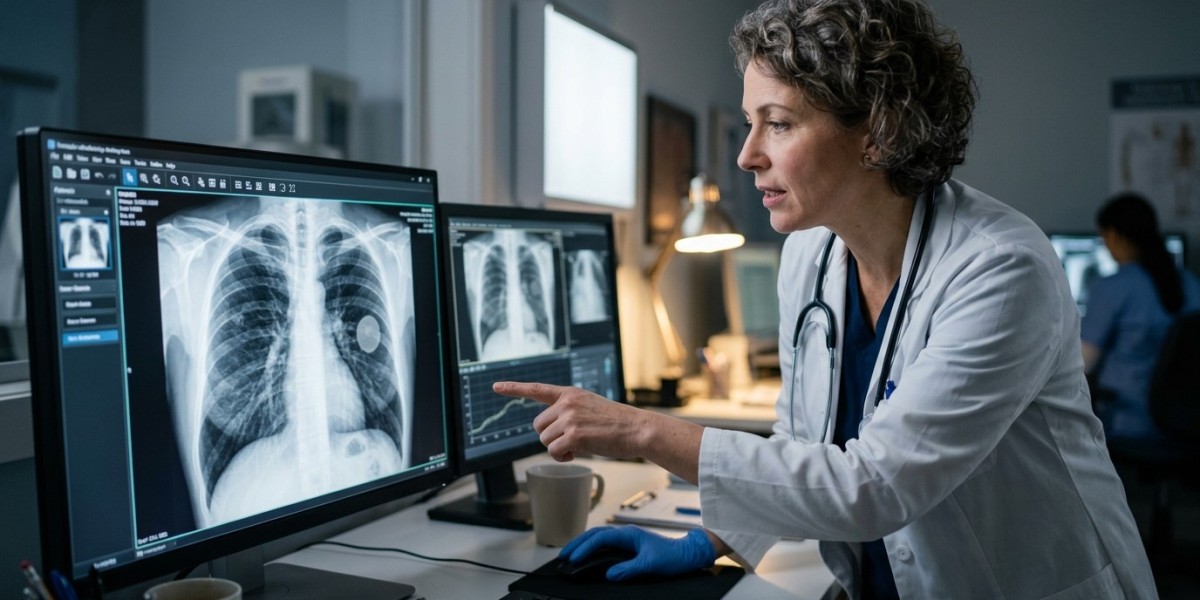

In 2026, the landscape of medical imaging has shifted toward high-precision, AI-integrated diagnostics that offer more clarity than ever before. For many patients, the journey begins with a minor injury or a persistent symptom that leads them to search for a digital x-ray near me to rule out fractures or basic internal issues. However, if an X-ray doesn't provide enough detail, your physician might upgrade the request to a Computed Tomography (CT) scan.
A CT scan is significantly more complex than a standard X-ray, utilizing a series of cross-sectional images to create a 3D view of your organs, bones, and blood vessels. Because it involves higher radiation and often requires chemical contrast agents, it is vital to be an informed patient. Before you book your appointment at a diagnostic centre, asking the right questions can ensure your safety, save you money, and guarantee the highest accuracy for your results.
Is a CT Scan Necessary, or Will a Digital X-Ray Suffice?
The first question you should always ask—both of your doctor and the diagnostic centre—is whether the more intensive CT scan is required or if a high-resolution digital X-ray is sufficient. When you search for a digital x-ray near me, you are looking for a fast, low-cost tool that is excellent for identifying major bone fractures, dislocations, or lung infections. Digital X-rays have advanced significantly by 2026, offering better contrast and faster results than traditional film, but they remain a 2D snapshot of the body.
If your condition involves complex internal structures, such as subtle bone stress, tumors, or vascular blockages, a digital X-ray might miss the critical details. A CT scan, while more expensive, provides "slices" of the body that allow radiologists to see behind and around organs. Understanding why you are being moved from a basic scan to a CT helps you understand the severity and focus of your diagnostic journey.
| Feature | Digital X-Ray | CT Scan |
| :--- | :--- | :--- |
| Image Type | 2D Flat Image | 3D Cross-sectional Slices |
| Primary Use | Bone fractures, dental, chest | Soft tissue, organs, complex trauma, oncology |
| Duration | 1–5 Minutes | 10–20 Minutes |
| Radiation Level | Very Low | Moderate to High |
| Best For | First-line screening | Detailed diagnosis and surgical planning |
What Radiation Safety Protocols and Low-Dose Technologies are in Use?
Safety is a primary concern for any patient undergoing radiological procedures. In 2026, the standard for imaging centers is the "ALARA" principle—As Low As Reasonably Achievable. Before visiting a centre, ask if they utilize "Low-Dose CT" (LDCT) protocols. Advanced scanners now use iterative reconstruction software that allows for high-quality images while reducing the radiation dose by up to 50% to 80% compared to older machines.
Additionally, ask if the facility participates in radiation dose tracking. Many top-tier centers in Bangalore and globally now use digital registries to record how much radiation a patient has received across various scans over time. This is particularly important for patients with chronic conditions who may require multiple follow-up scans, as it prevents cumulative exposure from reaching dangerous levels.
Dose Modulation: Does the machine automatically adjust the radiation intensity based on the thickness of the body part being scanned?
Lead Shielding: Will the centre provide protective aprons for areas of the body not being imaged (such as the thyroid or reproductive organs)?
Pediatric Protocols: If the scan is for a child, does the centre use specific pediatric settings to account for their higher sensitivity to radiation?
Certification: Is the equipment regularly calibrated and certified by national safety boards like the AERB (Atomic Energy Regulatory Board) in India?
How Should I Prepare for a Contrast-Enhanced Scan?
Many CT scans require the use of a contrast agent—a dye usually containing iodine—that is injected intravenously or swallowed. This dye makes certain tissues and blood vessels "light up" on the scan, making it easier to spot abnormalities. However, contrast media come with specific preparation requirements and potential risks, particularly for your kidneys.
You must ask the centre about their specific fasting requirements and whether you need a recent blood test. Because contrast dye is processed through the kidneys, clinicians usually require a "Serum Creatinine" test to ensure your renal function is strong enough to flush the dye out of your system. Failure to prepare properly can lead to cancelled appointments or, worse, medical complications like Contrast-Induced Nephropathy (CIN).
1. Fasting Windows: Most contrast scans require you to refrain from eating for 4–6 hours prior to the appointment, though clear liquids are often encouraged.
2. Medication Review: If you are diabetic and taking Metformin, you may need to stop the medication for 48 hours after the scan, as the combination with contrast can affect kidney function.
3. Allergy History: Disclose any history of allergies to iodine or seafood. Modern "non-ionic" contrast agents are much safer, but high-risk patients may still need premedication with steroids or antihistamines.
4. Hydration Plan: Ask how much water you should drink after the procedure. Staying hydrated is the most effective way to help your body eliminate the contrast agent quickly.
Is the Centre Equipped with AI and Advanced Slice-Count Technology?
The quality of a CT scan depends heavily on the technology of the scanner. When calling a diagnostic centre, ask about the "slice count" of their machine. In 2026, 64-slice and 128-slice scanners are the industry standards for general diagnostic work. Higher slice counts allow the machine to capture more data in a single rotation, which is vital for imaging moving organs like the heart or for patients who have trouble holding their breath.
Furthermore, inquire if they use AI-enhanced diagnostic tools. Artificial Intelligence in 2026 is used to pre-screen images for urgent findings, such as internal bleeding or lung nodules, often before a radiologist even opens the file. This "second pair of eyes" increases accuracy and ensures that critical cases are prioritized in the reporting queue.
64-Slice vs. 128-Slice: A 128-slice scanner is significantly faster and offers better resolution for cardiac angiography compared to a 16 or 32-slice unit.
AI Pre-screening: Does the centre use AI algorithms to detect early-stage cancers or acute trauma?
Spectral CT: Ask if the centre offers spectral imaging, which can better distinguish between different types of tissues and materials (like distinguishing between a cyst and a solid tumor).
Motion Correction: Does the software include motion-correction features for elderly or pediatric patients who may move during the scan?
What are the Realistic Costs, Billing Procedures, and Insurance Options?
Diagnostic imaging costs can vary widely, especially in a major hub like Bangalore. While a digital x-ray near me might cost between ₹300 and ₹1,000, a CT scan can range from ₹3,000 to over ₹15,000 depending on the complexity and whether contrast is used. Transparency in pricing is essential to avoid "sticker shock" on the day of your appointment.
Ask for an "all-inclusive" quote. Some centers may quote a base price but charge extra for the contrast media, the nursing fees for the injection, or the digital copy of the films. Furthermore, if you have health insurance, check if the centre is "empaneled" or in-network with your provider. Many modern policies in 2026 cover diagnostic imaging as part of outpatient care, provided the centre meets specific accreditation standards like NABL or NABH.
| Factor | Impact on Cost |
| :--- | :--- |
| Region/Location | Centers in premium areas or multi-specialty hospitals often charge 20–30% more. |
| Contrast Usage | Contrast-enhanced scans (CECT) involve additional costs for the dye and kidney function tests. |
| Accreditation | NABL-accredited labs may charge a premium for guaranteed quality and accuracy. |
| Urgency | "Stat" or emergency reporting within 2 hours may incur a priority fee. |
| Digital Access | Some centers charge extra for cloud-based access to your high-resolution DICOM files. |
What is the Expected Turnaround Time for Digital Reports and Teleradiology?
The final, and perhaps most stressful, part of the process is waiting for the results. In 2026, the era of waiting 48 hours for a medical report is largely over. Most high-end diagnostic centers now utilize teleradiology—where images are sent digitally to specialist radiologists who can provide a report from any location.
Ask the centre specifically when the final, signed report will be available. Many centers now offer a "Digital First" approach, where you receive a WhatsApp or SMS link to your report and images within a few hours. This is crucial if you have a follow-up appointment with your specialist on the same day.
Preliminary Findings: Can the technician or on-site radiologist provide a "verbal" or preliminary indicator if something is found urgently?
Cloud Storage: Will the images be stored on a secure portal that you can share with multiple doctors, or will you only receive a physical film?
Specialist Reporting: If you are getting a specialized scan (like a Neuro-CT or Cardiac-CT), is the report being written by a radiologist with a sub-specialty in that field?
Accuracy Rates: Does the facility have a secondary review process (peer review) to ensure the highest degree of reporting accuracy?
In conclusion, while your search for a digital x-ray near me might be your first step into a diagnostic lab, being prepared for a CT scan requires a deeper level of inquiry. By asking about radiation safety, contrast preparation, and the underlying technology, you ensure that your diagnostic journey is not only safe but also produces the most accurate results possible for your healthcare team. Always choose a facility that is transparent, accredited, and equipped with the latest 2026 imaging standards to give you the peace of mind you deserve.