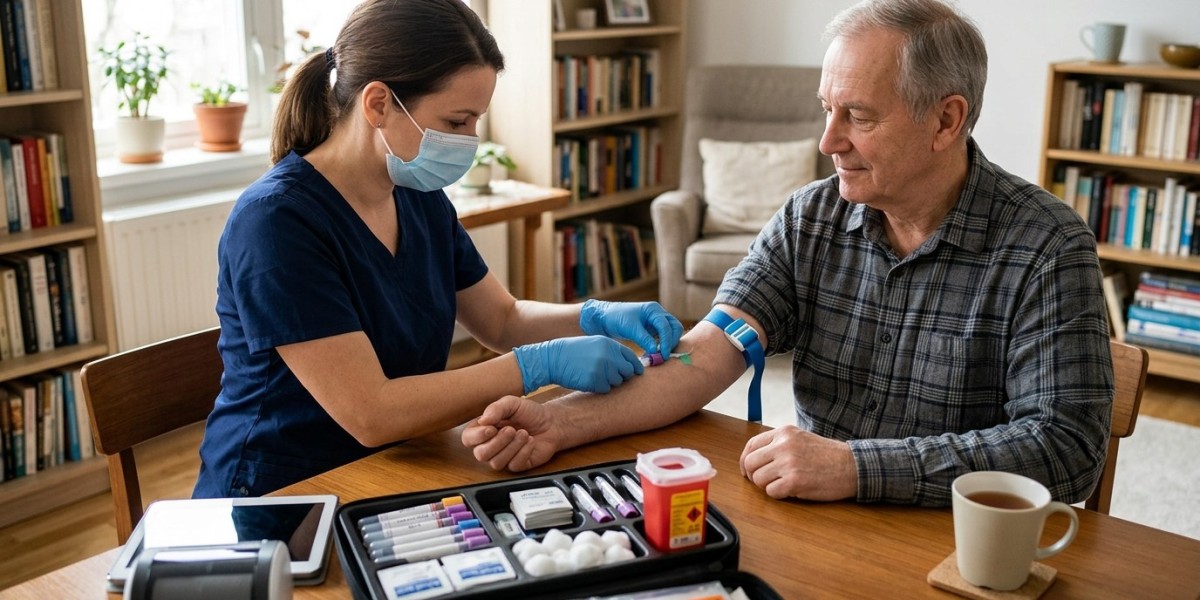

The landscape of healthcare has undergone a dramatic shift toward decentralized care. In 2026, the global at-home lab testing market is projected to reach over $17 billion, driven by a growing demand for personalized medicine and the sheer convenience of skip-the-queue diagnostics. While the ease of having a phlebotomist arrive at your doorstep is undeniable, the move from a controlled clinical environment to a domestic one introduces several variables that can impact the accuracy of your medical results.
Choosing a service provider involves more than just comparing prices or checking for the earliest available slot. Because over 70% of clinical decisions are based on laboratory reports, the integrity of the "pre-analytical phase"—the time between sample collection and lab arrival—is paramount. For residents in fast-paced urban hubs like Bangalore, where traffic and temperature fluctuations are constant challenges, understanding the technical standards of home blood sample collection is essential for ensuring your health data is both reliable and actionable.
1. Verifying Phlebotomist Credentials and Safety Equipment
The individual who enters your home to perform venipuncture must be more than just a "collection agent." In 2026, professional phlebotomists are required to have specialized certifications, such as those aligned with the National Skill Development Corporation (NSDC) or recognized paramedic institutes. A qualified technician should demonstrate a deep understanding of anatomy, infection control, and the "order of draw," which prevents cross-contamination between different colored collection tubes.
Safety protocols are the first visible indicator of a service’s quality. A professional technician will always arrive with a complete Personal Protective Equipment (PPE) kit, including fresh disposable gloves for every patient and a dedicated biohazard waste disposal container. They should use safety-engineered devices, such as vacuum-based evacuated tube systems (ETS), which are designed to reduce the risk of needlestick injuries and ensure the correct volume of blood is drawn—a critical factor for accurate testing.
| Feature to Verify | Standard Requirement | Why it Matters |
| :--- | :--- | :--- |
| Certification | Accredited Phlebotomy/CPT certification | Ensures technical skill and minimal patient discomfort. |
| Hygiene | Hand sanitization and fresh gloves | Prevents healthcare-associated infections (HAIs). |
| Equipment | Single-use sterile vacuum tubes | Guarantees sample stability and prevents clotting errors. |
| Waste Management | Puncture-proof biohazard bins | Ensures safe disposal of sharps and prevents environmental contamination. |
2. The Role of Cold Chain Maintenance in Sample Integrity
One of the most critical yet frequently overlooked aspects of home blood sample collection is the "Cold Chain." Biological samples are highly sensitive to temperature; even minor thermal variations can alter the concentration of inflammatory markers, hormones, and enzymes. By 2026, regulatory developments have tightened the requirements for traceability, meaning labs must document the temperature of a sample from the moment it leaves your home until it enters the centrifuge.
A reliable service provider will use specialized medical refrigeration equipment or validated cold gel packs rather than simple ice bags. Look for companies that employ "Smart Carriers" equipped with IoT sensors that provide real-time temperature tracking. If a sample is transported at room temperature for an extended period, it can lead to hemolysis (the rupture of red blood cells), which falsely elevates potassium levels and may result in an incorrect diagnosis or a forced repeat collection.
Validated Cold Packs: Look for gel packs certified to maintain temperatures between 2°C and 8°C for at least 12 hours.
Triple-Layer Packaging: Samples should be placed in a primary leak-proof receptacle, a secondary absorbent layer, and a rigid outer container.
Time-Stamping: The provider should record the exact time of collection to ensure the sample reaches the lab within the recommended 4-hour window for most routine tests.
IoT Tracking: Advanced services in 2026 offer GPS-linked temperature logs that you can view via a mobile app.
3. Decoding Laboratory Accreditations (NABL and ISO 15189)
While many agencies offer home collection, the quality of the report ultimately depends on the processing laboratory. In India, the gold standard for medical laboratories is accreditation by the National Accreditation Board for Testing and Calibration Laboratories (NABL), which operates under the ISO 15189 framework. An NABL-accredited lab has undergone rigorous peer evaluation to prove its technical competence and the reliability of its results.
Accreditation is not a one-time event; it involves regular proficiency testing and audits of equipment calibration. In 2026, you can easily verify a lab's status by checking for the NABL symbol on your report or looking up their unique certificate number (typically starting with "M-") on the official NABL directory. Choosing an accredited lab ensures that the measurement uncertainty is accounted for and that your results will be accepted by doctors and hospitals across the country and even internationally.
ISO 15189 Compliance: Specifically focuses on medical lab quality and competence.
External Quality Assurance (EQAS): Accredited labs participate in programs where they test unknown samples to compare accuracy with global peers.
Automated Workflows: Look for labs that use "walkaway automation" for processing, which minimizes human error in high-volume testing environments.
Standardized Reference Ranges: Accredited labs use scientifically validated ranges that account for age, gender, and current clinical guidelines.
4. Managing Pre-test Preparation and Fasting Logistics
The accuracy of your blood test begins long before the phlebotomist arrives. Many common tests, such as fasting blood sugar, lipid profiles, and certain vitamin levels, require strict adherence to preparation guidelines. For example, a lipid profile usually requires a 12-hour fast, during which only plain water is permitted. Failure to follow these instructions can lead to skewed results, potentially prompting unnecessary medication or lifestyle interventions.
A high-quality home collection service will provide clear, written instructions at the time of booking. This should include details on hydration, as being well-hydrated makes the veins easier to access and reduces the risk of sample hemolysis. Furthermore, they should advise you on whether to continue or temporarily pause specific medications. In 2026, many providers use automated SMS or app-based reminders to ensure you stay on track with your fasting window.
| Test Type | Recommended Fasting | Additional Instructions |
| :--- | :--- | :--- |
| Blood Glucose | 8 to 10 hours | Avoid tea, coffee, and nicotine; water is okay. |
| Lipid Profile | 12 hours | No alcohol for 24 hours prior; avoid heavy meals the night before. |
| Iron/TIBC | 8 hours | Best performed in the morning; consult doctor regarding iron supplements. |
| Thyroid Panel | Not required | Usually better to take the test before taking your daily thyroid medication. |
5. Data Security and Digital Transparency in Diagnostic Reporting
With the implementation of the Digital Personal Data Protection Act, the security of your medical information is now a legal mandate for diagnostic providers. When you book a home blood sample collection, you are sharing sensitive personal data—from your address and contact details to your private health results. You must look for providers that use end-to-end encrypted platforms for report delivery.
Transparency in the reporting process is equally vital. In 2026, patients expect more than just a PDF; the best services provide digital portals where you can track the status of your sample, view historical trends of your biomarkers, and receive AI-driven summaries that contextualize your results. Ensure that the service you choose has a clear privacy policy and does not share your data with third-party marketers without your explicit, granular consent.
Encryption: Reports should be delivered via secure links or password-protected files.
Sample Tracking: A "Chain of Custody" log should be available, showing who handled your sample and when.
Trend Analysis: Modern dashboards should allow you to compare current results with previous ones to monitor long-term health changes.
Customer Support: A dedicated channel for resolving report-related queries or booking follow-up consultations with doctors.
6. Specialized Considerations for Pediatric and Geriatric Home Care
Home collection is often most beneficial for the most vulnerable populations: children and the elderly. However, these groups require specialized care and equipment. For pediatric patients, the phlebotomist should have specific training in "first-stick success" to minimize trauma and anxiety. They may use smaller gauge needles or specialized butterfly sets designed for delicate veins.
For geriatric patients, the challenges often involve fragile skin, collapsed veins, or cognitive impairments that make the process stressful. A high-quality provider will assign senior phlebotomists to these cases. They should be equipped with tactile feedback syringes if vacuum tubes are likely to collapse the vein. Furthermore, integrated care models in 2026 often allow these results to be automatically shared with the patient’s primary caregiver or geriatrician, ensuring a seamless circle of care.
Pediatric Expertise: Use of distraction techniques and safety-engineered lancets for minimal pain.
Geriatric Sensitivity: Patience and the use of specialized equipment for difficult venous access.
Home Visit Coordination: Providers should offer flexible scheduling to align with the patient’s medication or rest cycles.
Caregiver Integration: Automated sharing of reports with authorized family members to facilitate immediate follow-up.
Conclusion
Scheduling a home blood sample collection is an investment in your long-term health. By looking beyond the surface level of convenience and focusing on technical markers like phlebotomist certification, cold chain integrity, and lab accreditation, you ensure that your health data is accurate and dependable. In the evolving healthcare landscape of 2026, being an informed consumer is the first step toward effective preventive care. Always verify that your chosen provider adheres to the latest safety and security standards, turning the convenience of home diagnostics into a powerful tool for wellness.