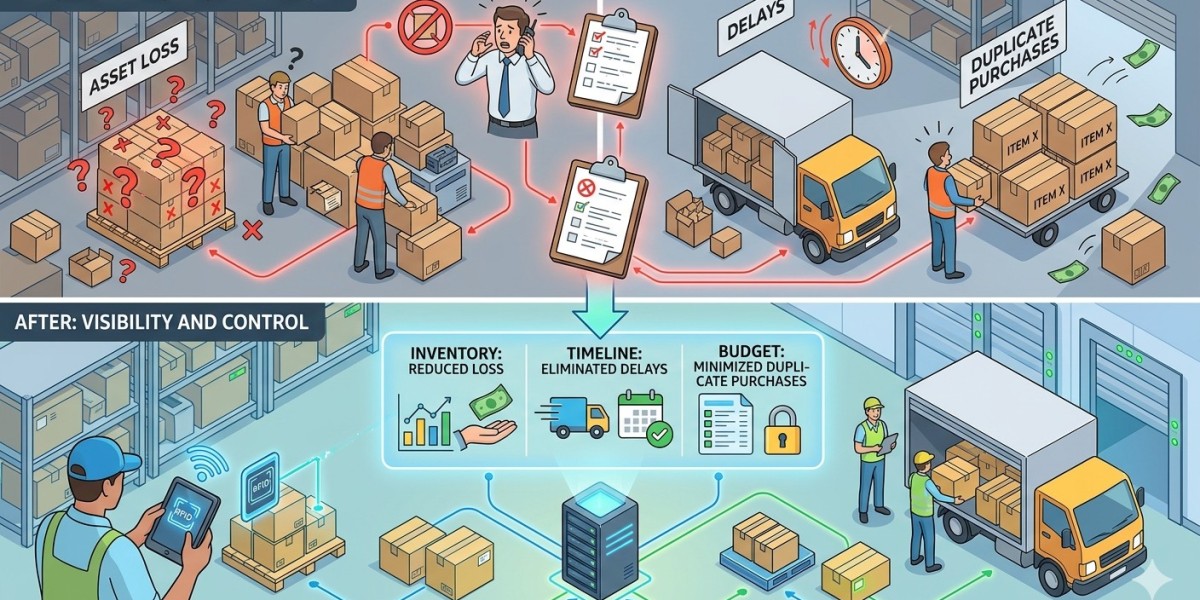

Construction companies depend on more than heavy equipment. They also rely on trailers, generators, compressors, pumps, compactors, lasers, attachments, power tools, safety equipment, and small jobsite assets that move between crews, yards, trucks, and projects every day.
When those assets are not tracked properly, the cost builds quietly. A missing generator can delay work in a remote area. A misplaced laser can slow layout. A missing attachment can make equipment less useful. A trailer parked at the wrong jobsite can create hours of searching. These problems may seem small at first, but across several jobsites they create real project costs.
That is why contractors are using construction asset tracking software to reduce loss, prevent delays, and avoid buying tools and equipment they already own.
Why Asset Tracking Matters for Contractors
Construction assets move constantly. A tool may be used by one crew in the morning and another crew in the afternoon. A trailer may be moved after hours. An attachment may travel with equipment but not be logged separately. A generator may be dropped at a site and forgotten until the next crew needs it.
This movement creates risk. If a contractor does not have a clear process for assigning, moving, and returning assets, the company loses visibility quickly.
Asset Loss Is Not Always Theft
Many contractors assume missing assets are stolen, but that is not always true. In many cases, assets are misplaced, borrowed, left behind, stored in the wrong trailer, or moved without being recorded.
The asset may still be somewhere inside the company. But if no one can find it when the crew needs it, it creates the same operational problem as a lost item.
The Hidden Cost of Poor Asset Tracking
The purchase price of a missing asset is only the obvious cost. The hidden cost is usually larger. Crews may spend time searching. Project managers may delay work. Yard teams may check multiple trailers. Another asset may be rented or purchased just to keep production moving.
This creates a cycle of waste. The company owns assets, but still buys replacements because availability is unclear. Over time, inventory grows, but jobsite readiness does not improve.
Duplicate Purchases Hurt Margins
Duplicate purchasing is one of the most common asset problems in construction. A crew needs a tool, no one knows where the existing one is, and a replacement gets approved. The decision may make sense at the moment because the crew needs to work, but it creates long-term waste.
A contractor may end up with too many pumps, too many generators, too many small tools, or too many attachments. At the same time, crews may still feel like they never have what they need because assets are not properly assigned or visible.
Better asset tracking helps contractors check what they already own before spending more money.
Small Assets Can Cause Big Delays
Large equipment usually gets most of the attention because they cost more. But small assets can delay major work if they are missing at the wrong time.
A laser may be needed for layout. A compactor may be required before backfill. A pump may keep water out of a trench. A generator may power tools on a remote jobsite. If any of these assets are unavailable, the crew may not be able to continue.
In construction, the value of an asset is not only its purchase price. It is also the role it plays in keeping production moving.
Why Spreadsheets Struggle With Asset Movement
Spreadsheets can work for a basic asset list, but they struggle with real construction movement. Assets are checked out, borrowed, repaired, reassigned, moved, returned, and sometimes damaged. If every change depends on manual updates, the list becomes outdated quickly.
Once the spreadsheet becomes unreliable, teams stop trusting it. Then they go back to phone calls and memories. That is not asset control. It is asset guessing.
Accountability Improves Asset Control
Better asset tracking creates accountability without slowing down the field. The goal is not to blame crews. The goal is to know where each asset is, who has it, and when it should return.
When assets are assigned to a crew, truck, jobsite, or responsible person, everyone has a clearer process. Yard teams can prepare equipment. Project managers can plan with more confidence. Foremen can reduce time spent searching.
Where Asset Tracking Software Fits
In the lower part of daily construction operations, construction asset tracking software helps connect tools, trailers, attachments, compact equipment, crews, yards, and jobsites into one tracking process. Instead of relying on memory, teams can see where assets are assigned and whether they are available.
A strong system can include barcode or QR code scanning, mobile check-in, photo records, condition notes, jobsite assignment, and movement history. The process must be simple enough for field teams to use consistently.
Better Asset Data Improves Planning
Asset tracking also improves planning before the job starts. Project managers can confirm availability before mobilization. Yard teams can stage tools and equipment more accurately. Operations leaders can identify assets that are frequently missing or underused.
This helps reduce last-minute scrambling and improves jobsite readiness.
Conclusion
Poor asset tracking creates loss, delays, duplicate purchases, and wasted labor. These problems may look small individually, but they can damage margins across multiple jobsites.
With construction asset tracking software, contractors can improve visibility, reduce replacement spending, strengthen accountability and make sure crews have the tools, trailers and equipment they need when the work is ready to move.