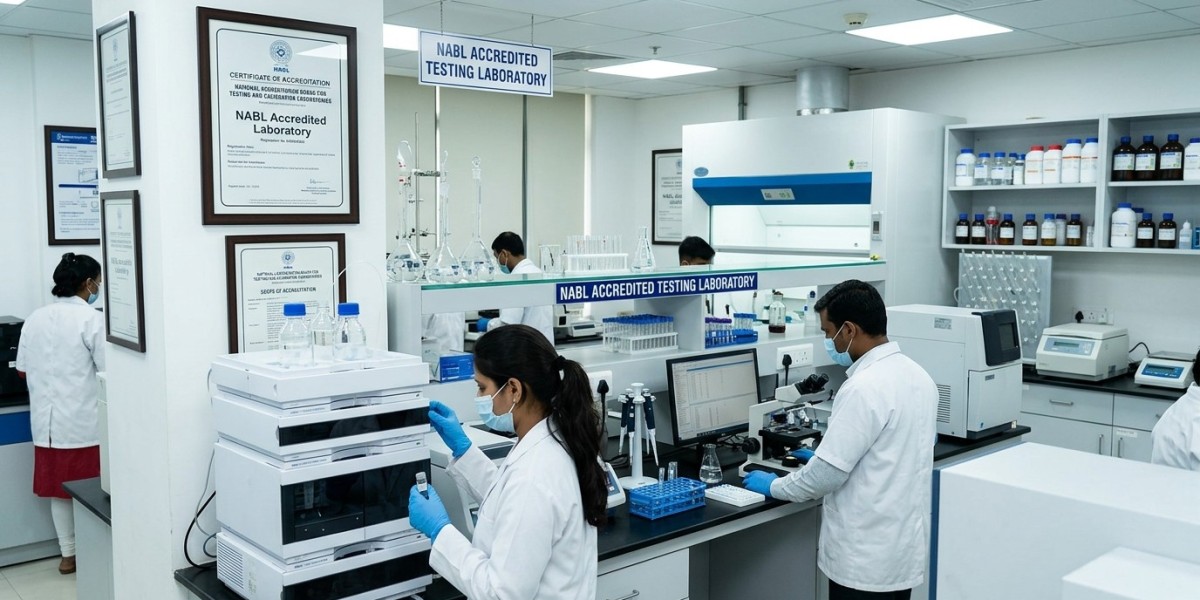

In the rapidly evolving healthcare landscape of 2026, diagnostic accuracy has moved from being a luxury to a fundamental requirement for effective medical treatment. With the rise of hyper-personalized medicine and AI-driven diagnostics, the role of nabl accredited labs has become more critical than ever. Accreditation by the National Accreditation Board for Testing and Calibration Laboratories (NABL), a constituent board of the Quality Council of India, ensures that a laboratory has the technical competence to perform specific tests with precision. However, as the number of accredited facilities in major hubs like Bangalore and Mumbai continues to grow, patients and healthcare providers often find themselves asking a crucial question: How do you choose between two different accredited labs?
Choosing the right facility involves looking beyond the NABL logo. While accreditation provides a baseline of quality, laboratories differ significantly in their specific scope of testing, the sophistication of their automated systems, and their adherence to the latest global standards, such as ISO 15189:2022. By June 2026, the integration of digital health records and the Digital Personal Data Protection Act (DPDPA) has added layers of complexity to how labs handle your sensitive information. This guide provides a structured framework to help you evaluate and compare laboratories to ensure you receive the most reliable results for your health needs.
Verifying the Specific Scope of Accreditation
One of the most common misconceptions is that a lab's NABL accreditation covers every test they offer. In reality, accreditation is granted for a specific "scope," which includes particular disciplines like clinical biochemistry, molecular diagnostics, or histopathology. When comparing two nabl accredited labs, your first step should be to verify if the specific test you require—especially if it is a specialized genomic or hormonal assay—is actually included in their accredited scope. A lab might be accredited for routine blood sugar tests but not for advanced liquid biopsies or rare infectious disease markers.
To verify this, you should access the NABL directory through the official Quality Council of India (QCI) portal. By entering the lab’s unique accreditation number (e.g., MC-XXXX), you can view their current certificate and the exhaustive list of tests they are authorized to perform under the NABL symbol. In 2026, labs are also transitioning to the newer ISO 15189:2022 standards, which place a heavier emphasis on clinical risk management and patient safety. Checking whether a lab has updated its accreditation to this latest version can give you a clear indicator of its commitment to modern quality standards.
| Factor to Verify | Importance in Selection | How to Check |
| :--- | :--- | :--- |
| Accredited Disciplines | Ensures the lab is technically competent for your specific test category. | View the "Scope of Accreditation" document on the NABL website. |
| Certificate Validity | Confirms that the lab’s accreditation has not expired or been suspended. | Check the "Valid Until" date on the official NABL certificate. |
| ISO Version | Indicates if the lab follows the latest ISO 15189:2022 global guidelines. | Look for the standard version mentioned on the accreditation certificate. |
| Test Parameters | Distinguishes between basic screening and advanced diagnostic testing. | Ensure the specific analyte (e.g., Vitamin D, HBA1C) is listed in the scope. |
Evaluating Technical Competence and AI Integration
By 2026, the "Gold Standard" for diagnostic labs has shifted toward Total Laboratory Automation (TLA) and the integration of Artificial Intelligence (AI). When choosing between laboratories, evaluate the level of automation they employ in their pre-analytical and analytical phases. Labs that utilize automated sample sorting, centrifugation, and aliquoting significantly reduce the risk of human error—which historically accounts for nearly 60-70% of all laboratory mistakes. Advanced facilities now use AI-assisted pathology to provide high-value insights, helping pathologists identify subtle patterns in tissue samples that the human eye might miss.
Technical competence also extends to the qualifications of the laboratory staff. NABL mandates strict guidelines for the training and competency of phlebotomists, technicians, and doctors (pathologists, biochemists, etc.). In the current year, leading labs are investing in continuous training for their staff to handle sophisticated molecular diagnostic tools and digital pathology systems. When researching, look for labs that transparently share their clinicians' credentials and their history with advanced technology, as this often translates to higher diagnostic precision and a lower rate of specimen rejection.
Automation Levels: Does the lab use robotic tracks (TLA) to minimize manual handling?
AI Diagnostics: Are AI algorithms used to double-check complex results in radiology or pathology?
Staff Qualifications: Does the lab employ MD Pathologists or Phlebotomists with recognized certifications for specialized collections?
Equipment Calibration: Does the lab participate in regular calibration of its equipment against national or international standards?
Digital Pathology: Can the lab share high-resolution digital slides for a second opinion with experts globally?
Assessing Quality Control: EQAS, PT, and Z-Scores
Accuracy is not a one-time achievement but a continuous process. To maintain their status, nabl accredited labs must participate in External Quality Assurance Schemes (EQAS) and Proficiency Testing (PT). These programs involve an independent agency sending "blind" samples to the lab; the lab then tests these samples and sends the results back for evaluation. Comparing how different labs perform in these external audits is perhaps the most objective way to judge their reliability.
Ask the laboratory about their PT performance or their participation in global quality programs. High-performing labs will often have consistently low Z-scores (a statistical measure of how far their results deviate from the true value), indicating superior precision. Furthermore, in 2026, many top-tier labs have joined the Global Accreditation Cooperation Incorporated (which replaced ILAC and IAF in early 2026), ensuring their results are recognized internationally without the need for retesting if you are traveling or seeking treatment abroad.
| Quality Marker | Description | Why It Matters to You |
| :--- | :--- | :--- |
| EQAS Participation | Regular testing of samples provided by external bodies. | Ensures the lab's machines are producing accurate, unbiased results. |
| Z-Score Performance | A statistical ranking of the lab’s accuracy compared to its peers. | A score close to zero indicates the highest possible level of precision. |
| Internal Quality Control (IQC) | Daily checks performed by the lab before processing patient samples. | Guarantees that the equipment is functioning correctly every single day. |
| Global Recognition | Compliance with MRA (Mutual Recognition Arrangements). | Your reports will be accepted by doctors and hospitals across the globe. |
Data Privacy and Digital Security (DPDPA 2023)
In 2026, the security of your medical data is as important as the accuracy of the test itself. With the full implementation of the Digital Personal Data Protection Act (DPDPA), diagnostic centers are now legally classified as "Data Fiduciaries." This means they must follow stringent protocols for obtaining explicit consent, storing sensitive health data, and ensuring it is not misused. When choosing between labs, look for those that have transparent privacy policies and robust digital infrastructure.
Leading laboratories have now adopted blockchain technology to create tamper-proof diagnostic reports. This ensures that the PDF or digital record you receive cannot be altered by unauthorized parties, providing an extra layer of trust for both the patient and the treating physician. Furthermore, check if the lab provides a secure patient portal or a "Health Locker" where you can access your historical data while maintaining control over who can view it. A lab that prioritizes cybersecurity is likely to have a more disciplined approach to its overall clinical operations.
Explicit Consent: Does the lab clearly explain how your data will be used before collection?
Data Encryption: Are your reports stored using end-to-end encryption to prevent breaches?
Audit Trails: Does the system track every person who accesses your medical records?
Right to Erasure: Does the lab allow you to request the deletion of your personal data as per DPDPA guidelines?
Secure Delivery: Are reports delivered via password-protected links or verified mobile apps?
Logistics, Home Collection, and Turnaround Time (TAT)
The quality of a lab report is often determined before the sample even reaches the machine. In 2026, home sample collection has become the standard for most routine tests. However, not all home collection services are equal. You must choose a lab that guarantees a "Cold Chain" during transport. Samples for certain tests, such as insulin or specific vitamins, are highly temperature-sensitive; if the phlebotomist does not use specialized gel packs or temperature-monitored carrier boxes, the final result could be clinically misleading.
Turnaround Time (TAT) is another critical differentiator. While some labs promise results within a few hours, you should verify if this speed compromises quality. The best labs utilize real-time logistics tracking, allowing you to see when your sample was picked up, when it reached the lab, and when it entered the processing phase. Efficient digital logistics not only reduce the TAT but also ensure that the integrity of the specimen is maintained throughout the journey.
Cold Chain Logistics: Use of temperature-controlled bags with real-time IoT monitoring.
Barcoding at Source: Samples should be barcoded immediately at your home to prevent mix-ups.
Real-Time Tracking: Apps that let you track the phlebotomist and the sample’s status.
Phlebotomy Safety: Use of vacuum-based tubes (Vacutainers) and sterile, single-use kits.
Report Accessibility: Fast delivery via WhatsApp, email, or integrated health apps.
Post-Test Support and Patient-Centric Value
The final step in choosing between nabl accredited labs is evaluating what happens after the report is generated. A collection of numbers on a page can be confusing for most patients. In 2026, top-tier labs distinguish themselves by offering integrated post-test support. This includes AI-generated summaries of your reports that highlight critical values in plain language and provide a trend analysis of your health over time. Some labs even offer immediate teleconsultations with specialists to help you understand the implications of your results.
Finally, consider the transparency of their pricing. While NABL labs often have slightly higher costs due to the rigorous quality controls they must maintain, there should be no "hidden" charges for specialized collection or digital reports. A lab that offers a clear breakdown of costs and provides high-value diagnostic insights—rather than just a list of data points—is ultimately the better choice for your long-term health management.
1. Report Interpretation: Does the lab provide a clear summary of what the results mean?
2. Trend Analysis: Can the lab show you how your cholesterol or HbA1c levels have changed over the last year?
3. Specialist Access: Is there a facility to speak with a doctor or a lab consultant if you have questions?
4. Transparent Billing: Are the prices for home collection and specialized tests clearly listed on their app or website?
5. Customer Feedback: Check recent reviews (from 2026) regarding the lab’s responsiveness and the professionalism of their home collection team.
Conclusion
Choosing between different NABL accredited labs requires a shift from looking at simple certifications to examining the technical and ethical depth of the organization. By 2026, the standard for excellence has moved toward specialized scopes, AI-enhanced accuracy, and absolute data privacy under the DPDPA. Whether you are in Bangalore or any other major healthcare hub, prioritizing labs that invest in the latest ISO 15189:2022 standards, participate in rigorous EQAS programs, and provide seamless digital logistics will ensure that your diagnostic journey is both safe and accurate. Your health decisions are only as good as the data they are based on—make sure that data comes from a laboratory that treats quality as a non-negotiable commitment.