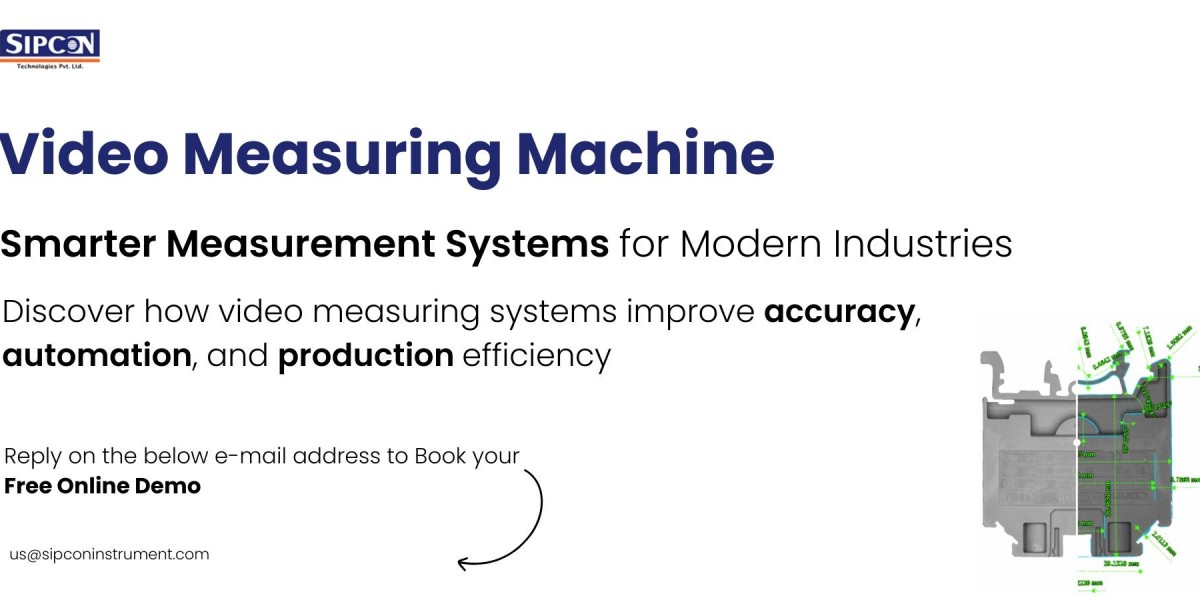

If you're inspecting tiny components where every fraction of a millimeter matters, a video measuring machine can make life much easier. Instead of relying on manual gauges or calipers, the system uses a high-resolution camera and precision software to measure dimensions quickly and consistently.
The real advantage isn't just speed. It's repeatability. When multiple operators inspect the same part, you want the same result every time. That's where optical measurement systems prove their value.
Why More Manufacturers Are Using Video Measuring Machines
Many industries now work with parts that have complex shapes, delicate edges, or features too small for traditional measuring tools.
A good video measuring machine manufacturer designs systems that capture these fine details without physically touching the component. That reduces the risk of damaging sensitive parts while improving measurement accuracy.
The software also stores inspection programs, so routine quality checks become much faster after the initial setup.
Understanding Video Measuring Machine Price
One of the first questions buyers ask is about the video measuring machine price. The answer depends on several practical factors rather than a single number.
Some of the biggest factors include:
- Measuring range
- Camera resolution
- Optical zoom quality
- CNC or manual operation
- Accuracy requirements
- Software capabilities
- Probe or laser integration
Don't rush this part. Buying a machine simply because it's cheaper often creates bigger costs later if it cannot measure your production parts properly.
Measuring Plastic Parts with Confidence
A Video Measuring machine for plastic parts is commonly used because plastic components can flex or deform when touched with conventional measuring tools.
Optical inspection avoids direct contact, making it suitable for:
- Injection molded components
- Medical plastic devices
- Electronic housings
- Connectors
- Consumer product parts
Plastic surfaces sometimes create reflections that confuse measurements. Proper lighting setup makes a noticeable difference. This is where many inspection teams lose accuracy without realizing it.
Inspecting Rubber Components Accurately
Rubber parts create a different challenge altogether.
A Video Measuring machine for rubber parts helps inspect seals, O-rings, gaskets, molded rubber products, and flexible components without compressing the material.
Since rubber can easily change shape under pressure, non-contact measurement provides more reliable results.
Small deviations can ruin the results, especially when inspecting sealing components used in automotive or industrial equipment. Consistent positioning of the sample is just as important as the machine itself.
Simple Inspection Process
Most inspections follow a straightforward workflow:
- Clean the component before placing it on the measuring stage.
- Secure the part so it doesn't move during inspection.
- Adjust lighting to improve edge detection.
- Focus the camera correctly.
- Run the programmed measurement routine.
- Review dimensions against the drawing.
- Save the inspection report for quality records.
Skipping even one preparation step can affect repeatability more than many people expect.
What to Look for Before Buying
When comparing systems, consider more than specifications on a brochure.
Ask questions like:
- Is calibration simple?
- Can operators learn the software quickly?
- Does the machine support future inspection requirements?
- Is technical support available when needed?
- Are spare parts and servicing easily accessible?
These practical considerations usually matter more over several years than the initial purchase price.
Choosing a Reliable Partner
A measuring machine is a long-term investment, so working with an experienced supplier matters. Companies that provide installation support, operator training, calibration guidance, and after-sales service generally help customers achieve better inspection consistency over time.
For manufacturers across the USA, Sipcon Technologies Pvt Ltd supplies precision optical measurement solutions designed for demanding quality inspection applications while also providing the technical support needed throughout the machine's lifecycle.
Practical Takeaway
Choosing the right video measuring system isn't about buying the most advanced model available. It's about selecting equipment that matches your parts, inspection volume, and accuracy requirements. Spend time evaluating your measurement needs, test real production samples whenever possible, and pay attention to lighting, setup, and operator training. Those small decisions usually have the biggest impact on inspection accuracy over the long run.