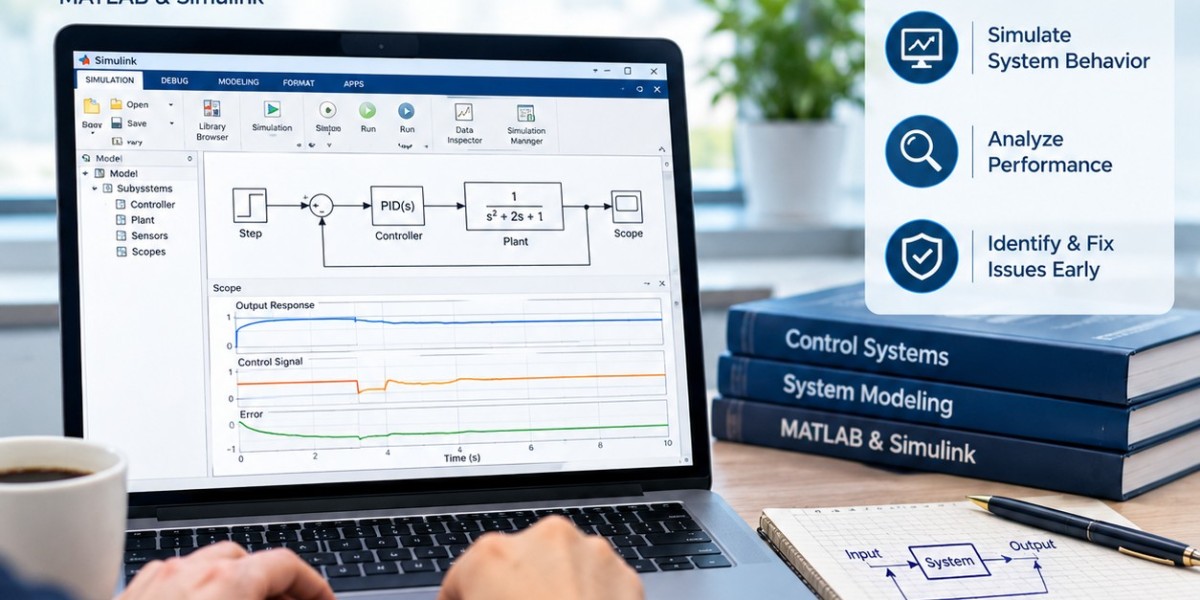

Developing a complex engineering system often requires extensive testing before the final hardware is produced. Simulink System Modeling provides engineers with a way to create virtual representations of systems and study their behavior through simulation.
With system models, engineers can represent inputs, outputs, control logic, physical relationships, and interactions between different components. This allows teams to experiment with system behavior without immediately depending on physical prototypes.
One useful application is control-system development. Engineers can create and test control algorithms, adjust parameters, and observe system responses under different conditions. Simulation can also help identify unexpected behavior at an earlier stage of development.
Model-based engineering can support several industries, including automotive, embedded systems, industrial automation, aerospace, and energy systems. Depending on the project, models can be developed at different levels, from individual components to complete system architectures.
Another benefit of Simulink System Modeling is that it can support communication between different engineering teams. A well-structured model can provide a common representation of how a system is expected to operate.
By using modeling and simulation before physical implementation, engineering teams can evaluate ideas earlier, refine system behavior, and create a more organized development process.