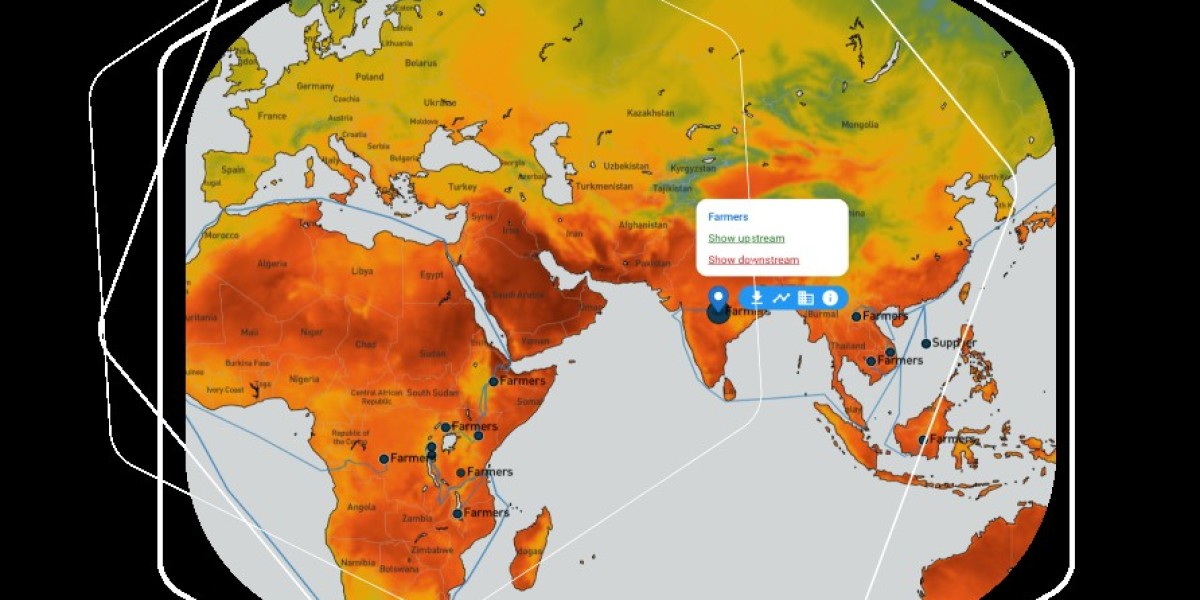

As climate change continues to influence business operations, regulatory requirements, and investor expectations, organizations are increasingly relying on climate data analysis to make informed decisions. Raw environmental data alone has limited value unless it can be transformed into meaningful insights that support sustainability goals, risk management, and long-term business planning.
At Correntics, we help organizations simplify climate data analysis, enabling them to convert complex environmental information into actionable strategies that improve resilience and ESG performance. In this article, we'll explain what climate data analysis is, why it matters, and how businesses can use it to gain a competitive advantage.
What Is Climate Data Analysis?
Climate data analysis is the process of collecting, organizing, evaluating, and interpreting climate-related information to identify patterns, risks, opportunities, and trends. The goal is to transform large volumes of environmental data into practical insights that support decision-making.
Climate data may include:
- Greenhouse gas (GHG) emissions
- Temperature records
- Weather patterns
- Energy consumption
- Water usage
- Carbon footprint metrics
- Climate risk indicators
- Supply chain environmental data
Through effective analysis, organizations can better understand how climate factors affect their operations and future performance.
Why Climate Data Analysis Is Important
Businesses today face growing pressure from regulators, investors, customers, and stakeholders to demonstrate environmental responsibility and climate resilience.
Climate data analysis helps organizations:
- Understand climate-related risks
- Improve ESG reporting accuracy
- Support regulatory compliance
- Track sustainability performance
- Identify operational efficiencies
- Develop climate adaptation strategies
- Enhance stakeholder confidence
Without reliable climate data analysis, sustainability initiatives may lack direction and measurable outcomes.
Turning Environmental Data into Actionable Insights
The true value of climate data analysis lies in transforming information into practical actions. Organizations can use climate insights to guide strategic decisions and improve performance.
Identifying Climate Risks
Climate data analysis helps businesses assess exposure to physical and transition risks such as:
- Flooding
- Heatwaves
- Droughts
- Supply chain disruptions
- Regulatory changes
- Carbon pricing policies
Understanding these risks enables organizations to develop proactive mitigation and adaptation strategies.
Measuring Sustainability Performance
Climate data provides visibility into environmental performance indicators, including emissions, energy use, and resource consumption.
Organizations can use these insights to:
- Set sustainability targets
- Track progress
- Benchmark performance
- Identify improvement opportunities
This supports more effective sustainability management and reporting.
Supporting Strategic Planning
Businesses can use climate data analysis to evaluate future scenarios and make informed long-term decisions.
For example, organizations can assess:
- Climate impacts on operations
- Investment risks
- Facility vulnerabilities
- Resource availability
- Market opportunities
This enables more resilient and sustainable business planning.
Key Components of Climate Data Analysis
Data Collection
The first step in climate data analysis involves gathering relevant environmental data from internal and external sources.
Common sources include:
- Utility bills
- Emissions tracking systems
- Supply chain partners
- Climate models
- Environmental monitoring tools
Accurate data collection forms the foundation of reliable analysis.
Data Integration
Climate information often exists across multiple systems and departments. Integrating these datasets into a centralized platform improves consistency and accessibility.
Correntics helps organizations consolidate sustainability and climate information into a single source of truth.
Data Validation
Reliable analysis requires high-quality data. Validation processes help identify inaccuracies, inconsistencies, and missing information before analysis begins.
Analytics and Reporting
Advanced analytics tools transform raw climate data into dashboards, reports, forecasts, and risk assessments that support decision-making.
Organizations can visualize trends and communicate findings more effectively to stakeholders.
How Climate Data Analysis Supports ESG Reporting
Environmental, Social, and Governance (ESG) reporting depends heavily on accurate climate data.
Organizations must often disclose information related to:
- Carbon emissions
- Climate risks
- Energy consumption
- Sustainability goals
- Environmental performance
Climate data analysis helps ensure ESG disclosures are accurate, transparent, and aligned with frameworks such as:
- ISSB
- TCFD
- CSRD
- GRI
- SASB
Correntics simplifies ESG reporting by automating data collection, analysis, and disclosure workflows.
Benefits of Climate Data Analysis for Businesses
Improved Decision-Making
Organizations gain access to reliable information that supports strategic and operational decisions.
Better Risk Management
Climate-related risks can be identified and addressed before they become major business challenges.
Enhanced Regulatory Compliance
Accurate climate data supports compliance with evolving environmental regulations and disclosure requirements.
Greater Operational Efficiency
Analysis often reveals opportunities to reduce energy consumption, improve resource efficiency, and lower costs.
Stronger Investor Confidence
Investors increasingly evaluate climate-related performance when making investment decisions. Transparent reporting supported by climate data analysis helps build trust.
Common Challenges in Climate Data Analysis
Despite its benefits, organizations often face several challenges:
Fragmented Data Sources
Climate information may be scattered across departments and systems.
Data Quality Issues
Incomplete or inaccurate data can undermine reporting and decision-making.
Complex Reporting Requirements
Organizations must often comply with multiple sustainability frameworks and disclosure standards.
Limited Internal Expertise
Many businesses lack the resources or technical knowledge needed to perform advanced climate analysis.
This is why organizations increasingly rely on technology platforms like Correntics.
How Correntics Simplifies Climate Data Analysis
Correntics provides a comprehensive solution for managing and analyzing climate-related information.
Our platform helps organizations:
- Collect and centralize climate data
- Monitor environmental performance
- Assess climate risks
- Support ESG and sustainability reporting
- Track emissions and sustainability targets
- Generate actionable insights
By simplifying climate data management and analysis, Correntics enables businesses to focus on strategy and impact rather than manual data processes.
The Future of Climate Data Analysis
As sustainability expectations continue to evolve, climate data analysis will become increasingly important for organizations of all sizes.
Future trends include:
- Greater use of AI and predictive analytics
- Real-time environmental monitoring
- Enhanced climate risk modeling
- Automated ESG reporting
- Increased regulatory requirements
- Data-driven sustainability decision-making
Organizations that invest in robust climate data analysis capabilities today will be better prepared for future challenges and opportunities.
Conclusion
Climate data analysis is no longer optional for organizations seeking to manage climate risks, improve ESG performance, and build long-term resilience. By transforming environmental data into actionable insights, businesses can make smarter decisions, strengthen sustainability initiatives, and enhance stakeholder confidence.
With the support of Correntics, organizations can streamline climate data analysis, improve reporting accuracy, and develop effective strategies for navigating a rapidly changing environmental landscape. Turning data into action is the key to achieving meaningful sustainability outcomes and long-term business success.