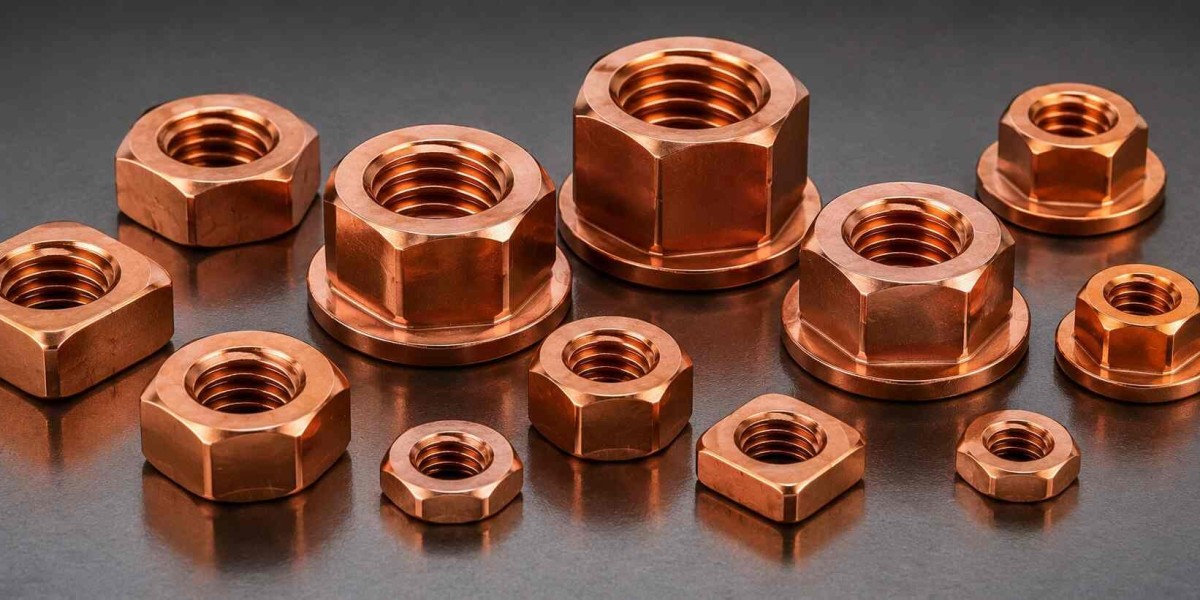

A procurement manager touring a fastener unit in Rajkot once asked to see the annealing furnace first. Most buyers never ask that. They inspect the box, check the thread with a gauge, and assume the process was fine because the part looks fine. Copper Nuts don't fail because a machine was miscalibrated on the last pass — they fail because a step three stations earlier got rushed, and nothing about the finished part shows it.
Kiran Industries has run this process from Shapar, Rajkot, since 1985, and we're one of the Copper Nuts Manufacturers who'll walk you through it station by station instead of just quoting a price.
Most Copper Nuts Suppliers reselling finished stock can't answer questions about annealing time or gauge tolerance — that information never left the factory that made the part. That gap is what this post is for.
What Goes Into a Copper Nut, Station by Station
Raw Material Selection
Production starts with copper rod or billet, typically C10100 or C11000 grade, checked against its declared composition before it clears for the floor. Skip this check and you're forging a problem into the part before it has a shape.
Forging or Cold Heading
Most Copper Nuts are cold headed — shaped under pressure at room temperature, which preserves grain structure and gives better mechanical strength than a hot-forged equivalent. Cold heading also work-hardens the copper, which is why the next step matters more than buyers assume.
Annealing
Here's the detail most buyers overlook: copper that's just been cold headed is harder and more brittle than the spec sheet implies. Annealing — controlled reheating and cooling — relieves that stress before threading. Shorten this step to save furnace time, and you get nuts that pass a visual check and crack under real torque months later.
Threading and Tapping
Internal threads are cut or formed to spec, then checked against go/no-go gauges. A worn tap can pass a spot check and still produce threads that gall under repeated tightening.
Surface Finishing
Nuts are left bare, tin-plated, or nickel-plated depending on the application. This is where Copper Nuts Dealers placing repeat orders should check consistency — a plating line running slightly thin on one batch won't show up in a casual check.
What to Actually Ask a Manufacturer Before You Order
Do you anneal after cold heading, or skip it on standard orders? A bad answer treats annealing as optional — it isn't, if the nut carries load.
What's your thread tolerance class, and can you show a gauge report? A bad answer is a grade name with no inspection data behind it.
Is plating thickness measured per batch or assumed consistent? A bad answer assumes; a real process measures.
Can you trace a finished lot back to its raw material batch? If not, a dispute six months from now has nowhere to go.
What's your rejection rate at final inspection? A manufacturer who won't answer this hasn't been tracking it.
These are the same five questions Copper Nuts Wholesalers should run past every vendor on their list, not just new ones — sourcing quietly drifts even with suppliers you've used for years.
Why the Process Details Actually Protect Your Order
Verified raw material grade stops conductivity and corrosion problems before they're baked in.
Proper annealing prevents brittleness that shows up as field failures, not factory rejects.
Gauge-checked threading reduces installation friction and torque failures.
Batch-level plating checks protect performance in humid or coastal installations.
Lot traceability gives you a real answer when something goes wrong months later.
This is why Copper Nuts Manufacturers in India who control their own process cost slightly more upfront and noticeably less over the life of an order.
Why Manufacturing From Rajkot Still Matters for Delivery
We manufacture out of Shapar, Rajkot — a cluster with deep access to copper billet suppliers and the ancillary trades a fastener unit depends on: plating, tool and die, inspection. That density is a supply chain advantage, not just an address. A plating-line breakdown mid-order costs two days here, not two weeks. Freight out of Rajkot also reaches buyers across Gujarat, Maharashtra, and Rajasthan faster than sourcing from Copper Nuts Suppliers in India scattered across separate clusters.
Who's Actually Running the Floor
We've manufactured fasteners from Rajkot since 1985, under our founder Vallabhbhai N. Bhalani. We hold ISO certification, and every batch that leaves our floor goes through raw material verification, dimensional inspection, and thread testing before it's packed. We don't claim zero rejects — no cold-heading process has a zero-reject rate, and any manufacturer telling you otherwise isn't tracking the number honestly. It's also why several Copper Nuts Dealers in India have stayed on as repeat buyers instead of switching sourcing every time metal prices shift.
Ready to Order? Send Us This
Send your required grade, thread size, quantity, and finish, and we'll confirm stock, documentation available, and lead time within one business day. Custom thread or plating requirements outside our standard range add a short lead time. This applies whether you're a Copper Nuts Wholesalers in India account placing a bulk order or a first-time buyer testing a smaller batch.
The Process Is the Part You're Actually Buying
A Copper Nuts Manufacturers isn't really selling you a finished part — they're selling you everything that happened to the copper before it reached that shape. Kiran Industries has run that process from Rajkot since 1985, and buyers who ask about annealing and thread tolerance are the ones who don't get callbacks about failures later.
FAQs
What's the actual manufacturing process behind Copper Nuts?
Raw copper billet is cold headed into shape, annealed to relieve internal stress, threaded to spec, then inspected and finished. Skip the annealing step and the part looks identical but fails under torque later.
Do all Copper Nuts Manufacturers anneal after cold heading?
No, and that's honestly one of the more common corners cut on standard orders. Ask directly, and ask for it in writing if the order is going into a load-bearing or high-torque application.
How do Copper Nuts Suppliers differ from manufacturers in terms of quality control?
A supplier reselling manufactured stock is only as reliable as whoever made it — they may not have visibility into annealing practices or thread tolerance data. Buying direct from a manufacturer gets you closer to that information.
What should Copper Nuts Dealers check before adding a new manufacturer to their supply chain?
Ask for a gauge report and a rejection rate, not just a sample part. A single good sample tells you nothing about batch consistency.
Can Copper Nuts Wholesalers rely on consistent thread tolerance across large orders?
With a manufacturer that gauge-checks each batch, yes. Without it, tolerance can drift slightly between production runs, which is a real problem on bulk orders installed in batches over months.
Is cold heading always better than hot forging for copper fasteners?
For most standard nut sizes, yes — cold heading gives better grain structure and mechanical strength. It does require proper annealing afterward, which is the step some manufacturers shortcut to save time.
How fast can Kiran Industries confirm an order after I send specifications?
We respond within one business day confirming stock and lead time. Custom specifications outside our standard thread range add setup time, so we'll flag that upfront rather than let it surprise you later.