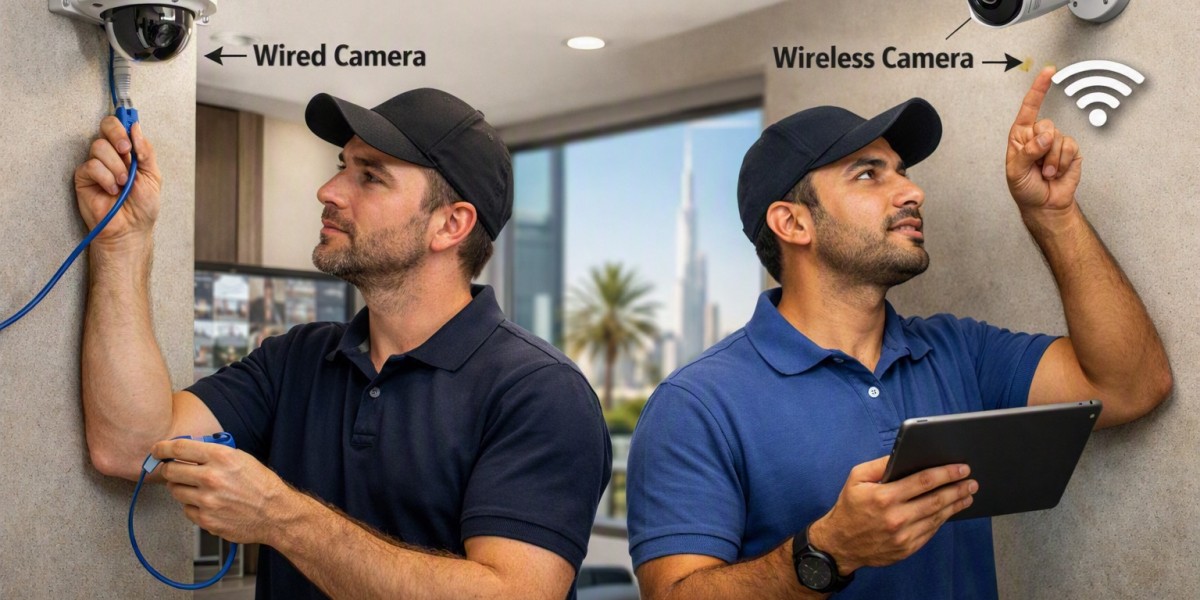

When planning CCTV installation in Dubai, one of the first decisions is whether to choose a wired or wireless camera system. Both options can provide useful security monitoring, but they work in different ways. The right choice depends on the building layout, internet connection, camera locations, power supply, and the level of reliability needed.
What Is a Wired CCTV System?
A wired CCTV system uses physical cables to connect cameras to a recording device or network. These cables carry video signals and, depending on the system, may also provide power to the cameras.
Wired systems are commonly used in villas, offices, shops, warehouses, and other buildings where cameras are expected to stay in fixed positions. Once the cables are installed, the cameras can provide a stable connection without depending on wireless signal strength.
One important benefit is consistent communication between the cameras and recording equipment. This can be useful when continuous monitoring is required.
What Is a Wireless CCTV System?
A wireless CCTV system sends video data through a wireless network instead of using a dedicated video cable between every camera and the recording equipment. However, wireless cameras still usually need a power source unless they use batteries or another power method.
Wireless systems can be easier to place because fewer data cables are required. This can be helpful in rented properties, finished buildings, or areas where running new cables would be difficult.
The quality of a wireless system depends on factors such as Wi-Fi coverage, walls, distance, network traffic, and the location of the cameras.
Installation Differences
Installation is one of the clearest differences between the two systems.
A wired system requires cable routes between cameras and the relevant equipment. This may involve work above ceilings, inside walls, or along suitable cable pathways. The installation can take more planning, especially in large buildings.
Wireless systems generally need less data cabling. This may make camera placement easier in some situations. However, the wireless network still needs to be strong enough to support the cameras.
Therefore, wireless does not always mean completely cable-free.
Reliability and Connection Stability
Wired CCTV systems usually provide a stable connection because the cameras communicate through physical cables. They are less affected by Wi-Fi interference, network congestion, or physical obstacles between devices.
Wireless systems can also work well, but their performance depends more heavily on the network environment. Thick walls, metal structures, long distances, and weak Wi-Fi coverage can affect communication.
For locations where stable video transmission is a major concern, these differences should be considered before selecting a system.
Image Quality and Video Transmission
Both wired and wireless CCTV systems can support high-quality video. Image quality is mainly affected by the camera's resolution, lens, image sensor, lighting conditions, and video settings.
The difference is often related to how the video reaches the recording or network equipment. A wired connection can provide a direct and stable communication path, while a wireless connection depends on available network capacity.
For several cameras operating at the same time, network planning becomes especially important with wireless systems.
Power Requirements
Power is another important point to consider. Wired cameras normally receive power through a separate cable or a network cable designed to carry both data and power.
Wireless cameras still need electricity. Some can use a nearby power outlet, while battery-powered models need regular charging or battery replacement.
This means the term "wireless" mainly refers to the method used to transmit data. It does not necessarily mean the camera operates without wires of any kind.
Maintenance and Future Changes
Wired systems can require more effort when cables need to be replaced, extended, or moved. However, once properly installed, the physical connection can remain stable for many years.
Wireless systems may be easier to move or add in some buildings. At the same time, network problems may require attention if cameras lose connection or experience delays.
Before choosing either system, it is useful to consider how often cameras may need to be relocated or expanded.
Which System Is Better for Different Buildings?
There is no single choice that works for every property.
A wired system may be suitable for new construction, large offices, warehouses, and properties where permanent camera locations are planned.
A wireless system may be useful for smaller spaces, completed interiors, temporary monitoring, or locations where installing long cable routes is difficult.
Some properties can also benefit from a combination of wired and wireless cameras, depending on the layout and monitoring needs.
What Should You Consider Before Choosing?
Start by checking the number of cameras, camera locations, available power points, network coverage, building structure, recording requirements, and future expansion plans.
It is also useful to consider how difficult it would be to install cables. A site survey can help identify weak Wi-Fi areas, suitable cable routes, power requirements, and possible camera positions.
The most practical choice is the system that provides dependable coverage while fitting the building's physical and technical conditions.
When comparing CCTV installation in Dubai, understanding the difference between wired and wireless systems makes it easier to choose a setup based on the property's layout, connection needs, installation conditions, and long-term use.