
For a growing number of Indian youngsters, Formula 1 is no longer something watched only on television on Sunday evenings. It is becoming a career ambition.
Walk into a karting track in India and you can now find teenagers thinking about lap times, racing licences, fitness routines and international championships. Some dream of Formula 1, while others are aiming for Formula 2, Formula 3, Formula E or professional GT racing. The destination may differ, but the ambition is becoming much more visible.
That change did not happen overnight. India has produced international racers such as Narain Karthikeyan and Jehan Daruvala, while Kush Maini's progress through the junior single-seater ladder has given another generation a more relatable example. In 2025, Maini became the first Indian to win a Formula 2 Sprint Race at Monaco, another reminder that Indian drivers can compete on major international stages.
At grassroots level, the pathway is also becoming clearer. The FIA-certified F4 Indian Championship is designed to help young drivers move from karting into single-seater racing, creating a domestic stepping stone before international competition.
For Indian motorsport fans following racing news, driver results and championship developments through platforms such as gold365 this growing ecosystem is worth watching closely. The important question, however, is not simply whether India will produce another F1 driver. It is whether the country can build a sustainable system capable of producing many high-level racers.

Why India’s Motorsport Scene Is Growing
For decades, motorsport in India faced a difficult problem: plenty of interest existed, but the pathway from beginner to professional driver was not always obvious.
A young person might love Formula 1, but knowing what to do next was another matter. Should they start karting? Where could they race? Which championship mattered? How could they obtain international experience?
That landscape is gradually changing.
From Karting to Formula 4: A More Visible Pathway
Karting remains one of the most important starting points for young drivers. It teaches fundamentals that cannot be learned simply by playing racing games: braking points, racing lines, overtaking, defensive driving, throttle control and, perhaps most importantly, how to remain calm when several cars are fighting for the same corner.
The next step for promising youngsters can be single-seater racing.
Formula 4 is particularly important because it provides an introduction to cars that resemble the fundamental philosophy of higher formula racing. Drivers begin learning how to work with engineers, understand telemetry, manage tyres and communicate technical feedback.
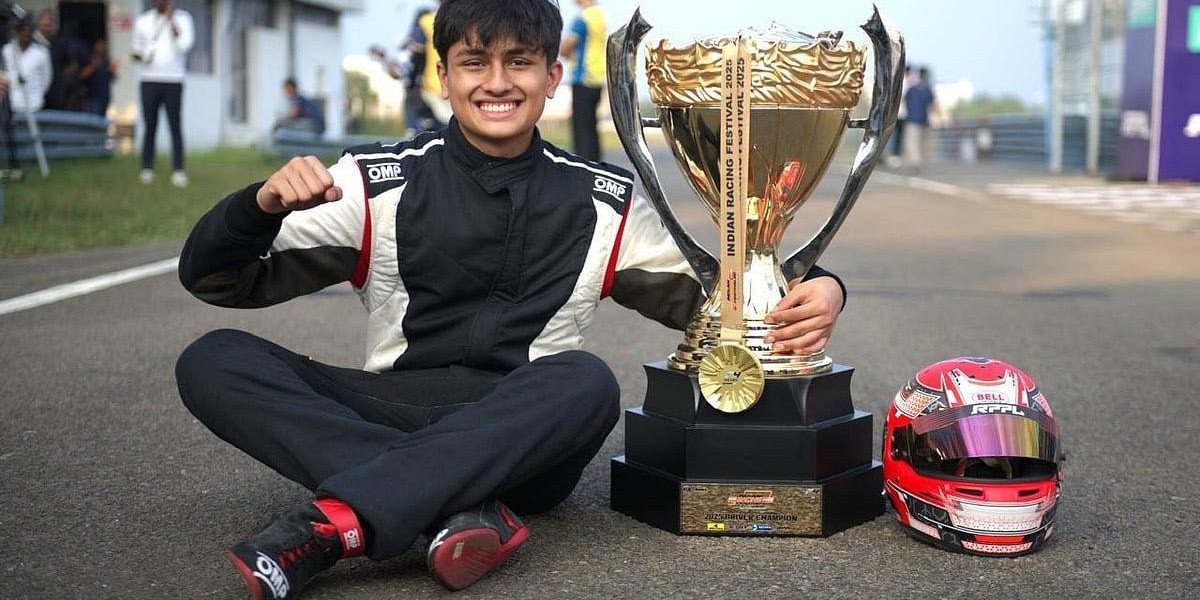
India's F4 championship has therefore become an important part of the country's motorsport development. The 2025 season produced a particularly interesting example when 15-year-old Shane Chandaria became the youngest F4 India champion. India's Ishaan Madesh finished third overall. Chandaria's title also earned him 12 Super Licence points, with 40 required to qualify for an FIA Super Licence.
The significance goes beyond one champion.
A young driver competing against international talent in India can gain experience without immediately moving their entire racing programme overseas. That does not remove the need for European or other international competition later, but it can make the first steps more accessible.
The Indian Racing Festival is also bringing the F4 Indian Championship and Indian Racing League together under a broader domestic motorsport platform. The 2026 calendar includes six Indian Racing Festival rounds, showing that the domestic racing ecosystem is continuing to develop.
That matters because drivers need more than one weekend of racing to improve.
They need repeated competition, professional coaching, engineers, fitness support and opportunities to understand how a racing team operates.
Young Drivers Are Starting Earlier and Thinking Globally
Another important change is the age at which young drivers begin taking motorsport seriously.
Many successful international racers started karting at very young ages. Indian families who previously viewed motorsport primarily as entertainment are increasingly recognising that it can be approached as a structured sporting discipline.
The ambitions of young Indian racers also extend beyond domestic championships.
Shane Chandaria's 2025 F4 India title, for example, was followed by plans to compete in French F4 in 2026 as he continues pursuing a long-term single-seater career.
There are also encouraging signs of greater diversity.
Shriya Lohia has been reported as India's first female F4 racer, having started karting at nine and progressing into single-seater competition. Her story is significant because motorsport needs a larger talent pool if India wants to compete internationally on a consistent basis.
This wider participation is important. The next major Indian driver could come from a family already involved in motorsport, but they could just as easily come from a family that discovered karting through a local track.
What It Really Takes to Chase an F1 Career
The phrase "F1 dream" sounds exciting, but the road to Formula 1 is much more demanding than simply being fast.
A young driver needs several things to come together at the right time.
Racing ability: Speed is the foundation. Without strong results, moving up the ladder becomes extremely difficult.
Physical fitness: Modern single-seaters place considerable demands on the neck, core and cardiovascular system. Drivers need to maintain concentration while dealing with high physical loads.
Technical understanding: A professional driver cannot simply tell an engineer that the car feels slow. They need to explain whether the problem comes from braking, traction, balance, tyre temperature or another area.
Mental resilience: A bad qualifying session, mechanical failure or crash can end a weekend. Young drivers need to recover quickly instead of carrying one mistake into the next race.
Financial support: This is one of the biggest barriers. Junior motorsport is expensive, and moving from one championship to another can require substantial funding.
That final point is particularly important when discussing India's motorsport boom.
More talent does not automatically mean more F1 drivers.
A driver can be exceptionally quick and still struggle to progress because funding disappears at the wrong moment. This is one reason talent programmes, sponsors, academies and structured domestic championships are so important.
The reality is similar to football or cricket at grassroots level: finding talented youngsters is only the beginning. The system has to keep supporting them as the competition becomes stronger.
Why India Needs More Than One F1 Hopeful
It is tempting to look for "the next Narain Karthikeyan" or "the next Kush Maini."
But India's long-term goal should be broader.
A healthy motorsport ecosystem should produce drivers across multiple disciplines. Some may eventually reach Formula 1. Others could build careers in Formula 2, Formula 3, Formula E, endurance racing, GT championships or professional testing.
That wider ecosystem can create opportunities for engineers, mechanics, data analysts, aerodynamicists, team managers, physiotherapists and media professionals too.
In other words, motorsport development is not only about putting an Indian driver on the F1 grid.
It is about creating an Indian motorsport industry.
The domestic racing scene already demonstrates that possibility. Indian Racing League events, F4 competition and national championships provide opportunities for drivers and teams to operate within the country. The 2026 Indian Racing Festival schedule includes multiple rounds across the season, giving the domestic calendar greater continuity.
That continuity is crucial.
A championship that appears for one season and disappears the next cannot build a reliable development pipeline. Young drivers need to know that if they perform well this year, there will be a meaningful next step waiting for them.
The Role of Parents, Schools and Technology
Behind almost every young racing driver is a family making difficult decisions.
Motorsport requires travel, equipment, coaching, race fees and time. For teenagers, there is also the challenge of balancing school with a demanding sporting schedule.
Parents therefore play a role that goes far beyond paying for races. They help manage education, travel, fitness and the emotional pressure that comes with competition.
Schools can help too.
Flexible academic arrangements can allow talented athletes to continue their education while competing nationally or internationally. This is particularly important because very few young drivers ultimately reach Formula 1.
A sensible development plan should always include education and alternative career options.
Technology is also changing how young drivers train.
Sim racing can help drivers understand circuits, braking points and racecraft before they drive a real car. It cannot completely replace physical racing, but it can provide additional practice at relatively low cost.
Data analysis is another growing part of the sport.
Young drivers increasingly have access to onboard cameras, telemetry and lap comparison tools. Instead of simply asking, "Why was I slower?", they can examine exactly where time was lost.
That creates a more scientific approach to driver development.
The Biggest Challenges Still Facing Indian Drivers
The biggest challenge is money.
International junior racing can become extremely expensive once a driver moves beyond domestic competition. Flights, accommodation, testing, tyres, race entries and team costs quickly add up.
The second challenge is international exposure.
A driver who dominates a domestic championship still needs to prove that they can compete against strong European, Asian and global fields.
The third is consistency.
One impressive weekend can attract attention. A complete season of strong qualifying performances, race results, technical feedback and professional behaviour is much more valuable.
Finally, there is the pressure created by the F1 dream itself.
Young drivers can become obsessed with the idea that anything other than Formula 1 represents failure. That is not a healthy way to view motorsport.
Professional racing has many successful destinations.
A driver who reaches Formula E, the World Endurance Championship, GT racing or another international series has still achieved something remarkable.
Key Takeaways
- India's motorsport pathway is becoming more structured.
- Karting remains an important foundation for young drivers.
- F4 India provides a domestic stepping stone into single-seater racing.
- The Indian Racing Festival is helping create a more consistent domestic calendar.
- Shane Chandaria's 2025 F4 India championship demonstrates the emergence of very young talent.
- Indian drivers still need international experience to progress toward the highest levels.
- Funding remains one of the biggest barriers to junior motorsport.
- Sim racing, telemetry and data analysis are becoming useful development tools.
- India's motorsport future should be measured by the strength of its entire ecosystem, not only by whether one driver reaches F1.
Frequently Asked Questions About India’s F1 Dream
Why are more young Indians interested in Formula 1?
The growing global popularity of F1, increased access to racing content and the emergence of Indian drivers on international stages have made motorsport careers more visible. Domestic championships also give young racers a clearer starting point.
What is the usual pathway from karting to F1?
A typical single-seater pathway can involve karting, Formula 4, Formula Regional, Formula 3 and Formula 2 before Formula 1. However, careers do not always follow the same sequence, and many successful drivers take different routes.
Can Indian drivers start their careers in India?
Yes. Domestic karting and single-seater championships can provide valuable early experience. F4 India is specifically positioned as an FIA-certified platform where karting drivers can move into single-seater competition.
How difficult is it financially to reach Formula 1?
Extremely difficult. Junior motorsport can require substantial funding, particularly once a driver begins competing internationally. Sponsorship, manufacturer programmes, talent scholarships and family funding can all play important roles.
Who are some Indian young drivers to watch?
Ishaan Madesh is one name to follow after finishing third in the 2025 F4 India standings. Shane Chandaria, although Kenyan rather than Indian, is also relevant to the domestic development story after becoming the youngest F4 India champion. Other Indian racers are progressing through different junior and professional categories.
Can motorsport become a bigger career industry in India?
Yes. A stronger domestic racing calendar can create opportunities not only for drivers but also for engineers, mechanics, data specialists, team managers and other professionals. The continued development of the Indian Racing Festival is one indication of that broader potential.
For fans checking gold365 vip, 365 win or gold365 online while following motorsport news, the most useful information is still the driver's actual championship results, development pathway and verified race performance rather than hype around a potential F1 move.
Conclusion
India's motorsport boom is not really about producing one superstar. It is about giving more young people a realistic opportunity to find out how far their ability can take them.
The emergence of stronger domestic championships, younger drivers and better development pathways is an encouraging sign. But the hardest part comes after the excitement of the first karting victory: finding funding, gaining international experience, handling pressure and continuing to improve when the competition gets tougher.
If India can keep strengthening those foundations, the F1 dream will become more than a distant ambition for young racers. It can become one possible destination within a much larger and healthier Indian motorsport culture.