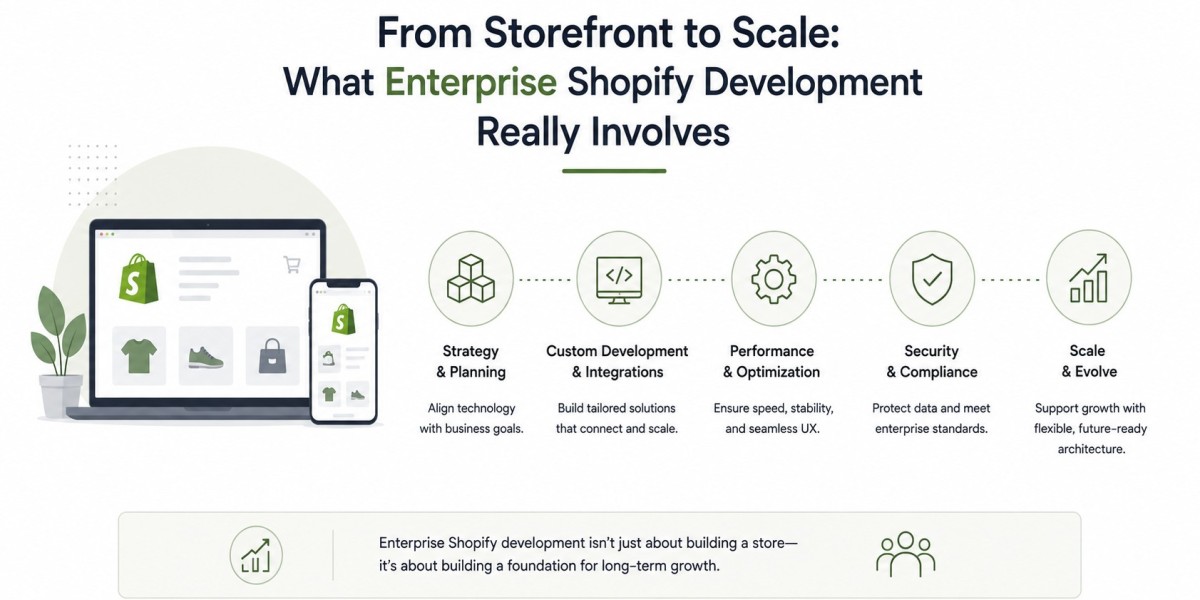

A founder once told us his store had "basically the same setup" as when he launched it three years earlier, except now it did $40 million a year instead of $400,000. Same theme. Same handful of apps. He wasn't wrong about the setup staying similar. He was very wrong about that being fine.
That's the gap this article is about. Somewhere between a solid store and an enterprise operation, the rules change completely, and most merchants don't notice until something breaks in public, usually during their biggest sales event of the year.
Enterprise Isn't a Revenue Number. It's a Risk Profile.
People often assume "enterprise Shopify" just means "big Shopify," measured in revenue or order volume. That's part of it, but the real definition is about risk and complexity, not size alone.
A $2 million brand with one product, one warehouse, and simple checkout logic isn't enterprise, no matter how much traffic it gets. A $5 million brand running twelve international storefronts, complex B2B pricing, real time inventory sync across three warehouses, and custom checkout logic absolutely is, even at a fraction of the revenue. Enterprise Shopify development is triggered by operational complexity and the cost of downtime, not a dollar figure.
What Actually Changes at Enterprise Scale
Performance Becomes a Business Metric, Not a Technical One
At small scale, a slow page costs you a little conversion rate. At enterprise scale, a slow checkout during a flash sale can cost six figures in an afternoon, and it happens publicly, with customer complaints piling up on social media in real time.
This shifts performance work from "nice to have" to core infrastructure. Enterprise builds get load tested against realistic traffic spikes before launch, not after a crash reveals the problem. Caching strategy, third party script auditing, and checkout speed become ongoing operational disciplines, not a one time cleanup.
Integration Complexity Multiplies
A small store might connect Shopify to an email platform and a shipping tool. An enterprise operation often connects Shopify to an ERP system, a warehouse management platform, a customer data platform, a tax engine, a fraud detection tool, and internal reporting dashboards, frequently across multiple regions with different compliance requirements.
None of that is theme work. It's systems architecture, and it requires the kind of depth you'd expect from Custom Software Development Services, not Shopify app installation. Every integration point is also a potential failure point, so enterprise projects spend real time on error handling and fallback logic that smaller builds often skip entirely.
Custom Checkout and Business Logic Get Genuinely Complicated
Checkout extensibility opened the door to real customization, and enterprise merchants use nearly all of it. Different pricing logic for wholesale versus retail customers in the same store. Subscription and one time purchase products sharing a cart. Location based tax and shipping rules across a dozen countries. Custom payment terms for B2B accounts.
Building this correctly requires developers who understand both the Shopify platform deeply and general software engineering principles, which is exactly the overlap you'd look for in strong Shopify Development Services paired with broader technical experience.
Governance and Change Management Become Real Jobs
At small scale, one developer can make a change directly on the live store. At enterprise scale, that's how outages happen. Enterprise Shopify development introduces staging environments, version control, code review, and structured deployment processes, the same discipline you'd expect from any serious software project.
This slows individual changes down slightly, which frustrates teams used to moving fast. It also prevents the kind of "someone pushed an untested change on Black Friday morning" disaster that has genuinely happened to brands we've since worked with.
Multi Region and Multi Brand Complexity
Enterprise merchants often run multiple storefronts across regions or brands from a shared backend, with localized pricing, currency, language, and legal requirements for each. Keeping catalog, inventory, and pricing synchronized across all of them without manual duplication is a real architecture problem, not a settings toggle.
This is where general Web Development Services experience becomes essential alongside Shopify specific knowledge. A lot of the hardest problems at this scale (data synchronization, caching layers, API rate limits) aren't Shopify problems specifically. They're distributed systems problems that happen to involve Shopify.
The Team You Actually Need Changes Too
A standard store can be handled well by a small, focused team, sometimes even a single skilled developer. Enterprise Shopify development typically needs a broader mix: someone architecting the overall system, developers handling custom storefront and checkout logic, someone owning integrations and backend systems, and someone responsible for performance and monitoring on an ongoing basis, not just at launch.
This is also where a lot of enterprise merchants get burned. They hire based on their old team's structure from when they were smaller, and end up with a team that's excellent at storefront polish but has no one who actually understands distributed systems, caching, or integration architecture under load. The store looks fine in a demo and buckles under real traffic.
What Good Enterprise Support Actually Looks Like Day to Day
It's less exciting than the initial build, and that's kind of the point. Ongoing monitoring for performance regressions as new apps and features get added. Regular load testing ahead of major sales events, not just once at launch. A clear deployment process so changes go through staging before touching the live store. Documentation thorough enough that no single person becomes a single point of failure if they leave or get busy.
None of this is glamorous. All of it is the difference between a brand that scales smoothly through its biggest growth years and one that has a very public, very expensive failure at the worst possible moment.
We've watched both versions play out with clients at North Rose Technologies, and the pattern is consistent: the brands that invest in this operational discipline early rarely make headlines for the wrong reasons. The ones that don't, eventually do.
FAQ
At what revenue level does a store need enterprise Shopify development?
There's no fixed number. It's driven by operational complexity, multiple integrations, international operations, custom checkout logic, and the cost of downtime, not revenue alone. A smaller store with high complexity can need enterprise level support before a larger, simpler store does.
Is Shopify Plus required for enterprise level development?
Not strictly, but most enterprise merchants end up there because of checkout customization limits, API rate limits, and support requirements on standard Shopify plans. It's usually a practical necessity rather than a hard technical requirement.
How is enterprise Shopify development different from a large custom build?
The core difference is ongoing operational discipline: staging environments, load testing, monitoring, and structured deployment processes, not just a bigger one time build. Enterprise work treats the store as infrastructure that needs continuous care.
What's the biggest mistake brands make when scaling their Shopify store?
Assuming the same setup and team that worked at a smaller scale will keep working as complexity grows. Performance and integration problems usually surface first during the highest traffic moments, which is the worst possible time to discover them.