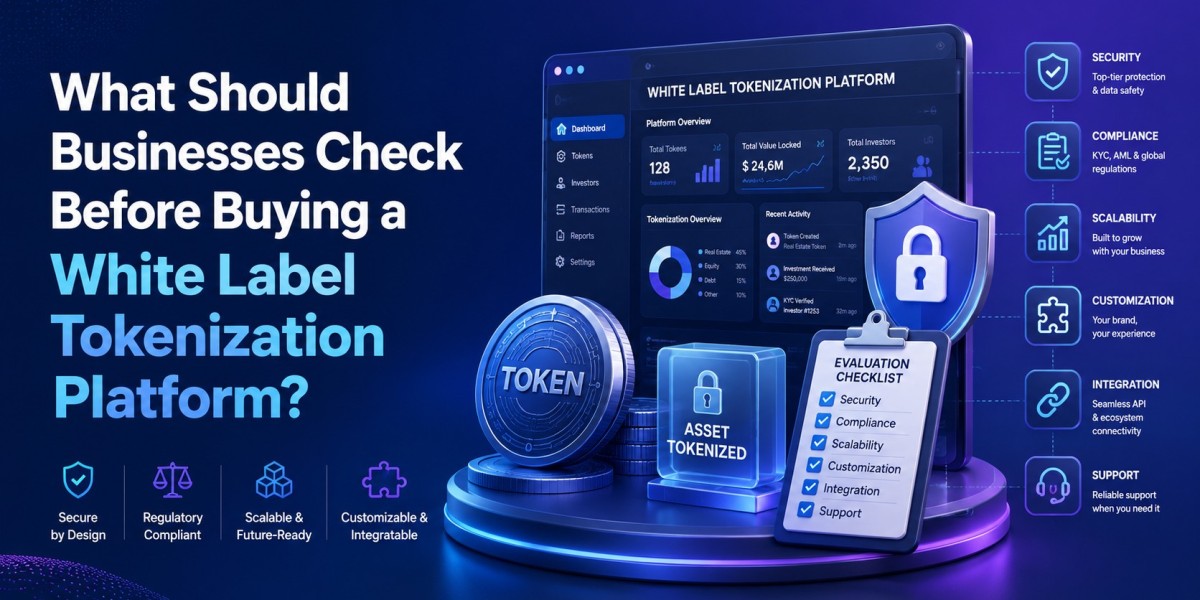

Tokenization has become a practical option for businesses looking to represent real-world assets through blockchain-based ownership structures. Real estate firms, investment companies, financial institutions, and asset managers can use tokenization platforms to issue digital representations of assets, manage investors, process transactions, and maintain records through a single digital environment. However, buying a ready-made platform requires more than checking its appearance or feature list.
A White Label Tokenization Platform can reduce the time and resources required to launch a tokenization business, but the platform still needs to match the company's asset type, business model, investor requirements, compliance approach, and operational plans. A platform that looks impressive during a product demonstration may create problems later if it lacks suitable token standards, investor management functions, security controls, or administrative tools.
Before signing a purchase agreement, businesses should examine the technology, compliance setup, customization options, transaction structure, security practices, support model, and total ownership cost. This article explains the areas businesses should review before purchasing a tokenization platform.
1. Check Whether the Platform Matches Your Asset Type
The first assessment should focus on the assets the business plans to tokenize. Tokenizing a commercial property portfolio has different requirements from tokenizing private equity, artwork, commodities, debt instruments, or infrastructure projects.
For businesses focused on property assets, the platform should support property information, ownership records, investor allocations, distributions, documentation, and relevant transaction workflows. A White Label Real Estate Tokenization Platform should also provide suitable functions for managing multiple properties and investment offerings.
Before buying, prepare a list of the assets you expect to tokenize during the first year. Compare that list with the platform's supported asset structures. Ask the provider whether the same platform can accommodate additional asset categories later without requiring an entirely separate system.
2. Review the Token Creation Process
Token issuance is one of the most important areas to inspect before making a purchase. Businesses should understand how tokens are created, assigned, transferred, paused, burned, and retired when necessary.
Ask the provider which blockchain networks are supported and which token standards are available. Also check whether the token structure can represent fractional ownership, revenue rights, debt claims, or other financial arrangements relevant to your business model.
The token creation process should include appropriate administrative controls. Businesses should know who can initiate an issuance, who can approve it, and how token records are maintained. A practical demonstration of the complete issuance process is more useful than a simple feature list.
3. Examine Investor Management Functions
A tokenization business may have investors from different locations, investment categories, and account types. The platform should provide tools for handling investor registration, verification, wallet information, investment history, token balances, transaction records, and communications.
During evaluation, ask the provider to demonstrate the investor journey from account registration to investment completion. Check whether investors can access their holdings and transaction history through a dedicated dashboard.
For property-focused ventures, White Label Real Estate Tokenization Services should include investor management functions that work alongside property offerings. The platform should also support multiple investment opportunities if the business intends to list several assets.
4. Assess KYC and AML Support
Regulatory obligations can influence the entire tokenization workflow. Businesses should therefore examine how the platform handles Know Your Customer and Anti-Money Laundering procedures.
Check whether identity verification can be connected to external compliance providers. Review how investor documents are collected, stored, reviewed, and updated. Ask whether restrictions can be applied based on investor location, investor category, or offering requirements.
The platform does not replace legal advice or regulatory review. Instead, it should provide technical functions that fit the company's compliance process. Businesses should discuss their intended operating jurisdictions with legal and compliance professionals before purchasing the system.
5. Inspect Smart Contract Functions
Smart contracts determine how many important token operations take place. Businesses should understand how contracts are created, tested, deployed, upgraded, and monitored.
Ask whether the provider uses reusable contract templates or develops contracts specifically for each offering. Find out whether the contracts have undergone independent security audits and request relevant audit documentation.
It is also useful to ask how contract changes are handled after deployment. If an issue is identified, the business should know what administrative options are available and whether changes require a new contract or another technical procedure.
6. Check Wallet and Custody Integration
Investors need a reliable method for receiving and holding their tokens. The platform may support external wallets, embedded wallets, institutional custody providers, or several wallet options.
Businesses should understand how private keys are handled and who has access to administrative wallet functions. If the platform provides custodial services, review the custody arrangement carefully.
For non-custodial models, check whether investors can connect commonly used wallets. Also examine how wallet verification, transaction approval, and address management work. These details can affect the investor experience and operational workload.
7. Review the Administrative Dashboard
The administrative dashboard should give business operators sufficient control over daily platform activities. It may include investor management, asset listings, token issuance, transaction monitoring, compliance records, distribution management, user permissions, and reporting.
Ask the provider to demonstrate the dashboard using a realistic business scenario rather than a prepared presentation. For example, request a demonstration showing how an administrator would create a property offering, approve an investor, issue tokens, review a transaction, and generate a report.
A useful dashboard can reduce manual work, but businesses should still examine whether its functions match their actual operating process.
8. Examine Security Practices
Security deserves detailed attention because tokenization platforms handle financial information, identity documents, wallet data, and transaction records.
Ask the provider about smart contract audits, application security testing, encryption, access controls, authentication methods, database protection, backup procedures, and incident response.
Businesses should also ask how administrator privileges are managed. Multi-factor authentication, role-based permissions, activity logs, and approval workflows can reduce the risk of unauthorized actions.
Do not rely only on claims made during sales discussions. Request technical documentation, audit reports, security policies, and information about previous security assessments where available.
9. Understand Blockchain Network Support
The choice of blockchain can affect transaction fees, transaction speed, token compatibility, wallet support, and investor access. A platform that supports only one network may limit future business decisions.
Ask which blockchain networks are currently supported and whether the architecture can work with additional networks. Review the cost of deploying tokens and processing transactions on each supported network.
Businesses should also consider whether investors are familiar with the selected network. A technically suitable blockchain may still create friction if investors find wallet setup or transaction processes difficult.
10. Review the White Label Capabilities
The main reason for choosing a white-label product is to launch under the company's own identity. Therefore, businesses should check exactly what can be changed.
Review branding options such as logos, colors, domain configuration, platform name, emails, dashboard appearance, and investor-facing pages. Ask whether the company can modify the interface without contacting the provider for every minor change.
For businesses planning a property investment platform, White Label Real Estate Tokenization Development should provide enough branding and configuration options to present the platform as part of the company's own service ecosystem.
11. Check the Development and Integration Options
A tokenization platform rarely operates alone. It may need connections with payment gateways, identity verification services, custody providers, CRM systems, accounting applications, analytics tools, email systems, and other financial infrastructure.
Ask whether the provider offers APIs, webhooks, documentation, and integration support. Check whether your internal development team can access the necessary technical resources.
White Label Real Estate Tokenization Platform Development should also be evaluated according to the integrations required for your particular business model. A platform with many features may still be unsuitable if it cannot connect with the systems your company already uses.
12. Understand the Pricing Structure
The purchase price is only one part of the financial assessment. Businesses should calculate the total cost of operating the platform.
Ask about setup fees, licensing charges, monthly or annual subscriptions, transaction fees, blockchain gas costs, maintenance charges, integration expenses, support packages, security audits, and future development costs.
Request a written pricing breakdown. Also ask what happens when the number of investors, assets, transactions, or token offerings increases. This helps the business estimate future expenses rather than judging the platform solely on its initial price.
13. Review Ownership and Data Rights
Before signing a contract, businesses should understand who owns the platform data, smart contracts, branding assets, investor information, and custom development work.
Ask what happens to the company's data if the agreement ends. Check whether data can be exported in commonly usable formats and whether the business can migrate to another provider.
Also review the agreement for intellectual property rights. If the provider creates additional modules specifically for your business, clarify who owns those components and what usage rights the company receives.
14. Evaluate Technical Support
Technical problems can affect token issuance, investor access, payments, and transactions. Therefore, support quality matters when selecting a provider.
Ask whether support is available through email, ticketing, chat, phone, or a dedicated account manager. Check the expected response times for normal issues and critical incidents.
Businesses should also find out whether maintenance, upgrades, bug fixes, and security patches are included in the agreement. A written support policy is preferable to relying on verbal commitments.
15. Test the Platform Before Purchasing
A product demonstration is useful, but a hands-on trial provides more information. If possible, ask for a sandbox environment where your team can test the main workflows.
Create a sample asset, register a test investor, complete verification, issue tokens, conduct a test transaction, review the administrative dashboard, and generate reports.
During testing, involve people from different departments, including operations, compliance, finance, and technology. Their feedback can reveal practical issues that may not be visible during a sales demonstration.
16. Check the Provider's Track Record
The platform provider also deserves careful evaluation. Look at previous projects, client references, technical expertise, maintenance history, and experience with tokenization businesses.
Ask whether the provider has worked with businesses similar to yours. A company experienced in real estate may have a different understanding of property tokenization requirements than a provider focused mainly on digital collectibles.
For companies considering White Label Real Estate Tokenization Services, reviewing previous property-related implementations can provide useful information about the provider's practical experience.
17. Review the Launch and Future Development Plan
Buying a platform is only the beginning. Businesses should prepare a launch plan covering asset onboarding, legal review, investor onboarding, payment setup, testing, marketing, support, and ongoing administration.
Ask the provider how updates are delivered and whether future modules can be added. Review the product roadmap and understand which functions are already available versus those still under development.
White Label Real Estate Tokenization Platform Development can become a long-term technology relationship, so the provider's future development approach should be considered before the contract is signed.
Conclusion
Buying a tokenization platform requires a detailed review of technology, asset support, investor management, compliance functions, smart contracts, wallet connections, security, integrations, pricing, data ownership, technical support, and provider experience. Businesses should test the platform with realistic workflows instead of judging it only from a sales presentation. For property-focused companies, the selected system should also match the requirements of White Label Real Estate Tokenization and provide suitable functions for launching and managing property investment offerings. Blockchain App Factory provides White Label Real Estate Tokenization Services for businesses seeking a ready-to-launch tokenization solution with platform development, token issuance, investor management, blockchain integration, and business-focused functionality.
FAQs
1. What is a White Label Tokenization Platform?
A White Label Tokenization Platform is a ready-made tokenization system that a business can launch under its own brand. It can include token issuance, investor management, wallet functions, administrative controls, compliance-related workflows, and transaction management.
2. What should businesses check before buying a tokenization platform?
Businesses should review asset support, blockchain networks, smart contracts, investor management, security, compliance functions, integrations, pricing, data ownership, support, branding options, and the provider's experience.
3. Is a White Label Tokenization Platform suitable for real estate?
Yes. A platform can be used for property tokenization when its functions support property offerings, fractional investment structures, investor records, token ownership, distributions, and related operational requirements.
4. What are White Label Real Estate Tokenization Services?
White Label Real Estate Tokenization Services provide technology and development support for businesses that want to offer property tokenization under their own brand. Services may include platform development, token creation, blockchain integration, investor dashboards, and administrative functions.
5. Why should businesses test the platform before purchasing?
Testing allows businesses to evaluate actual workflows, usability, integrations, transaction processes, administration, and reporting. It can reveal limitations that may not appear during a product presentation.
6. Does a tokenization platform handle regulatory compliance?
The platform can provide technical functions for identity verification, investor screening, transaction restrictions, record keeping, and related workflows. However, businesses remain responsible for obtaining appropriate legal and regulatory advice for their operating markets.
7. What is involved in White Label Real Estate Tokenization Development?
White Label Real Estate Tokenization Development may involve platform architecture, property listing modules, token issuance, investor management, wallet integration, smart contracts, payment systems, administrative dashboards, security testing, and deployment.
8. How much does a White Label Tokenization Platform cost?
The cost depends on platform features, blockchain selection, integrations, branding requirements, security work, support arrangements, and the number of modules required. Businesses should request a detailed quotation based on their actual operating requirements.
9. Can a white-label platform support multiple properties?
Yes, provided the platform includes multi-asset management functions. Businesses should confirm how new properties are added, how separate offerings are managed, and how investors can track their holdings across different assets.
10. What should businesses ask the platform provider before signing?
Businesses should ask about security audits, smart contract ownership, blockchain support, API access, data ownership, pricing, maintenance, support response times, customization options, integrations, migration procedures, and previous tokenization projects.