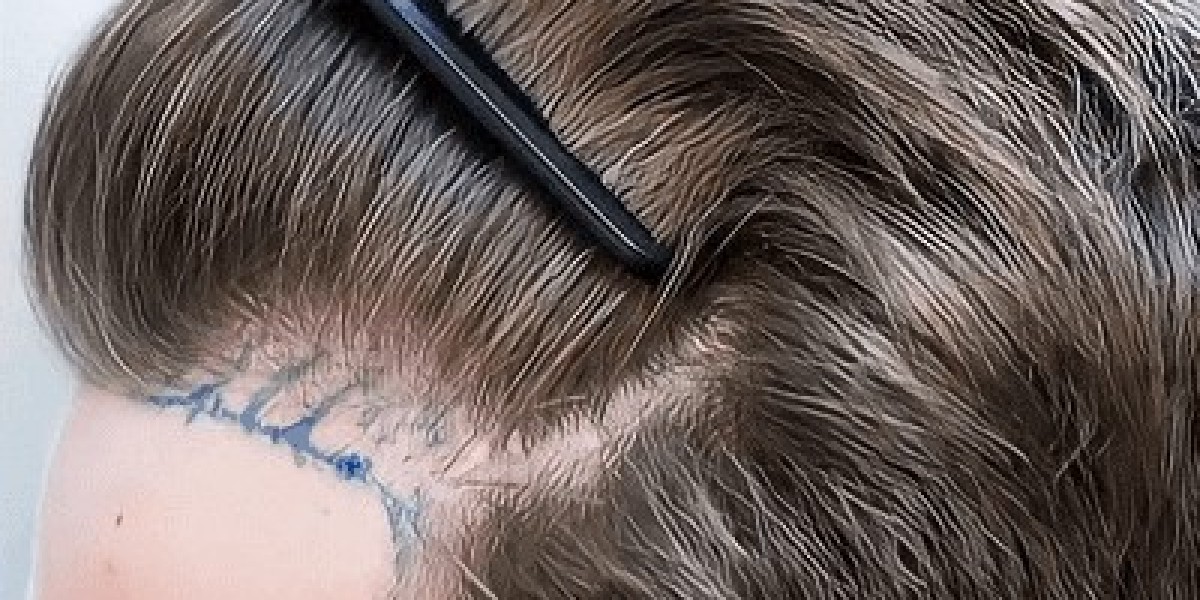

Thinning hair can develop gradually, making it difficult to notice the extent of density loss until the scalp becomes increasingly visible. A FUE hair transplant in Dubai can be considered when reduced hair density affects areas such as the frontal region, temples, mid-scalp, or crown. Instead of treating the scalp as one uniform area, FUE allows individual follicular units to be distributed according to where additional coverage is most needed.
Understanding how thinning differs from complete baldness, how donor hair is used, and why density planning matters can help you develop realistic expectations about hair restoration.
How Thinning Hair Differs From Baldness
Thinning hair does not always mean that an area has completely lost its follicles. In many cases, existing strands become finer, shorter, or less dense over time.
This distinction can be important when considering restoration. Areas with some existing hair may require a different strategy from completely bald regions because transplanted follicles need to blend with the surrounding growth.
Early Signs of Reduced Hair Density
Common signs can include a widening part, increased scalp visibility under bright light, reduced fullness around the temples, or a gradually changing hairline.
Some people may also notice that their usual hairstyle no longer provides the same coverage as before.
Recognizing these changes early can encourage a more thoughtful approach to long-term hair management.
Where FUE Can Help With Thinning
Thinning does not occur in exactly the same pattern for everyone. Some people primarily lose density around the front, while others notice changes around the crown or throughout the top of the scalp.
Frontal Hair Thinning
Reduced density near the forehead can make the hairline appear less defined. Carefully positioned follicular units can add coverage while maintaining a natural transition.
The front requires particular attention because it is highly visible and influences the overall appearance of the face.
Temple Thinning
The temples can gradually become less dense as hair loss progresses. Even relatively small changes in this region can make the hairline appear wider.
Targeted restoration may be considered when sufficient donor follicles are available.
Mid-Scalp Thinning
Some people retain a hairline but experience reduced fullness farther behind it. In such cases, distributing grafts among existing hairs requires careful planning.
The objective is to improve coverage without unnecessarily using a large portion of the available donor supply.
Crown Thinning
Crown restoration presents a different challenge because hair naturally grows in a swirling pattern. Follicle direction and distribution therefore become particularly important.
The amount of coverage possible also depends on the size of the thinning area and the density of the donor region.
Why Donor Hair Is Important
FUE relies on follicles taken from a donor area. This means the available donor supply places a natural limit on how much thinning can be addressed.
A strong donor region may provide greater flexibility, while limited density may require a more conservative restoration plan.
Donor Hair Characteristics
The appearance of transplanted coverage depends not only on the number of follicles but also on their natural characteristics.
Hair thickness, texture, growth direction, and the number of hairs within each follicular unit can influence how much visual density they provide.
FUE Can Preserve a Strategic Approach to Donor Hair
When hair is thinning across a larger region, using donor follicles indiscriminately may not be the best approach.
Strategic distribution can help prioritize areas that have the greatest effect on overall appearance. For example, restoring the frontal region may have a different visual impact from adding the same number of grafts to a less noticeable area.
Long-term planning is therefore especially relevant for people experiencing progressive thinning.
What Happens to Existing Thin Hair?
Existing hair around the transplanted follicles may remain part of the final appearance. This can make blending particularly important.
Transplanted follicles should be positioned in a way that complements the direction and density of the surrounding strands.
The goal is to create a gradual visual transition rather than a noticeable separation between new and existing hair.
Understanding Hair Miniaturization
Pattern-related thinning can involve a process called miniaturization. During this process, affected follicles may gradually produce finer and shorter hairs.
As the strands become smaller, the scalp can become more visible even though some hair remains.
Recognizing miniaturization can be useful when evaluating the overall pattern of thinning and deciding which areas may benefit from additional coverage.
Why Density Planning Matters
Adding the maximum possible number of follicles is not always the most appropriate goal.
A restoration plan needs to balance the size of the thinning area against the available donor supply. If too many follicles are concentrated in one region, fewer may remain available for future needs.
Creating Visual Density
Visual fullness depends on several factors, including the number of hairs, their thickness, placement, angle, and the characteristics of surrounding hair.
This means two people with a similar number of transplanted grafts can have different-looking results.
Hairline Restoration and Facial Balance
A thinning hairline can change the proportions of the face. Restoring it therefore requires consideration beyond simply filling visible gaps.
The shape of the forehead, facial proportions, existing hairline, and expected future changes can all influence the design.
A conservative approach may be appropriate in some cases, particularly when long-term hair loss remains uncertain.
What Is the Recovery Like?
After FUE, the treated areas may temporarily show redness, small crusts, or sensitivity. These changes generally form part of the early healing process.
The scalp should be handled carefully while the follicular units settle. Hair washing and other routine activities may need to be adjusted temporarily according to aftercare instructions.
The visible appearance during the first few weeks should not be considered the final result.
Temporary Shedding After FUE
Some transplanted hairs can shed during the early stages. This can seem worrying, especially when the original concern was already thinning hair.
However, the visible hair shaft and the follicle beneath the skin are not the same thing. A shed shaft does not necessarily mean that the follicle has been permanently lost.
New growth develops according to the follicle's natural cycle.
When Does Thinning Hair Begin to Look Fuller?
Hair restoration requires time. The early period is primarily associated with healing and adjustment, followed by gradual new growth.
New strands can initially appear fine before becoming more mature. The pace of development differs from person to person.
For this reason, judging the outcome too early can create unrealistic expectations.
Caring for Hair After Restoration
Once the scalp has healed, maintaining healthy hair habits remains important. Gentle handling, appropriate cleansing, and protection from unnecessary damage can support overall hair condition.
It is also worth remembering that transplanted follicles are only part of the scalp's hair population. Existing strands can still experience natural thinning over time.
Long-term attention to overall hair health can therefore remain relevant after transplantation.
Can FUE Address Future Hair Loss?
FUE restores selected areas but does not automatically prevent future changes in non-transplanted hair.
If the underlying pattern of thinning continues, surrounding hair may gradually become less dense.
This is why a long-term perspective is particularly important when designing a restoration plan. The current appearance and potential future progression both need to be considered.
Who May Need a Different Approach?
Not every person with thinning hair is an ideal candidate for transplantation. Limited donor density, widespread diffuse thinning, certain scalp conditions, or rapidly changing hair loss can affect suitability.
In some cases, understanding the cause and pattern of thinning may be more important than immediately focusing on transplantation.
A proper assessment can help determine whether FUE is appropriate or whether another hair-management strategy should be considered.
Setting Realistic Expectations
The purpose of hair transplantation is generally to improve coverage rather than recreate the exact density of childhood hair.
Available donor follicles are finite, and the final appearance depends on individual biological factors.
Understanding these limitations can help create a more realistic outlook and encourage better long-term planning.
Final Thoughts
Thinning hair can affect different parts of the scalp in different ways, making individualized planning important. A FUE hair transplant in Dubai can use carefully selected follicular units to improve coverage in areas where reduced density has become noticeable. Donor availability, existing hair, miniaturization, hairline design, graft distribution, recovery, and future thinning all deserve consideration before treatment. For those exploring personalized approaches to hair restoration, TAJMEELS CLINIC can be considered when taking the next step toward a suitable treatment plan.