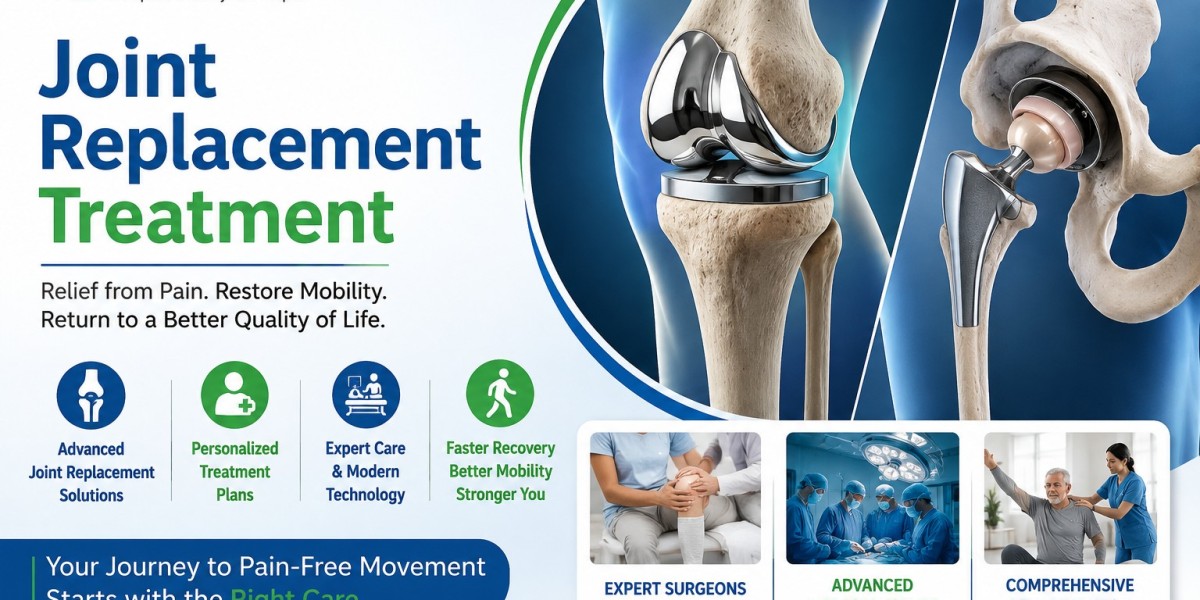

Joint Pain and Its Influence on Your Lifestyle
In itself, pain doesn't necessarily imply joint replacement. The important factor here is how it affects your life and if any other treatment methods work in your case.
An advanced joint dysfunction will manifest itself through:
Uncomfortable movement even over short distances
Effort needed to get up from a chair
Trouble going down stairs
Permanent joint stiffness
Influence on sleep
Failure of usual medications to relieve pain
Such symptoms shouldn't be ignored but brought up to the attention of an orthopedic specialist.
Damaged Joints: What Does It Mean?
Normal joints have smooth surfaces coated with cartilage providing minimal friction while bones move. With time, the cartilage wears off or gets damaged.
As the condition gets worse, moving becomes painful and the joint gets stiffened. Osteoarthritis is one of the causes but other forms such as rheumatoid arthritis, previous injuries, bone fractures and other diseases can result in severe joint dysfunction.
Knee and hip joints get impacted most often. But the decision of surgery depends on the state of a particular joint and doesn't depend on the age.
Does Everyone Need Surgical Intervention?
During the consultation, the doctor may consider:
Your symptoms and their duration
Physical examination results
X-rays and other imaging
Previous treatment
General state of health
Ability to carry out daily activities
This consultation is needed to ensure that the patient and the doctor make an informed decision.
Understanding Knee and Hip Replacement
Knee Replacement
If the surfaces of the knee joint are damaged, then walking and bending of the knee can be accompanied by pain. With the knee replacement surgery, the surfaces of the joint are replaced by artificial parts.
The main purpose of such a surgery is to reduce pain and improve the functioning of the knee.
Pain in the region of the hip joint, groin, and top of the thigh, difficulty in walking or standing is usually characteristic of hip joint problems. In appropriate cases with advanced disease, the damaged portions of the hip joint are replaced by an artificial joint.
Each particular case needs an appropriate treatment and a decision is made after careful orthopedic evaluation.
What To Expect Before Surgery?
Joint replacement surgery requires a certain amount of preparation. Before surgery, your orthopedic specialist will discuss the procedure and recovery period with you.
You may need to take certain tests before the surgery. In addition, it is necessary to inform your surgeon about taking any medications and diseases.
In advance, it is also useful to prepare for the first weeks after surgery. Planning of practical issues, transport, help with some tasks can facilitate the postoperative period.
Recovery is an Important Part of the Treatment
Many patients focus mainly on the procedure itself, but the recovery process requires equal attention.
After surgery, physical activity is gradually increased. Physiotherapy can improve mobility, balance, and help to build up the muscles around the joint.
Everyone has a different recovery process. While some patients progress very quickly, other require more time. Following the program of rehabilitation and recommended check-ups is important.
Why It Is Important to Have a Right Orthopedic Team
Replacement of joints is a serious procedure and many patients have concerns related to implants, surgery, rehabilitation and return to normal life. It is important to choose an orthopedic team which will be able to explain the whole procedure to the patient.
In Excel Orthopedic & Kidney Care Hospital, a person is being examined taking into account his/her complaints, condition of joints and personal needs. The treatment is being developed after understanding whether a surgery is needed in a particular case and what type of treatment can be used.
Not only the surgery itself is important here. It is crucial to educate the patient and to help him/her recover afterwards.
When Should One Have an Examination?
One doesn't need to wait until the pain in the joint becomes uncontrollable. If it repeatedly influences one's usual lifestyle, an examination by an orthopedist can provide the reasons for such a problem.
An early examination will allow the person to understand the treatment options available. In some cases, surgical intervention won't be needed at all.
A Step towards Moving without Pain
Replacement of joints can't change the time, but for selected patients, it can make the daily movement significantly easier. Any treatment should be chosen on the basis of medical examination, and not on pain or recommendations of other people.
For those whose joint problems interfere with the quality of life, the discussion with an orthopedic specialist would be reasonable.
Call to Action
In case of problems in moving caused by painful knees or hips, one should visit the specialists from Excel Orthopedic & Kidney Care Hospital to discuss whether the Joint Replacement Treatment is right for him/her.