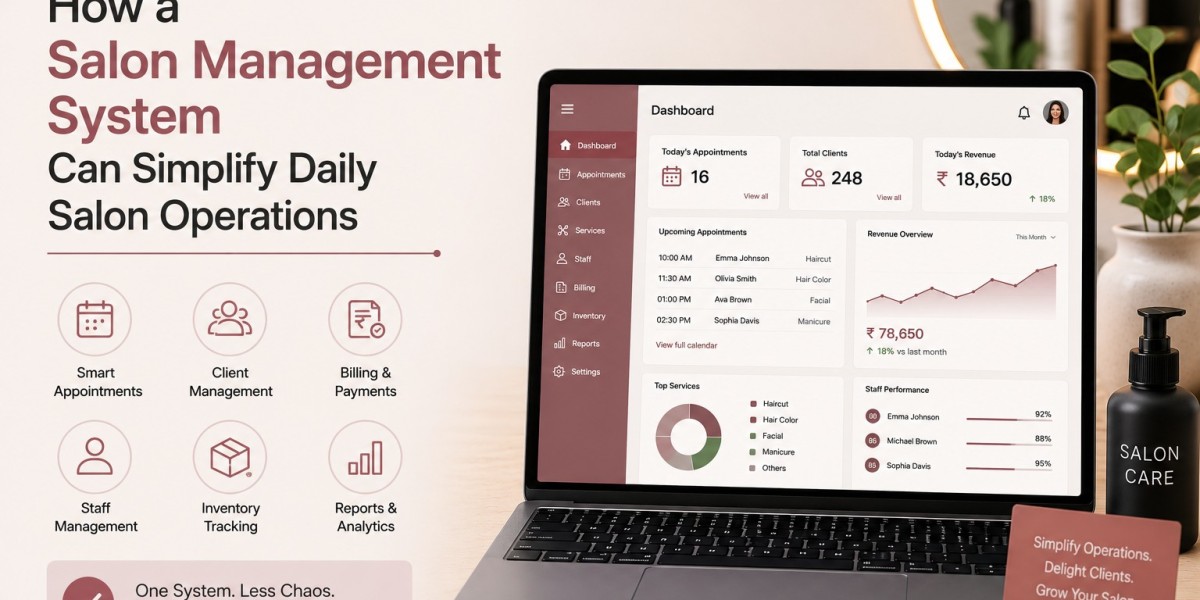

Running a salon involves much more than serving customers and providing beauty treatments. Salon owners and managers have to manage appointments, staff schedules, customer information, payments, inventory, marketing, and daily administration. When these tasks are handled manually, they can consume valuable time and increase the chances of mistakes.
A modern Salon Management System can simplify these responsibilities by bringing important salon operations together in one digital platform. From appointment booking to customer management and business reporting, salon software can help businesses operate more efficiently while creating a better experience for customers.
What Is a Salon Management System?
A salon management system is software designed to help salon owners manage their daily business activities digitally. Instead of relying on notebooks, spreadsheets, phone calls, and separate applications, salons can manage their core operations through a central platform.
Depending on the software, features can include online appointment booking, customer profiles, staff scheduling, automated reminders, payment management, inventory tracking, marketing tools, and business reports.
The main purpose is simple. A salon management system helps reduce administrative work so salon owners and staff can spend more time focusing on customers and service quality.
How Can Salon Management Software Simplify Daily Operations?
Modern salon businesses deal with multiple tasks throughout the day. Without an organised system, even simple activities can become time consuming.
Here are some of the main ways salon software can simplify everyday operations.
1. Make Appointment Scheduling Easier
Appointment management is one of the most important responsibilities in any salon.
Traditional appointment booking often involves phone calls, messages, social media enquiries, and manual calendar updates. This can create confusion, especially when several employees are working at the same time.
A digital booking system allows customers to check available appointments and choose a suitable time. Once a booking is made, the information can automatically appear in the salon calendar.
Staff can quickly see upcoming appointments, services, customer details, and availability.
This makes scheduling more organised and reduces the possibility of double bookings.
2. Allow Customers to Book Online
Customers increasingly expect convenient digital services. Many people prefer booking appointments online rather than calling a salon during business hours.
Online booking allows customers to schedule appointments at a time that is convenient for them.
For salon owners, this means bookings can potentially be generated even when the salon is closed. Staff also spend less time answering basic appointment enquiries.
A convenient booking experience can improve customer satisfaction and make it easier for new customers to book their first appointment.
3. Reduce Missed Appointments
Missed appointments can affect salon revenue and staff productivity.
Automated reminders can help customers remember their upcoming appointments. Depending on the system, reminders may be sent through supported communication channels before the scheduled visit.
This reduces the need for staff to manually contact every customer.
Salons can also establish clear cancellation and booking policies to create a more organised appointment process.
4. Manage Customer Information in One Place
Customer information is valuable for salons because it can help staff provide a more personalised experience.
A salon management platform can store information such as contact details, appointment history, preferred services, and relevant customer notes.
When a customer returns, staff can quickly review previous appointments and understand their preferences.
For example, a stylist may be able to see which service the customer previously selected. A beauty professional can also review relevant service history before the next appointment.
This can make customer interactions more personal and professional.
5. Simplify Staff Scheduling
Managing employees manually can become challenging as a salon grows.
Different employees may have different working hours, holidays, days off, and service responsibilities. Managing all these schedules through separate calendars can create confusion.
Salon management software can provide a central view of employee availability and appointments.
Managers can use the system to organise schedules, allocate appointments, and identify availability.
This can help reduce scheduling conflicts and improve staff utilisation.
6. Make Payments More Organised
Payment management is another important part of salon operations.
A digital system can connect appointment information with payment and transaction records, depending on the software.
This can make the checkout process more organised and reduce the amount of manual data entry required.
Salon owners can also use transaction information to understand daily sales and revenue.
Having accurate payment records can make financial administration easier and provide useful information for business planning.
7. Track Salon Inventory
Salons often use a wide range of professional and retail products.
These can include hair care products, skincare products, beauty treatment products, colours, shampoos, conditioners, and other supplies.
Without proper inventory management, salons may run out of important products or purchase more stock than necessary.
A management system can help track stock levels and provide greater visibility into product usage and sales.
This allows salon owners to make better purchasing decisions and maintain essential supplies.
8. Improve Customer Communication
Communication plays an important role in customer retention.
Salons need to communicate with customers about appointments, reminders, promotions, services, and future bookings.
Managing these communications manually can take considerable time.
Salon software can support automated communication and customer engagement depending on the available features.
For example, automated reminders can reduce manual work while marketing tools can help salons communicate relevant offers to existing customers.
9. Support Customer Retention
Getting a new customer is important, but encouraging existing customers to return can be equally valuable.
Salon management software can help businesses understand customer booking patterns and service history.
This information can support personalised marketing campaigns and follow up communication.
For example, a salon may identify customers who have not booked an appointment for several months and send them a suitable reminder or promotional message.
Consistent communication can help businesses build stronger relationships with their customers.
10. Provide Useful Business Reports
Salon owners need accurate information to understand how their business is performing.
Management software can provide reports covering areas such as revenue, appointments, popular services, customer activity, and staff performance.
These insights can help owners identify what is working well and where improvements may be needed.
For example, if a particular service generates strong demand, the salon may decide to promote it more actively or train additional staff to provide that service.
Data driven decision making can be more effective than relying only on assumptions.
Why Choose Salon100X for Salon Management?
Choosing the right software is an important decision for any salon owner. Businesses can explore Why Choose Salon100x to learn more about how a modern salon management platform can support everyday operations.
Salon100X is designed to help salons manage important business activities through digital tools.
The objective of using salon software should not simply be to replace manual processes. The bigger goal is to create a more efficient operation where staff can spend less time on administration and more time serving customers.
Can Salon Management Software Help Growing Salons?
Yes. As a salon grows, the number of customers, employees, appointments, services, and administrative tasks usually increases.
A system that centralises important information can help businesses manage this growth more efficiently.
For example, a growing salon may need to manage several employees and hundreds of customer appointments each month. Using separate spreadsheets and calendars can become increasingly difficult.
A central management platform provides a more structured approach to handling these activities.
Salon Management Software for Medspas
Medspas have additional operational requirements because they may provide aesthetic treatments, consultations, skincare services, and other specialised procedures.
They may need to manage customer information, appointments, staff availability, treatment schedules, and communication.
Businesses interested in this sector can learn more from our guide to Salon Management Software for Medspas UK.
The right management platform can help a medspa organise its operations while providing customers with a convenient booking experience.
How Salon Software Saves Time
One of the biggest advantages of salon management software is time savings.
Consider the number of administrative activities a salon performs every day. Staff may answer appointment calls, update calendars, send reminders, check customer information, process payments, monitor stock, and prepare reports.
When these activities are automated or centralised, employees can spend less time switching between different tools.
This can improve productivity and allow salon teams to focus on customer service.
What Should Salon Owners Look For?
When selecting salon management software, owners should consider their current requirements and future growth.
Important features may include:
Online Booking
Customers should be able to book appointments conveniently.
Customer Management
The system should provide organised customer information and appointment history.
Staff Management
Managers should be able to view staff availability and organise schedules.
Automated Reminders
The software should support appointment reminders to improve attendance.
Payment Management
Businesses should have an organised way to track transactions.
Reporting
Useful reports should help owners understand revenue, bookings, customers, and business performance.
Ease of Use
The platform should be simple enough for salon staff to use without extensive technical knowledge.
Frequently Asked Questions
What is the main purpose of salon management software?
The main purpose is to simplify salon operations by managing appointments, customers, staff, payments, communication, inventory, and reporting through digital tools.
Can salon management software save time?
Yes. Automation and centralised information can reduce repetitive administrative work and help staff manage daily tasks more efficiently.
Does salon software support online bookings?
Many modern salon management platforms provide online booking features that allow customers to schedule appointments digitally.
Can salon software help reduce no shows?
Automated appointment reminders can help customers remember their bookings and may reduce missed appointments.
Is salon management software useful for small salons?
Yes. Small salons can benefit from easier appointment management, customer records, automated communication, payment tracking, and business reporting.
Final Thoughts
Managing a salon becomes increasingly complex as the business grows. Manual processes can take valuable time and make it harder to maintain accurate information.
A salon management system can simplify daily operations by bringing appointment booking, customer management, staff scheduling, payments, inventory, communication, and reporting into one organised platform.
For modern salons, the right software can improve efficiency, reduce administrative workload, and create a smoother customer experience.
The key is choosing a platform that matches the salon's needs today while providing the flexibility required for future growth. With the right digital tools, salon owners can spend less time managing paperwork and more time building a successful and customer focused business.