
Facial hair can vary significantly in density, thickness, color, growth direction, and distribution, making treatment planning an important part of achieving consistent results. For individuals considering Laser Hair Removal In Islamabad, understanding these differences can help explain why the same laser approach may not be suitable for every facial area. A personalized plan considers the patient's skin tone, hair characteristics, treatment area, and pattern of growth before sessions begin.
Why Facial Hair Requires Individualized Planning
Facial hair is different from hair found on many other parts of the body. The face contains areas with both fine and coarse hair, and growth can be influenced by genetics and hormonal activity.
For example, the upper lip may contain relatively fine hair, while the chin and jawline can have thicker, darker strands. Because these areas respond differently, practitioners may adjust treatment parameters and techniques according to the specific zone.
Individualized planning can also help reduce unnecessary irritation while ensuring that the treatment is appropriately targeted.
Common Facial Hair Patterns
Facial hair can appear in several different patterns. Some people have relatively uniform growth, while others experience isolated patches or stronger growth around particular areas.
Common treatment zones include:
- Upper lip
- Chin
- Jawline
- Sideburns
- Cheeks
- Neck
- Forehead
- Between the eyebrows
Each area can have different hair density and thickness. Understanding the distribution before treatment helps the practitioner determine which areas need focused attention.
Hair Density and Laser Treatment
Hair density refers to how many hairs are present within a particular area.
A densely populated area may appear darker or more noticeable, while a low-density area may contain scattered hairs.
Dense facial hair can provide many visible targets during treatment, but the practitioner still needs to ensure systematic coverage.
Sparse or scattered hair may require more precise attention because individual hairs can be distributed unevenly across the treatment zone.
Hair Thickness Can Change the Treatment Approach
Hair thickness is another important consideration.
Coarse hair generally contains more pigment than very fine hair, which can make it a more apparent target for many laser systems.
Fine facial hair can behave differently and may require careful assessment before treatment.
As treatment progresses, remaining hairs may become finer. Consequently, later sessions may focus on hair that is less dense or less noticeable than the original growth.
Why Hair Color Matters
Laser hair removal relies partly on the difference between hair pigment and surrounding skin.
Dark, pigmented hair generally provides a stronger target than very light or minimally pigmented hair.
Very blonde, gray, or white hair may respond poorly to some laser systems because of limited pigment available to absorb the laser energy.
During consultation, the practitioner can assess hair color and determine whether laser treatment is appropriate for the specific area.
Facial Hair and Skin Tone
Skin tone is equally important when planning facial laser treatment.
Melanin is naturally present in the skin, and laser energy can interact with this pigment.
For patients with darker or more pigmented skin, careful selection of laser technology and treatment parameters can help balance effective hair targeting with skin safety.
The practitioner may consider factors such as wavelength, pulse duration, energy level, and cooling.
There is no single setting that is appropriate for every patient.
Hormones Can Influence Facial Hair Patterns
Hormonal activity can have a significant effect on facial hair, particularly around the chin, jawline, neck, and upper lip.
Hormonal changes may stimulate existing follicles or contribute to persistent growth.
This means that facial hair may continue appearing even after a patient has completed several laser sessions.
Laser treatment can reduce the activity of targeted follicles, but it does not necessarily prevent hormonally influenced hair from developing in the future.
This is why expectations should be realistic, especially when treating hormone-sensitive facial areas.
Why the Chin and Jawline May Behave Differently
The chin and jawline often contain a mixture of coarse and fine hairs.
Some patients may notice that these areas respond differently from the cheeks or upper lip.
Hormonal influences can also make the chin and jawline more persistent treatment zones.
A practitioner may therefore monitor these areas carefully and adjust the treatment plan based on observed regrowth.
Upper Lip Hair Needs Careful Treatment
The upper lip is a relatively sensitive facial area.
Hair can range from fine to moderately coarse, and the skin may be more reactive than other areas.
Because of this, treatment should be performed with appropriate parameters and attention to patient comfort.
Patients should also follow preparation and aftercare instructions carefully to minimize temporary redness or irritation.
Facial Hair Growth Direction Matters
Hair does not always grow straight out of the skin.
The direction and angle of hair growth can vary across the face.
For example, hairs around the jawline may grow in different directions from hairs on the cheeks.
Although laser systems are designed to target the hair and follicle beneath the skin, systematic treatment coverage remains important when working across areas with varying hair direction.
Facial Hair Growth Cycles
Hair follicles naturally move through different stages.
These are generally described as:
- Anagen: active growth
- Catagen: transitional stage
- Telogen: resting stage
Laser treatment is generally most effective when the hair is in a suitable active growth phase.
Because facial follicles do not all enter this phase simultaneously, multiple sessions are normally required.
This explains why some hairs may appear to remain while other areas become progressively smoother.
Why Facial Regrowth Can Look Uneven
Uneven regrowth does not necessarily mean that treatment has failed.
Different follicles can respond at different rates.
A patient may notice that the upper lip becomes less noticeable while some chin hairs remain more prominent. Alternatively, one side of the jawline may appear to regrow faster than the other.
Possible reasons include:
- Different follicle growth stages
- Uneven hair density
- Hair thickness differences
- Hormonal activity
- Treatment coverage
- Individual biological response
Tracking changes over multiple sessions provides a better indication of progress.
Comparing Common Facial Treatment Areas
| Facial area | Typical considerations | Why planning matters |
|---|---|---|
| Upper lip | Sensitive skin and variable hair thickness | Requires careful parameter selection |
| Chin | Can contain coarse, persistent hair | Hormonal influences may matter |
| Jawline | Mixed hair density and thickness | Regrowth can be uneven |
| Cheeks | Often finer or more scattered hair | Hair pigmentation should be assessed |
| Sideburns | Variable density and thickness | Requires consistent coverage |
| Neck | Can contain coarse or irregular growth | Individual pattern assessment is useful |
These characteristics vary from person to person.
How Practitioners Assess Facial Hair Before Treatment
A consultation allows the practitioner to evaluate the treatment area before selecting an approach.
The assessment may include:
- Hair color
- Hair thickness
- Hair density
- Growth distribution
- Skin tone
- Recent tanning or sun exposure
- Previous hair-removal methods
- History of laser treatments
- Skin sensitivity
- Possible hormonal influences
This information helps create a more individualized treatment strategy.
Why Previous Hair Removal Methods Matter
The way facial hair has been removed in the past can influence treatment preparation.
Shaving cuts hair at the skin surface and leaves the follicle intact.
Waxing and plucking remove hair from the root, which may interfere with the target required by many laser systems.
Patients undergoing laser hair removal are commonly advised to avoid plucking or waxing during their treatment course and follow the provider's specific preparation instructions.
What Patients Should Expect During Treatment
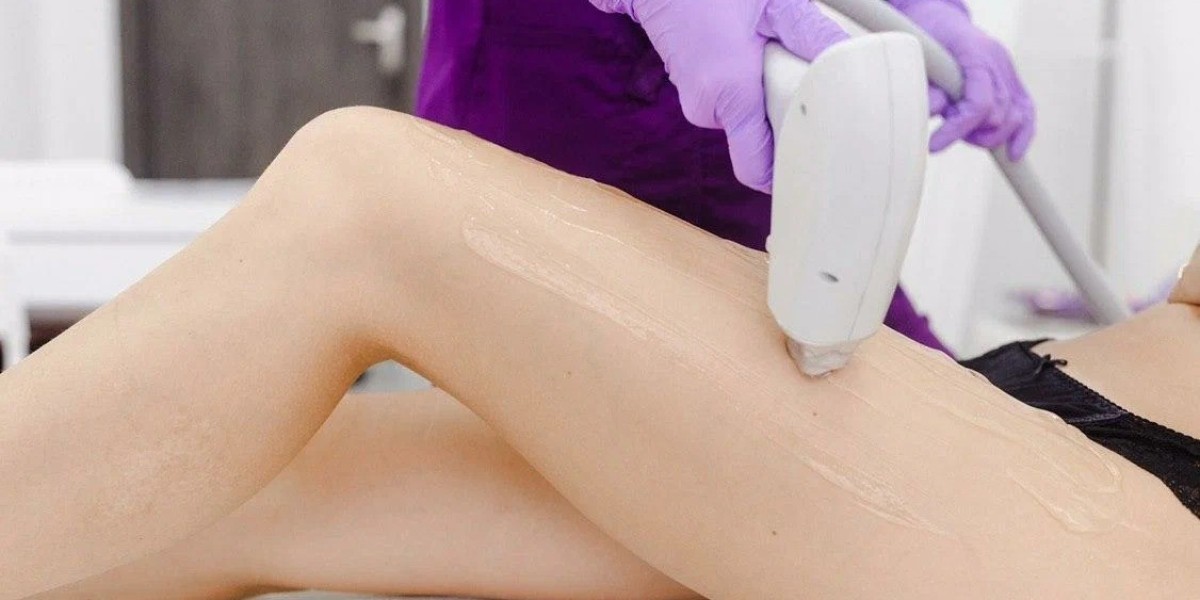
During a laser session, the practitioner typically treats the selected facial area systematically.
The sensation can vary depending on the treatment area, hair thickness, device, and individual sensitivity.
Temporary redness or mild swelling around treated follicles can occur after treatment.
These effects generally settle with time, but patients should follow the aftercare guidance provided by their practitioner.
Why Results Develop Gradually
Laser hair removal is not an instant process.
Only a portion of follicles may be in a suitable growth phase during a particular appointment.
With subsequent sessions, additional follicles can become appropriate targets.
Patients may gradually notice:
- Reduced hair density
- Slower regrowth
- Finer remaining hairs
- Longer intervals between shaving
- Less noticeable facial hair
The exact degree and speed of reduction vary between individuals.
How Results Can Be Monitored
Rather than judging treatment after one session, patients can monitor changes over time.
Useful indicators include how frequently they need to shave, whether hair appears finer, and whether the overall density is decreasing.
Consistent photographs can also help show gradual changes, particularly when the differences are subtle.
FAQs About Facial Hair and Laser Treatment
Does facial hair respond differently from body hair?
Yes. Facial hair can have different thickness, density, growth cycles, and hormonal influences compared with body hair.
Why does chin hair sometimes require more attention?
The chin can contain coarse hair and may be influenced by hormonal activity, which can contribute to persistent regrowth.
Can fine facial hair be treated with laser?
Treatment suitability depends on the hair's pigmentation, thickness, skin characteristics, and the laser technology being used.
Does shaving make facial hair thicker?
No. Shaving does not change the follicle or permanently increase hair thickness. A blunt hair tip can simply make newly regrown hair appear more noticeable.
Why are multiple facial laser sessions needed?
Facial follicles grow at different times. Multiple sessions allow treatment to address follicles as they enter appropriate growth phases.
Can hormones affect facial laser results?
Yes. Hormonal activity can contribute to continued or changing facial hair growth.
Why does one side of the face sometimes regrow differently?
Follicles may differ in density, growth stage, thickness, and biological activity between the two sides.
Can laser treatment permanently remove every facial hair?
Laser hair removal is generally considered a long-term hair-reduction treatment rather than a guarantee that every hair will permanently disappear.
What should I avoid before facial laser treatment?
Patients are commonly advised to avoid waxing and plucking and to follow the specific preparation instructions provided by their practitioner.
Conclusion
Facial hair patterns play an important role in laser treatment planning because hair density, thickness, pigmentation, growth direction, skin tone, and hormonal influences can differ significantly from one facial zone to another. A treatment plan designed for the upper lip may not be identical to one used for the chin, jawline, cheeks, or neck.
Understanding these differences can help patients develop realistic expectations and recognize why results may appear gradually or vary between facial areas. Careful assessment and individualized treatment parameters are important for balancing effective hair reduction with appropriate skin safety. If you are considering treatment and want your facial hair pattern professionally assessed, Dynamic Aesthetic Clinic can help evaluate your individual hair and skin characteristics and guide you toward a suitable treatment plan.