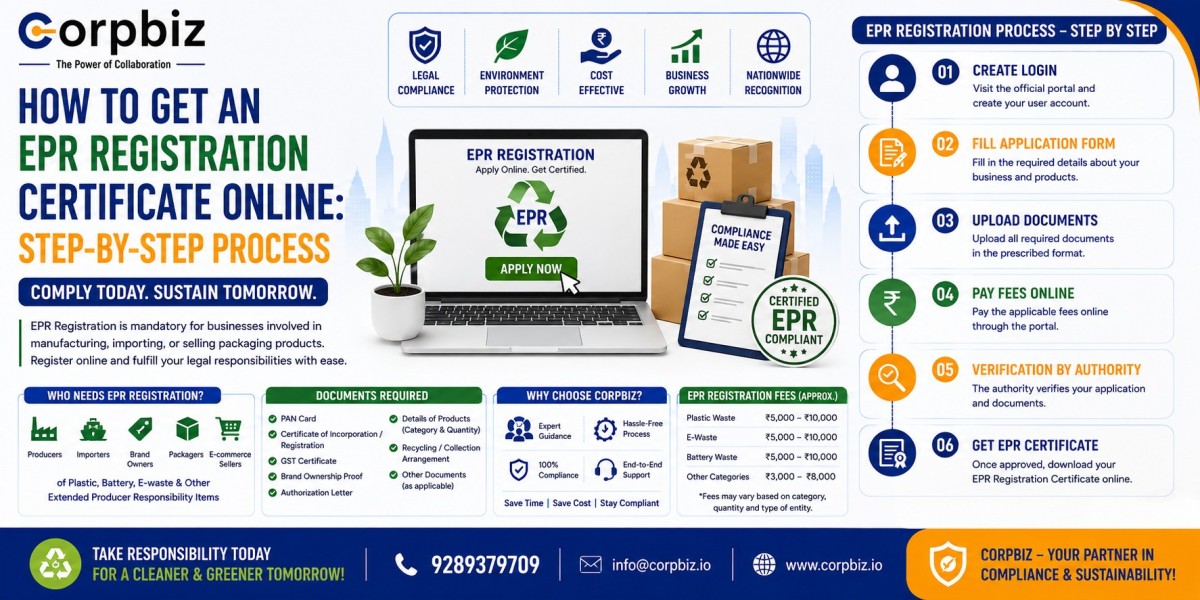

If you make, import, or sell plastic products in India, you may need an EPR Registration Certificate. Many business owners find the process confusing, but it is actually simple when you understand the steps.
What is an EPR Registration Certificate?
An EPR Registration Certificate is an approval issued under the Extended Producer Responsibility (EPR) framework. It makes producers, importers, and brand owners responsible for collecting and recycling the plastic waste generated from their products.
The Government of India introduced this system to reduce plastic pollution and promote proper waste management.
Without a valid certificate, many businesses may face penalties or legal action.
Who Needs an EPR Registration Certificate?
You may need an EPR Registration Certificate if you are:
A manufacturer of plastic packaging
An importer of plastic-packaged goods
A brand owner selling products in plastic packaging
An online seller using plastic packaging for deliveries
If your business falls into any of these categories, EPR registration is generally mandatory.
Documents Required
Before applying, keep these documents ready:
PAN Card of the business
GST Registration Certificate
Certificate of Incorporation or Business Registration
Aadhaar Card of the authorized person
Address proof
Details of plastic packaging used
Recycling or waste management plan
Keeping all documents ready helps avoid delays.
Step-by-Step Process to Get an EPR Registration Certificate Online
Step 1: Check Your Eligibility
Find out whether your business comes under the EPR rules. Different businesses have different compliance requirements.
Step 2: Collect Required Documents
Arrange all business and packaging-related documents before starting the application.
Step 3: Register on the Online Portal
Create your account on the official EPR registration portal and enter your business details carefully.
Step 4: Fill the Application Form
Provide accurate information about your company, products, plastic packaging quantity, and recycling plan.
Step 5: Upload Supporting Documents
Upload scanned copies of all required documents in the correct format.
Step 6: Submit the Application
Review the application carefully before submission. Any wrong information may delay approval.
Step 7: Verification by Authorities
The concerned authority verifies your documents and application. If additional information is required, you may receive a notice.
Step 8: Receive Your EPR Registration Certificate
After successful verification, your EPR Registration Certificate is issued online. You can download and use it for business compliance.
Why is the Certificate Important?
An EPR Registration Certificate offers several benefits:
Helps your business comply with environmental laws
Builds customer trust
Avoids legal penalties
Supports responsible waste management
Improves your company's reputation
Today, many large companies prefer working with businesses that follow environmental regulations.
Difference Between EPR Registration and Plastic Waste Authorization
Many people confuse plastic waste authorization with an EPR Registration Certificate.
An EPR Registration Certificate is mainly for producers, importers, and brand owners responsible for managing plastic waste.
On the other hand, plastic waste authorization is generally required for businesses involved in handling, collecting, processing, or recycling plastic waste. Depending on your business activities, you may need one or both approvals.
Is NOC Pollution Control Board Required?
Some businesses also require a NOC Pollution Control Board before starting operations or applying for certain environmental approvals.
The requirement depends on the type of industry, manufacturing process, and state regulations. If your business involves manufacturing or waste processing, obtaining the necessary NOC from the Pollution Control Board may be an important compliance step.
Is NGO Registration Related to EPR?
You may wonder how NGO registration connects with EPR.
While NGO registration is not required for obtaining an EPR Registration Certificate, many NGOs work in plastic waste collection, recycling awareness, and environmental protection. Businesses often collaborate with registered NGOs as part of their sustainability and waste management initiatives.
How Corpbiz Can Help
Applying for an EPR Registration Certificate can be time-consuming if you are unfamiliar with the process. Corpbiz offers end-to-end assistance, including document preparation, application filing, compliance support, and follow-up with the concerned authorities. Their experts help businesses complete the registration smoothly and stay compliant with environmental regulations.
Conclusion
Getting an EPR Registration Certificate online is easier when you understand the process. By preparing your documents, submitting the correct information, and following government guidelines, you can complete the registration without unnecessary delays.
If you also need guidance on NOC Pollution Control Board, plastic waste authorization, or other environmental compliances, taking professional assistance can save both time and effort while ensuring your business stays legally compliant.
Author Profile
Gaurav Sharma
Gaurav Sharma is an experienced Legal Consultant at Corpbiz with over 10 years of expertise in business registrations, environmental compliance, and corporate legal services. He has helped thousands of startups, manufacturers, importers, and established businesses obtain approvals such as EPR Registration Certificates, Pollution Control Board permissions, FSSAI registrations, and company registrations. Gaurav believes in explaining complex legal processes in simple language so every business owner can understand compliance requirements and grow with confidence.