
Introduction
Search engine optimization has evolved significantly over the past decade. While keywords remain an important part of SEO, modern search engines now focus on understanding the meaning behind content rather than simply matching words. This shift has introduced a more intelligent way of optimizing websites through Entity Optimization.
Google's algorithms increasingly rely on relationships between people, places, organizations, products, and concepts to deliver highly relevant search results. AI-powered platforms like ChatGPT, Gemini, and Perplexity also interpret information based on entities and context rather than exact keyword matches. As a result, businesses that invest in entity-focused optimization are more likely to improve search visibility, establish topical authority, and gain recognition across AI search platforms.
For brands looking to future-proof their SEO strategy, adopting entity-based optimization is no longer optional—it is becoming essential.
What Is Entity Optimization?
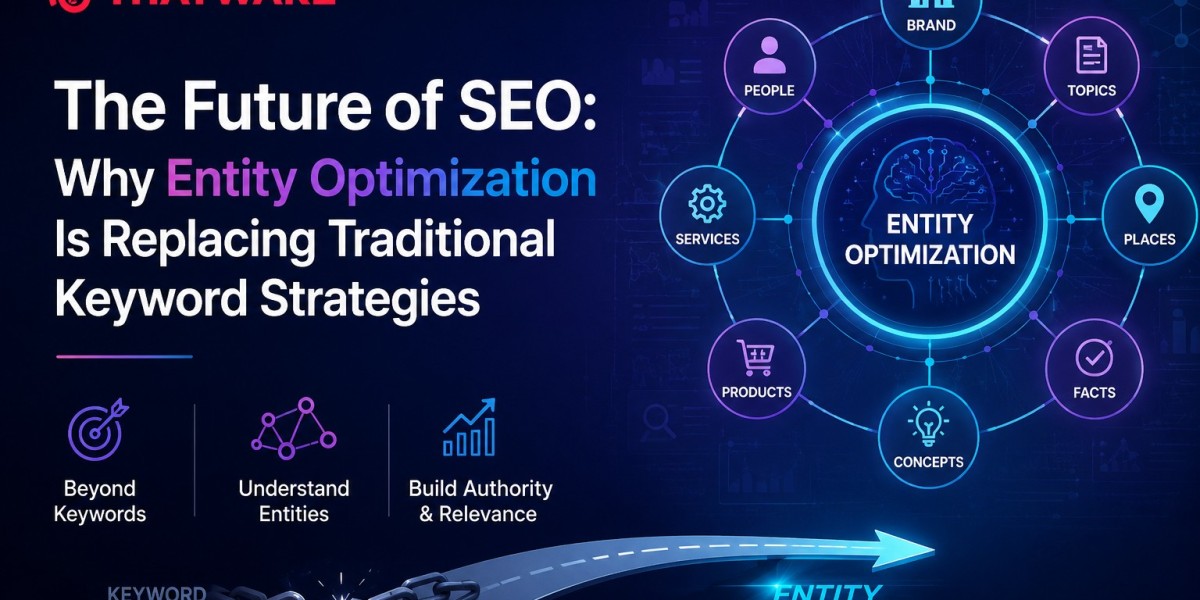
Entity Optimization is the process of helping search engines understand the real-world meaning and relationships behind your website's content.
Instead of focusing only on individual keywords, entity optimization connects your business, products, services, authors, and topics into a structured knowledge network that search engines can easily interpret.
Examples of entities include:
- Businesses
- Brands
- Products
- Locations
- Medical professionals
- Organizations
- Services
- Technologies
When Google recognizes these entities correctly, it becomes easier to determine your website's relevance and authority for specific topics.
Why Traditional Keyword Strategies Are No Longer Enough
For many years, SEO primarily revolved around inserting keywords into website content. While keywords continue to play a role, Google's algorithms have become much more sophisticated.
Today's search engines evaluate:
- User intent
- Topic relevance
- Context
- Content relationships
- Website expertise
- Brand credibility
Rather than rewarding pages with repeated keywords, Google now prioritizes content that demonstrates comprehensive knowledge of a subject.
This is where Entity SEO plays a significant role.
Instead of optimizing individual pages only for phrases, businesses create interconnected content that demonstrates expertise across an entire topic.
How Search Engines Understand Entities Instead of Keywords
Modern search engines use advanced Natural Language Processing (NLP) and machine learning models to understand relationships between entities.
For example, if someone searches for:
"Best robotic hernia surgeon in Chennai"
Google does not simply look for pages containing these words.
Instead, it evaluates:
- Doctor
- Specialty
- Location
- Hospital
- Medical procedures
- Reputation
- Related services
This contextual understanding helps deliver more accurate search results.
Through proper Semantic SEO, websites provide search engines with stronger contextual signals, enabling better understanding of page intent and subject relevance.
Benefits of Entity Optimization for Modern SEO
Businesses implementing entity-based optimization experience advantages beyond traditional rankings.
Improved Search Visibility
Entity-focused websites provide clearer contextual information, helping search engines display more relevant results.
Benefits include:
- Better topic understanding
- Higher content relevance
- Improved indexing
- Stronger search visibility
Better AI Search Recognition
AI search platforms analyze entities instead of simply matching keywords.
A properly optimized website has a better chance of appearing within AI-generated responses because its content is easier for language models to interpret accurately.
Stronger Content Relationships
Instead of isolated articles, entity optimization creates interconnected knowledge.
This allows search engines to understand how different pages support one another while strengthening topical coverage.
Higher User Trust
Well-structured content improves:
- Readability
- Navigation
- Information accuracy
- User experience
These factors indirectly contribute to stronger engagement metrics and improved search performance.
Increased Long-Term SEO Stability
Keyword trends frequently change.
Entities represent real-world concepts that remain relevant over time, making entity-focused optimization a more sustainable SEO strategy.
How Businesses Can Implement Entity-Based SEO
Implementing Entity Optimization requires a structured approach rather than simply adding schema markup.
Key practices include:
Build Comprehensive Topic Clusters
Create multiple pages covering related topics within your industry.
For example:
- Service pages
- Industry guides
- FAQs
- Case studies
- Educational blogs
This demonstrates subject expertise.
Use Structured Data
Schema markup helps search engines identify:
- Organization
- Authors
- Services
- Products
- Reviews
- FAQs
- Articles
Structured data improves content interpretation and enhances eligibility for rich search results.
Strengthen Internal Linking
Every important page should connect logically with related content.
Effective internal linking helps search engines understand entity relationships while improving user navigation.
Build Consistent Brand Signals
Maintain consistency across:
- Website
- Social profiles
- Business listings
- Citations
- Contact information
Consistent business information strengthens entity recognition.
Publish High-Quality Topical Content
Instead of writing only keyword-focused articles, develop comprehensive resources that answer real user questions.
This naturally improves Knowledge Graph SEO by helping search engines associate your brand with specific topics.
Why Choose ThatWare LLP for Entity-Based SEO Solutions?
ThatWare LLP specializes in advanced AI-driven SEO strategies designed for modern search engines.
Their services focus on:
- Entity optimization strategies
- Structured data implementation
- AI-ready SEO architecture
- Topical authority development
- Technical SEO improvements
- Semantic content optimization
- Advanced search visibility solutions
By combining artificial intelligence with proven SEO methodologies, ThatWare LLP helps businesses improve organic visibility while preparing websites for future AI-powered search experiences.
Conclusion
SEO is moving beyond simple keyword matching toward a deeper understanding of meaning, context, and relationships. Businesses that continue relying solely on traditional keyword optimization may struggle to compete as search engines become increasingly intelligent.
Entity Optimization provides a future-ready framework that helps search engines understand your business, services, expertise, and content more accurately. Combined with structured data, quality content, and strong internal linking, entity-based SEO creates long-term authority that benefits both Google Search and AI-powered search platforms.
If your goal is to improve search visibility, strengthen topical authority, and prepare your website for the future of AI-driven search, ThatWare LLP offers advanced entity-focused SEO solutions tailored to modern search engine requirements.
FAQs
What is Entity Optimization in SEO?
Entity Optimization helps search engines understand the meaning and relationships behind your website's content, improving relevance and search visibility.
Is Entity Optimization replacing keywords?
No. Keywords remain important, but they now work alongside entities, context, and user intent rather than serving as the only ranking factor.
How does Semantic SEO support modern search?
Semantic SEO focuses on context and topic relevance, helping search engines better understand the meaning of content instead of relying solely on exact keyword matches.
What is Knowledge Graph SEO?
Knowledge Graph SEO improves how businesses, people, products, and services are connected within Google's knowledge ecosystem through structured data and entity relationships.
How does Entity Authority improve rankings?
Entity Authority strengthens a website's credibility by demonstrating expertise, consistency, and relevance across related topics, helping search engines trust the content more effectively.
Does structured data improve entity recognition?
Yes. Schema markup provides structured information that helps search engines identify important entities and their relationships more accurately.
Why is entity-based SEO important for AI search?
AI platforms interpret context and entities instead of exact keyword matching. Entity-based optimization improves the likelihood of being understood and cited by AI-powered search systems.